
Logistics Price Hikes and Supply Chain Shifts: Impact on On-Premise AI
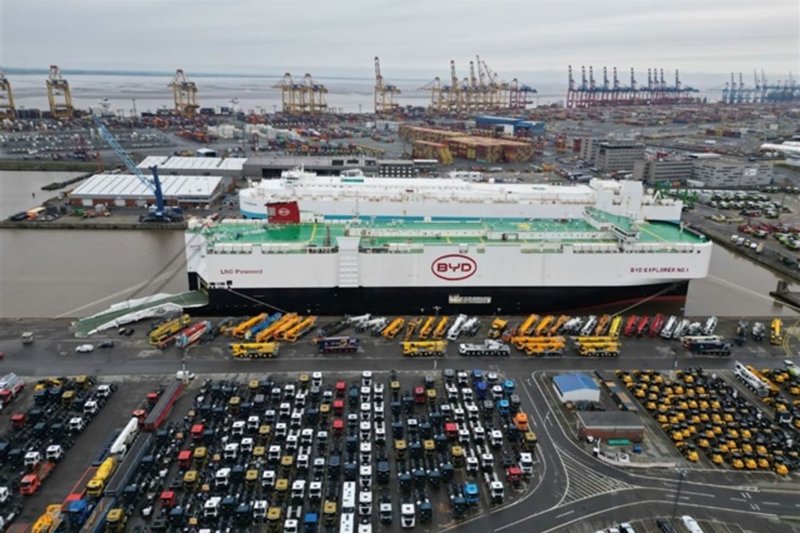
Recent geopolitical dynamics and adjustments in global trade routes are redefining the international logistics landscape. Specifically, changes in transshipment strategies in the Middle East have triggered significant shifts in the supply chain, with direct repercussions on freight rates. Southeast Asia, a crucial hub for the production and distribution of technological components, has seen a doubling of freight costs, an unequivocal sign of the increasing complexity and volatility in the sector.
This scenario, while seemingly distant from the world of artificial intelligence, has profound implications for companies planning or managing AI infrastructures. Specialized hardware, such as high-performance GPUs, servers, and networking components, is often manufactured in regions affected by these logistical dynamics. Consequently, increased transportation costs and potential delivery delays can directly impact the Total Cost of Ownership (TCO) of on-premise AI deployments, a fundamental aspect for CTOs and infrastructure architects.
The Implications for AI Hardware and On-Premise Deployments
The increase in freight rates translates into higher acquisition costs for AI hardware. Critical components like GPUs, for instance, A100 or H100 models with their high amounts of VRAM, are essential for Large Language Models (LLM) workloads and high-performance inference. When the shipping cost of these units doubles, the initial investment (CapEx) for a self-hosted infrastructure sees a surge, altering financial projections and project budgets.
Beyond mere cost, supply chain volatility can generate uncertainties regarding delivery times. For DevOps teams and infrastructure architects, planning an on-premise deployment requires precision and reliability in hardware availability. Unexpected delays can compromise development roadmaps, slow down the release of new AI-powered services, or hinder the expansion of existing capacities, risking business competitiveness. The ability to procure hardware in a timely manner becomes a critical factor.
TCO, Data Sovereignty, and Strategic Choices
In a context of rising logistics costs, the evaluation of TCO for an on-premise AI infrastructure gains even greater relevance. TCO includes not only the hardware purchase price but also transportation costs, customs duties, insurance, installation, power, cooling, and maintenance. Fluctuations in shipping rates introduce an unpredictable variable that can erode margins and complicate the economic justification of an investment in local infrastructure.
Despite these challenges, self-hosted deployments continue to offer indispensable strategic advantages, particularly concerning data sovereignty and compliance. Air-gapped environments or bare metal infrastructures ensure total control over data and models, a crucial aspect for regulated sectors such as finance or healthcare. The choice between an on-premise approach and cloud-based solutions thus becomes a balance between the stability of operational costs (OpEx) offered by the cloud and the strategic control and data security guaranteed by a local infrastructure. For those evaluating the trade-offs between these options, AI-RADAR offers analytical frameworks on /llm-onpremise to support informed decisions.
Future Outlook and AI Infrastructure Resilience
Supply chain resilience is set to remain a central concern for technology decision-makers. To mitigate risks arising from price hikes and disruptions, companies can adopt various strategies. These include diversifying suppliers, building strategic inventories of critical components, and negotiating long-term contracts that stabilize transportation costs. The goal is to create a more robust procurement pipeline, less susceptible to geopolitical or economic turbulence.
Carefully monitoring global logistical dynamics and understanding their potential impact on AI hardware acquisition is fundamental. The ability to anticipate and adapt to these changes will allow organizations to maintain their agility in developing and deploying AI solutions, effectively balancing cost constraints with the need for innovation and data security. The challenge is ongoing, but awareness and strategic planning can transform uncertainties into opportunities for infrastructural strengthening.








💬 Comments (0)
🔒 Log in or register to comment on articles.
No comments yet. Be the first to comment!