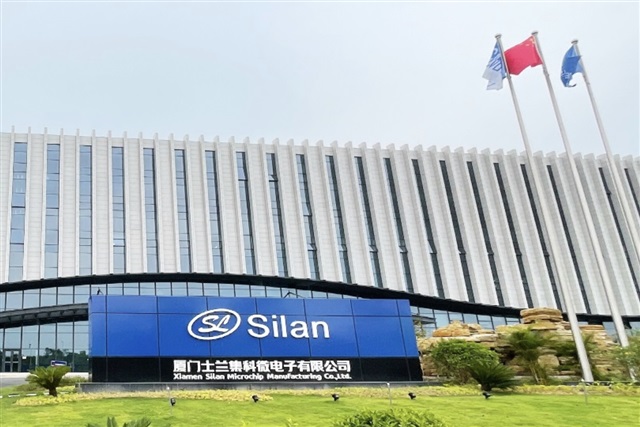
The news, echoed by Silan Micro, a key player in Chinese power chip manufacturing, shines a light on an exposed nerve in the AI supply chain: mature nodes. When a maker of power management ICs and MOSFETs raises prices, it is not just an isolated market move. It is a symptom of mounting pressure on production capacity at 28 nanometers and above—the very processes that supply the invisible building blocks of AI servers.
Talking about on-premise AI instantly brings to mind GPUs with hundreds of gigabytes of VRAM, NVLink interconnects, and entire racks of accelerators. Yet none of these systems function without a constellation of auxiliary chips: voltage regulators, power controllers, cooling fan drivers. Components that often ride on what the industry calls mature nodes, far from the extreme lithographies of 3 nanometers, but whose demand has exploded alongside the generative AI race. Servers designed for LLM inference, in particular, require motherboards capable of handling sudden and sustained power spikes—a task that falls squarely to power chips.
The price hikes flagged by Silan Micro are therefore not a niche detail. They carry concrete implications for anyone planning on-premise deployments. First, they raise CapEx: each additional compute node costs more not just for the GPU but also for the supporting electronics. Second, they potentially lengthen lead times, because foundries producing on mature nodes have limited capacity that is contested among automotive, IoT, and now AI server customers. Organizations building local infrastructure for data sovereignty or GDPR compliance may need to place orders earlier or explore alternative suppliers, with all the validation overhead that entails.
The phenomenon fits into a broader picture. While the semiconductor industry pours billions into advanced lithography, production on traditional nodes has remained relatively stable. The sudden demand surge—fueled also by renewed interest in on-device AI and edge servers—meets inelastic supply. It is a classic bottleneck that, in the past, has already hit sectors like automotive.
For those currently evaluating an on-premise cluster purchase, the lesson is clear: total cost of ownership is not measured by GPU spec sheets alone. Even the less celebrated silicon can become the line item that blows the budget or delays go-live. As the spotlight stays on cutting-edge nodes, the AI race is quietly stoking demand for older technologies, where production capacity is anything but infinite.







💬 Comments (0)
🔒 Log in or register to comment on articles.
No comments yet. Be the first to comment!