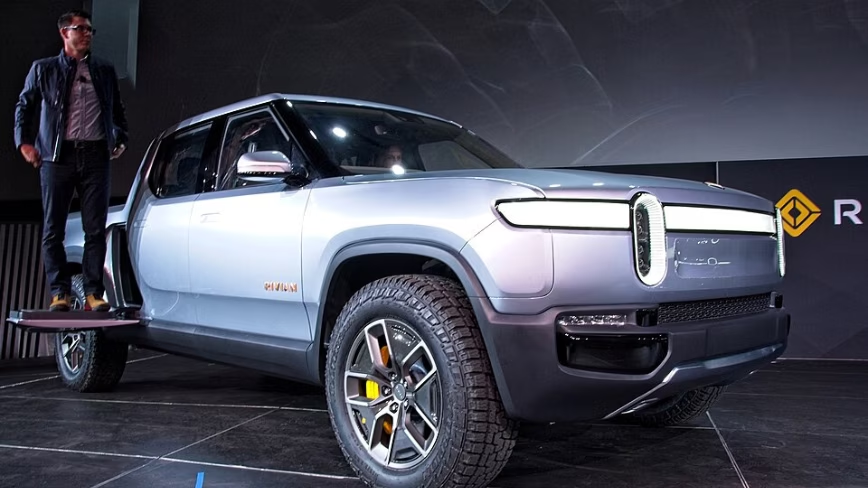
Rivian Announces Supervised Point-to-Point Self-Driving for 2024
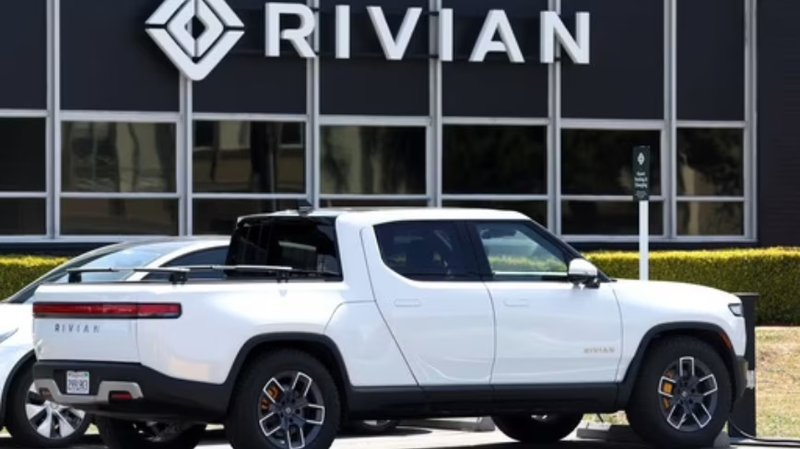
RJ Scaringe, CEO of Rivian, recently announced the introduction of a new supervised point-to-point self-driving capability. This feature will be available later this year on all second-generation Rivian vehicles and the R2 model. The announcement, made during the Masters of Scale event in Anaheim, marks a significant step for the electric vehicle manufacturer in the competitive automotive landscape.
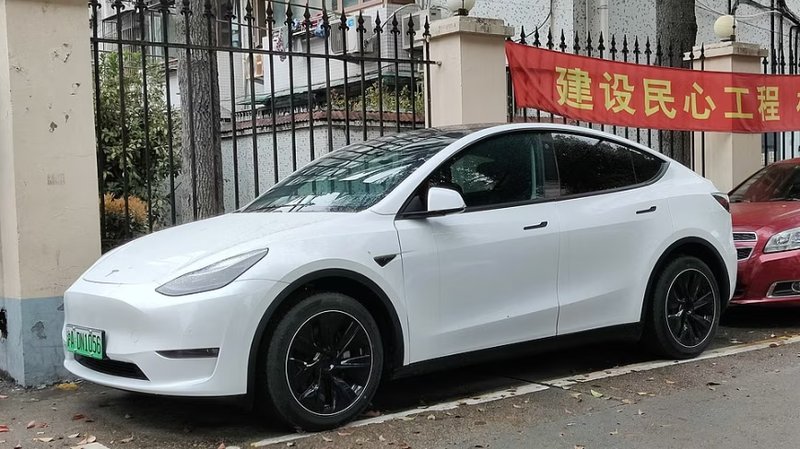
Scaringe explicitly compared this new capability to Tesla's Full Self-Driving (FSD) system, positioning Rivian's offering as a direct competitor in terms of functionality. This move underscores the company's ambition not only to produce electric vehicles but also to extend its leadership into advanced driver-assistance technologies.
Technical Details and the Autonomy Roadmap
The "supervised point-to-point self-driving" functionality implies that the vehicle will be able to navigate autonomously from point A to point B, managing steering, acceleration, and braking, but always under the active supervision of the driver. The driver must remain attentive and ready to intervene at any time, a crucial distinction from fully autonomous systems.
The CEO also outlined a three-stage autonomy roadmap, suggesting an incremental approach to the development and release of increasingly advanced capabilities. To implement such systems, vehicles require sophisticated hardware and software architecture capable of performing complex real-time inference operations. This includes advanced sensors, dedicated processing units (often based on custom silicon or GPUs), and machine learning algorithms for environmental perception, predicting other road users' behavior, and path planning.
Implications for On-Premise AI and Edge Computing
The implementation of autonomous driving systems like Rivian's represents a paradigmatic example of AI at the edge. Each vehicle acts as a mobile data center, requiring on-premise processing capabilities to ensure low latency and high throughput. Critical decisions must be made in milliseconds, without relying on potentially unstable or slow cloud connections. This necessitates robust hardware optimized for inference directly on board the vehicle.
For companies developing these technologies, the choice between an on-premise deployment (on-vehicle) and a hybrid approach (with some functions in the cloud) is fundamental. Data sovereignty and regulatory compliance, especially in critical sectors like automotive, are primary considerations. The collection and processing of sensor data, for example, often must adhere to strict privacy and security standards, making direct control over the infrastructure a significant advantage.
Future Prospects and Trade-off Considerations
Rivian's announcement intensifies competition in the autonomous driving sector, driving innovation and the search for increasingly efficient solutions. The challenge for manufacturers is not only to develop advanced algorithms but also to integrate hardware and software to optimize the Total Cost of Ownership (TCO) and ensure reliability and safety. Trade-offs between performance, energy consumption, and production costs are constant in this field.
For those evaluating on-premise deployment for AI/LLM workloads, the automotive industry's experience offers valuable insights. The need for high-performance processing in resource-constrained and power-limited environments is a constant. AI-RADAR, for instance, offers analytical frameworks on /llm-onpremise to evaluate these trade-offs, providing tools to compare different architectures and deployment strategies. The future of mobility is intrinsically linked to the evolution of edge AI and the ability to autonomously manage complex workloads.







💬 Comments (0)
🔒 Log in or register to comment on articles.
No comments yet. Be the first to comment!