
A rumor that hits the exposed nerve of consumer VRAM
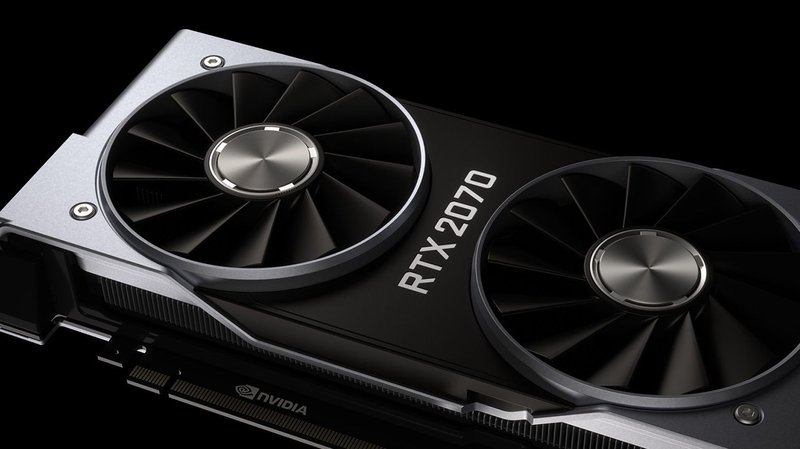
The news is circulating with the necessary conditional: a US repair technician allegedly indicated the existence of GeForce RTX 5090 cards with 64 and 96 GB of VRAM. The source is limited to a Reddit post and a linked discussion, so there is no official confirmation. Yet the mere hypothesis has reignited a debate on a point that is now structural for anyone running LLMs locally: video memory remains the primary bottleneck for loading larger models, maintaining extended contexts, and reducing reliance on aggressive quantization.
This is not a niche technical detail. When a model does not reside entirely in VRAM, the system must shuttle weights and activations between system memory and GPU, causing throughput drops in inference that negate even the most powerful hardware. A consumer card with 64 or 96 GB would change the equation for self-hosted deployments: you would no longer necessarily need a workstation platform or the cloud to run mid-to-high-end models with acceptable quality. The point is not the card itself, but the cost per gigabyte of VRAM actually usable after drivers, OS, and context window.
The demand for more VRAM in the consumer segment does not come from gaming. Over the past two years, the spread of open weight LLMs has turned GeForce GPUs into work tools for developers, researchers, and small teams. The need for video memory for AI workloads has become a market segment of its own, and the rumor about an RTX 5090 with 64 and 96 GB is a symptom of this pressure. Even if the news proves false, the fact that it circulates insistently signals that the shortage of consumer VRAM is perceived as a real limitation, not a technical whim.
The real metric: cost per gigabyte of usable VRAM
When evaluating a GPU for on-premise LLM workloads, the raw VRAM figure is only the starting point. Drivers, system buffers, model context, and computational temporary storage reduce the memory actually available. For inference with large context windows, the difference between 24 and 32 GB can become invisible, while between 32 and 64 GB there is room for larger models or less aggressive quantization. The metric that truly matters is the cost per gigabyte of usable VRAM, not the list price divided by nominal capacity.
A consumer card with 64 or 96 GB would overturn this calculation compared to professional GPUs. Today, those needing more VRAM often pay a premium for enterprise features—ECC, vGPU, certified drivers—that are not always needed in development or small production contexts. If the rumor were confirmed, the consumer segment would offer a cheaper path for those prioritizing memory capacity, but without the guarantees and support of workstations. TCO does not end at purchase: power consumption, cooling, maintenance, and warranty replacement become critical variables when assembling local nodes with multiple consumer cards.
There is, however, a mistake to avoid: more VRAM does not automatically mean more tokens per second. Memory bandwidth and compute power remain decisive for inference throughput. A card with double the memory but the same architecture does not double speed; it simply avoids swapping and keeps the model resident in VRAM. This is a concrete advantage for sustained workloads and first-token latency, but it does not replace the need for a balanced GPU.
Self-hosted: models, context, and light fine-tuning
For those managing LLMs locally, an increase in VRAM opens three immediate scenarios. The first is the ability to load models with a larger number of parameters without resorting to 4-bit or lower quantization. Quantization reduces memory footprint but introduces degradation in response quality, especially on complex tasks. With 64 or 96 GB, one could run a mid-to-high-end model at 8-bit or even mixed precision, maintaining quality closer to the original.
The second scenario concerns context windows. Models with extended contexts consume VRAM non-linearly: each additional token requires memory for activations and attention cache. A card with more VRAM allows handling long documents, extended chat sessions, or analysis pipelines over entire repositories without truncating context. This is relevant for knowledge management applications and for agents that must maintain state across multiple steps—an area where memory limits are often more constraining than compute power.
The third scenario is light fine-tuning on a single GPU. Today, fine-tuning an LLM on consumer hardware is possible only for small models or with techniques like LoRA that reduce the number of trainable parameters. With 64 or 96 GB of VRAM, there would be room for adaptation experiments on larger models without renting cloud GPUs or moving to expensive workstations. However, structural limits remain: fine-tuning requires more memory than inference because it must hold gradients and optimizer states, and consumer memory bandwidth may not keep up. It is an opportunity, not a magic wand.
The ripple effect on the professional GPU market and TCO
If NVIDIA truly extended workstation logic to the consumer segment with 64 and 96 GB, the first side effect would be on the professional GPU market. Those who today buy a workstation card mainly for VRAM—not for enterprise features—might see GeForce as a cheaper path. The initial savings would be significant, but they must be weighed against the absence of ECC, vGPU, certified drivers, and support contracts. In production, an uncorrected memory error can translate into incoherent outputs or silent crashes—a risk that companies with reliability requirements cannot ignore.
The TCO of a local node is not measured only in euros per gigabyte. A server with four or more consumer cards requires adequate power supplies, efficient cooling, and physical space. Consumer drivers are not designed to run 24/7 in virtualized environments; updates can introduce regressions untested on AI workloads. Companies with data sovereignty requirements might evaluate local servers with multiple consumer cards, but they face support, warranty, and reliability issues that a single purchase does not solve. The savings on the GPU can be eroded by operational costs and management time.
The game is played on NVIDIA's positioning. If the rumor were confirmed, the company would create a hybrid segment: abundant memory without professional certifications. For some workloads this is a sensible solution; for others it is a cost trap. Vendor neutrality demands presenting both sides: those who truly benefit are individual developers and small teams who can manage risk, while enterprises with strict SLAs will continue to look at workstations or certified systems.
Data sovereignty and local architectures: the strategic picture
For data sovereignty, the hypothesis of an RTX 5090 with 64 or 96 GB carries specific weight. Hardware cost has long been the main obstacle to adopting self-hosted LLMs in medium and small enterprises. If the cost per gigabyte of VRAM drops enough, the internal inference pipeline becomes sustainable even for those who today must send prompts and documents to cloud services. This is not just a privacy issue: network latency, context limits imposed by APIs, and recurring cloud costs push toward local architectures when data is sensitive or request volume is high.
But TCO does not end with hardware. A GPU with more VRAM reduces the need for aggressive quantization and swapping, but it does not eliminate the complexity of managing a local node: driver updates, temperature monitoring, model orchestration, backup, and security. Those evaluating an on-premise deployment must also consider the cost of internal skills or maintenance services. Abundant VRAM is a necessary but not sufficient condition for a solid data sovereignty strategy.
The most important signal of this rumor is that consumer VRAM demand for AI workloads is no longer a niche segment. Bottom-up pressure—developers, researchers, small businesses—is pushing manufacturers to redraw the boundaries between consumer and professional. For those evaluating on-premise deployments, this means the coming months could bring more accessible hardware options, but also new selection complexities. AI-RADAR offers analytical frameworks on /llm-onpremise to weigh these trade-offs without falling into oversimplification.
What to watch in the coming months: signals and verification
The news remains a rumor to verify, but there are concrete indicators to monitor. The first is official NVIDIA announcements: any RTX 5090 variants with higher memory capacities will appear in the company's communication channels, not on Reddit. The second is leaks from manufacturing partners: custom card makers often preview memory configurations in price lists or manuals before official launch. The third is driver evolution: if NVIDIA introduces support for non-standard memory configurations, that would be an indirect signal.
On the market front, it is worth observing the reaction of the professional line. If consumer cards with abundant VRAM erode workstation sales, NVIDIA could respond with software differentiation or artificial limitations. Conversely, if the rumor proves unfounded, pressure for more consumer VRAM will continue to grow, fueling further speculation and expectations.
For those using LLMs locally, the operational advice is not to make purchasing decisions based on rumors. The lifecycle of AI hardware is short; waiting for official confirmation can avoid premature investments. In the meantime, it makes sense to evaluate your real needs for VRAM, context, and precision, and to build an inference pipeline that can scale when more capable cards arrive. The rumor about an RTX 5090 with 64 and 96 GB is a market signal, not a roadmap.





💬 Comments (0)
🔒 Log in or register to comment on articles.
No comments yet. Be the first to comment!