
Salesforce and the Challenge of AI Delivery
Salesforce, a prominent player in the enterprise software landscape, has decisively positioned its future strategy around artificial intelligence. The core of this vision is Agentforce, its AI agent platform, presented as a solution capable of redefining automation and efficiency. The company has invested significantly in the narrative surrounding Agentforce, emphasizing the transformative potential of AI for business operations.
However, marketing ambition often clashes with the complexities of technological delivery. In the tech sector, it is not uncommon for the initial promises of an emerging technology to outpace its immediate capability for large-scale implementation. This gap between vision and operational reality is a recurring theme, requiring careful analysis by enterprise decision-makers.
Agentforce: Numbers and Ambitions
The numbers presented by Salesforce for Agentforce are, on paper, impressive. The platform has reportedly closed 29,000 deals and generates $800 million in annual recurring revenue (ARR). Agentforce's roadmap is equally bold, promising to replace entire categories of human work, suggesting a future of deep and radical automation.
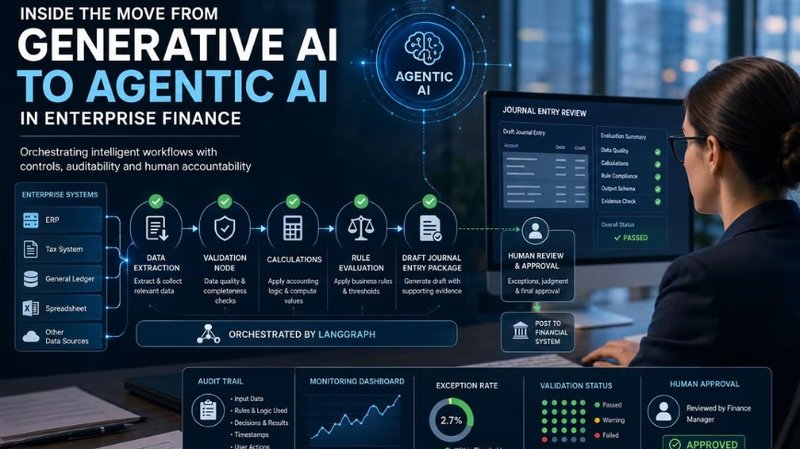
AI agents, like those proposed by Agentforce, represent a significant frontier in artificial intelligence development. They are designed to perform complex tasks, interact with various systems, and make autonomous decisions, often relying on underlying Large Language Models (LLM). Their real-world effectiveness depends on critical factors such as model robustness, its ability to handle exceptions, seamless integration with existing IT infrastructures, and managing latency and throughput to ensure timely responses. For businesses, adopting such solutions implies a profound review of processes and a careful evaluation of the technical and operational capabilities required for effective deployment.
The Enterprise Context: Between Hype and Concrete Requirements
The AI market is characterized by intense activity and considerable enthusiasm, but technical and strategic leaders in enterprises must navigate between the hype and the need for concrete solutions. For CTOs, DevOps leads, and infrastructure architects, evaluating platforms like Agentforce goes beyond sales figures. It is crucial to analyze the Total Cost of Ownership (TCO), data sovereignty, compliance requirements, and the ability to integrate with existing technology stacks.
While cloud-based solutions offer scalability and agility, self-hosted or hybrid alternatives can provide greater control over data and infrastructure, crucial aspects for regulated industries or companies with stringent security policies. The choice between cloud and on-premise deployment for AI workloads, especially those involving LLMs and intelligent agents, entails significant trade-offs in terms of initial costs (CapEx vs OpEx), operational management, and specific hardware requirements, such as GPU VRAM for inference.
Evaluating AI Maturity for the Enterprise
In a landscape where AI promises are increasingly bold, actual delivery capability becomes the true test. For organizations aiming to integrate artificial intelligence into their operations, it is imperative to adopt a critical approach, focusing on tangible results and the long-term sustainability of solutions.
The evaluation of an AI platform's maturity must consider not only its stated functionalities but also its adaptability to the specific constraints of the enterprise environment, including aspects related to data sovereignty and infrastructure control. AI-RADAR, for instance, offers analytical frameworks on /llm-onpremise to support decision-makers in evaluating the trade-offs between different deployment strategies, helping to distinguish between ambitious visions and solutions that can genuinely generate value in the enterprise context.







💬 Comments (0)
🔒 Log in or register to comment on articles.
No comments yet. Be the first to comment!