
Samsung has chosen an opportune moment to reinforce its 2-nanometer roadmap: as demand for AI silicon strengthens, the Korean foundry is courting AI chip designers with a manufacturing node that promises to redefine efficiency for the most demanding workloads.
The shift to 2 nm marks the adoption of gate-all-around (GAA) transistors, an architecture that surrounds the channel on all sides, offering far finer current control than FinFETs. For developers of accelerators targeting Large Language Models and massive parallel compute, this means higher transistor density and lower energy per operation — two levers that directly affect the total cost of ownership (TCO) of a computing infrastructure, whether cloud-based or deployed on-premise.
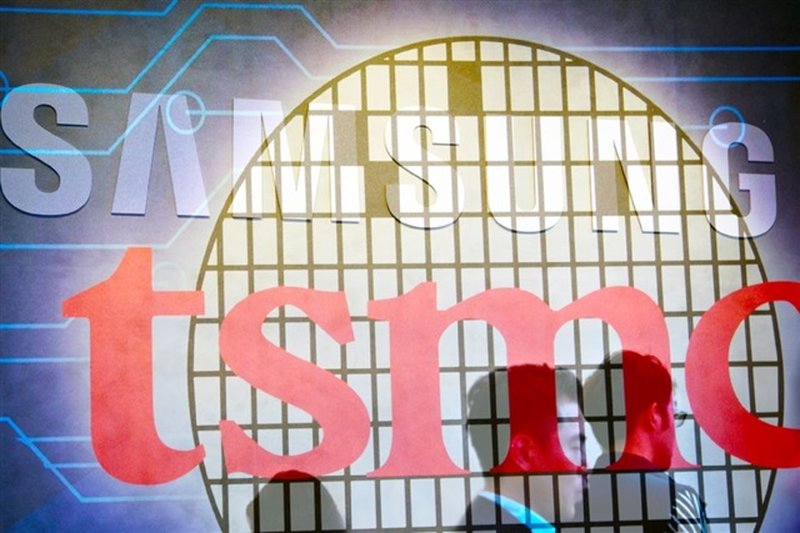
Samsung is not alone in this race. TSMC and Intel Foundry Services have competing roadmaps, but the Korean player’s move — with the 2 nm node expected sooner than many analysts had assumed — aims to attract companies that design their own AI chips in-house and have so far relied almost exclusively on its rivals. This competition is not limited to hyperscalers: even organizations evaluating self-hosted inference deployments are starting to watch node evolution closely, because each lithographic generational leap determines how much compute can be packed into a single server and with what power budget.
For those currently running inference on on-premise hardware — typically GPUs with large VRAM pools or dedicated solutions — a 2 nm chip could deliver a throughput-per-watt jump that changes the economics. Less dissipated heat, reduced cooling infrastructure, higher rack density: factors that make it more feasible to handle large models without having to surrender to the convenience of cloud APIs.
There are no public details yet about specific chips that will emerge from this node, but the mere existence of a more aggressive production timeline signals that the semiconductor market is refocusing R&D priorities toward AI workloads. Samsung, in this landscape, aims to become a manufacturing partner for the sector’s key players, offering not only a leading-edge lithographic process but also advanced packaging technologies capable of integrating memory and logic into a single package — another crucial piece for cutting latency and power consumption in inference pipelines.
The path taken confirms that foundry competition will increasingly hinge on the ability to serve the specific needs of the AI ecosystem: printing smaller transistors is no longer enough; it takes a design and manufacturing ecosystem tuned for workloads that blend vector compute, data movement, and memory access in ways that differ sharply from the past.




💬 Comments (0)
🔒 Log in or register to comment on articles.
No comments yet. Be the first to comment!