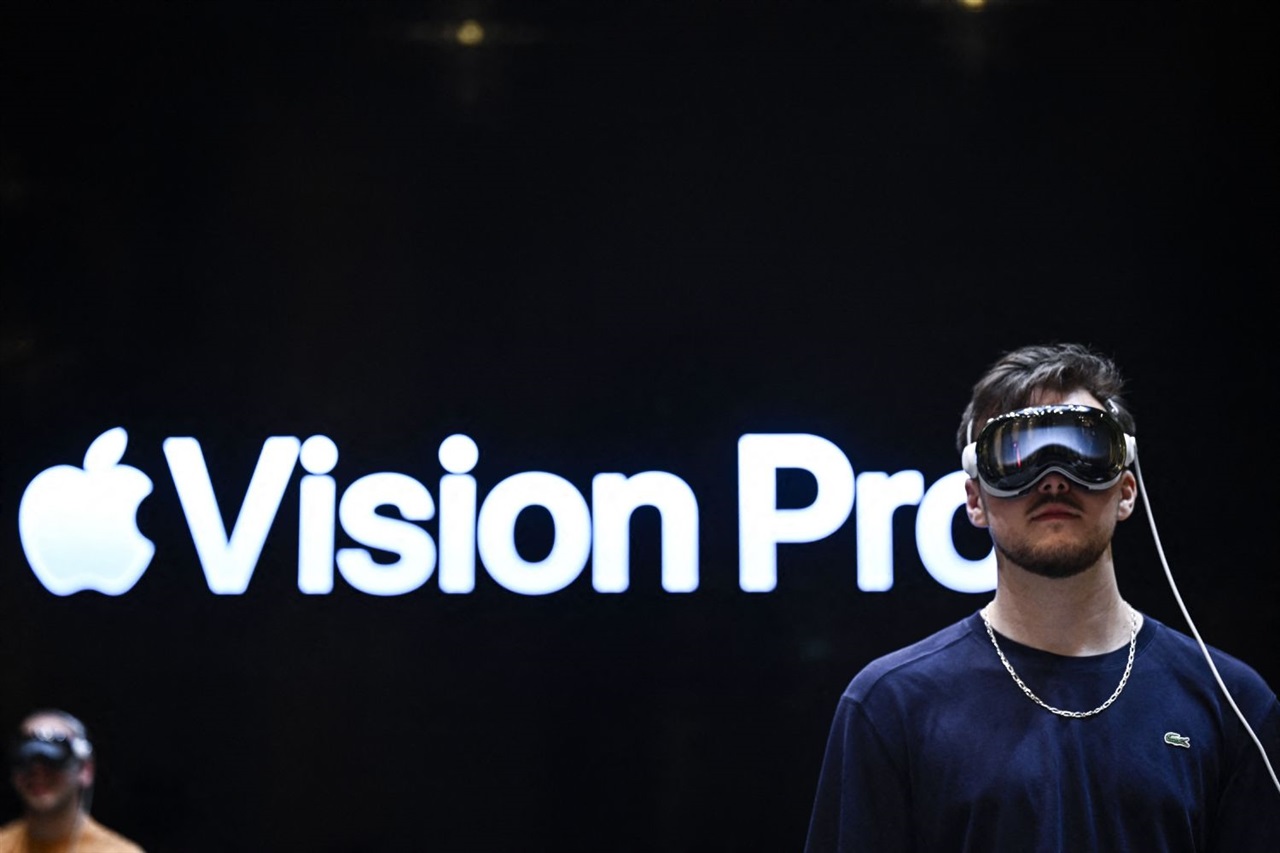
Samsung Display's reported decision to ditch a cheaper XR panel destined for Apple and shift toward AI smart glasses is more than a supply-chain whisper. It marks a directional signal for the entire AI hardware ecosystem.
Mixed-reality headsets like Apple Vision Pro are still built around high-power, cloud-tethered experiences: immersive, impressive, but expensive and dependent on external infrastructure. Samsung Display's pivot to AI smart glasses suggests the center of gravity is moving to lightweight, self-contained devices where processing happens locally, on low-power chips with dedicated neural engines. This is no longer about displaying content computed elsewhere; it's about running LLM inference on-device, in real time, never leaving the user's physical perimeter.
For those tracking the on-premise deployment landscape, the parallel is clear. Just as enterprises self-host language models to retain full control over data, AI smart glasses embody the sovereignty principle at the edge: no round-trips to remote servers, no biometric or contextual data leaving the device. Privacy becomes an architectural property, not a contractual disclaimer. This reorders incentives: SoC vendors with integrated NPUs and edge-optimized frameworks gain strategic weight over cloud bandwidth providers.
The move reveals a structural lesson already internalized in the LLM world: total cost of ownership (TCO) for AI services depends less on trillion-parameter clusters in data centers and more on efficiency per token processed locally. An 80 GB VRAM server GPU can be substituted, in many consumer and enterprise workflows, by chips drawing a few watts and running quantized models in INT8 or FP16 with acceptable latency. Smart glass hardware accelerates that trend, pulling it out of racks and into wearable objects.
Who benefits? Edge AI IP providers, low-power chip designers, and teams working on quantization and lightweight inference pipelines. Who stands to lose? Platforms that monetize centralized data streaming and cloud dependency. Apple's Vision Pro is a prime expression of that model. If the direction holds, we are looking at a healthy fragmentation of inference, where data sovereignty becomes not just an enterprise checkbox but a mass-market device attribute.




💬 Comments (0)
🔒 Log in or register to comment on articles.
No comments yet. Be the first to comment!