
Labor Stability and Its Impact on Tech
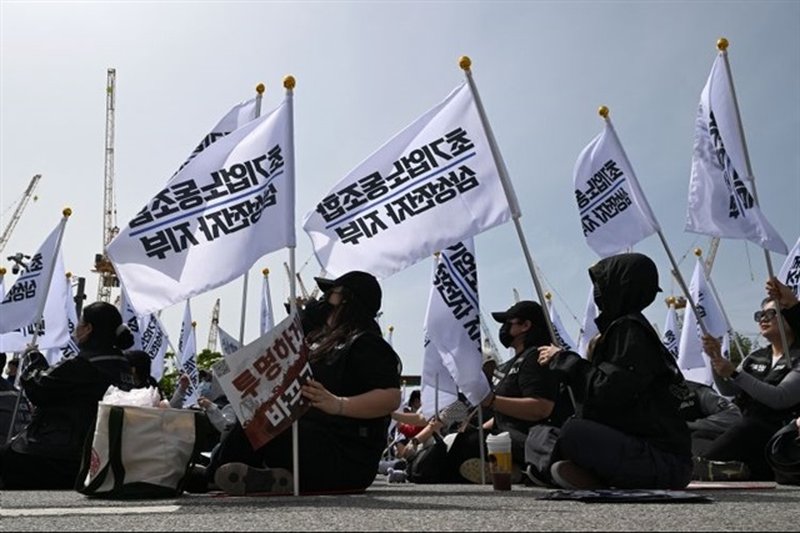
Samsung, one of the world's technology giants, recently secured a court injunction that averted an imminent strike action at the last minute. The decision allowed talks between the company and unions to resume, with unions now barred from occupying or locking facilities and obstructing workers. This episode, while specific to Samsung's internal dynamics, offers a broader reflection on the interconnections and vulnerabilities of global supply chains in the technology sector.
The operational stability of a key player like Samsung is of paramount importance not only for its final products but also for the entire industry. The company is a critical supplier of essential components, including memory (DRAM and NAND), displays, and foundry services, which underpin a wide range of devices and infrastructures, including the servers and GPUs required for artificial intelligence workloads.
The Supply Chain and On-Premise LLM Deployments
For organizations choosing to implement Large Language Models (LLM) in self-hosted or on-premise environments, the availability and predictability of the hardware supply chain are critical factors. Building a robust AI infrastructure requires the procurement of specific components, from high-VRAM GPUs to high-density memory modules and high-performance storage systems. Any disruptions in the production or delivery of these elements can significantly impact project timelines and costs.
A company like Samsung, with its vast manufacturing footprint, plays an irreplaceable role in this ecosystem. Its factories are responsible for a substantial share of the world's semiconductor and memory production. Therefore, any operational instability, such as that stemming from labor disputes, can generate ripple effects throughout the entire supply chain, influencing enterprises' ability to acquire the necessary hardware for their local AI deployments.
Implications for TCO and Data Sovereignty
Supply chain disruptions are not limited to delaying projects; they can also profoundly impact the Total Cost of Ownership (TCO) of AI infrastructures. Component scarcity can lead to price increases, forcing companies to revise CapEx budgets or delay investments. Furthermore, the need to seek alternative suppliers in emergency situations can introduce logistical complexities and additional costs, compromising the overall efficiency of the deployment.
For organizations prioritizing data sovereignty and complete control over their AI workloads, the reliance on a stable supply chain is even more pronounced. The ability to build and maintain an air-gapped environment or local infrastructure directly depends on the possibility of reliably and timely procuring the necessary hardware. Supply chain resilience thus becomes a fundamental pillar for control and compliance strategy.
Future Outlook and Resilience Strategies
The Samsung episode serves as a reminder for CTOs, DevOps leads, and infrastructure architects: strategic planning for on-premise LLM deployments must consider not only technical specifications and performance but also the robustness of the global supply chain. Diversifying suppliers, creating strategic inventories, and adopting flexible procurement models can mitigate the risks associated with potential disruptions.
In a rapidly evolving technological landscape, where the demand for AI hardware is constantly growing, the ability to navigate supply chain complexities will be a distinguishing factor for the success of artificial intelligence projects. For those evaluating on-premise deployments, analytical frameworks on AI-RADAR can help assess trade-offs and build resilient strategies, ensuring that infrastructure decisions are based on a comprehensive understanding of market constraints and opportunities.




💬 Comments (0)
🔒 Log in or register to comment on articles.
No comments yet. Be the first to comment!