This is not mere industrial repositioning. It signals that the competition for AI hardware is reshaping value chains more profoundly than accelerator announcements alone suggest. On one side, Samsung is tightening its vertical nanotech ecosystem; on the other, LG is pivoting resolutely toward semiconductor manufacturing equipment. Both thrusts aim straight at the heart of a problem familiar to anyone evaluating on-premises deployment: the availability and quality of the physical components on which LLMs must run.
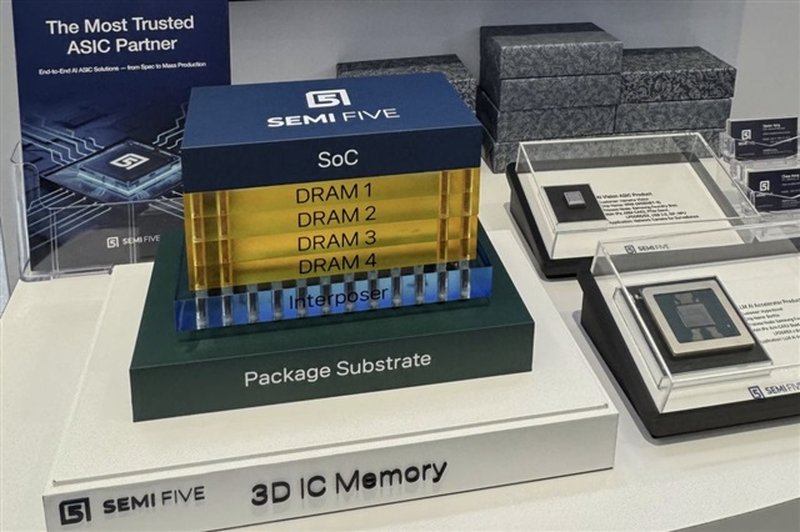
The Suwon giant is no stranger to the narrative of nanotechnology in chips. But today, “ecosystem” does not just mean shrinking transistors — it spans advanced materials, 3D packaging, interposers, and hybrid bonding techniques. What Samsung is trying to lock in is a supply chain where control goes beyond lithography to everything surrounding silicon, from substrates to thermal management, all of which become critical when nodes push below 3 nanometers and chiplets multiply to handle massive inference workloads. For on-premises computing, an accelerator’s build quality is no footnote: it impacts memory density, effective bandwidth, and ultimately token-by-token throughput.
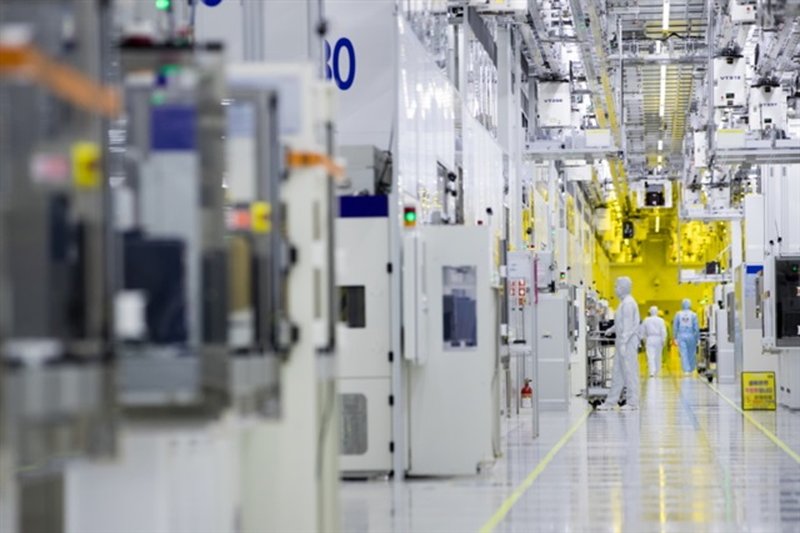
For its part, LG enters a space where margins have seen double-digit growth ever since AI demand turned every slice of production capacity into a strategic asset. Targeting fab equipment — deposition, etch, metrology — means positioning upstream of every possible compute architecture, be it a GPU, an ASIC, or a neuromorphic accelerator. In other words, LG is betting that the real bottleneck will not be model design but the physical ability to produce wafers in adequate volumes and yields. That reading finds support in lead times for process tools that remain stretched, and it hints that “data sovereignty” is not the only form of independence that matters — there is a “manufacturing sovereignty” that Europe and other players are beginning to take seriously.
For the AI-RADAR landscape, the takeaway is twofold. First, Samsung’s and LG’s choices reinforce the notion that hardware differentiation for on-premises deployment will be less about the brand on the card and more about integrated supply chains: those controlling materials and machinery can dictate rules around thermal compatibility, node scalability, and energy efficiency — all variables that shape the real TCO of a self-hosted cluster. Second, LG’s move signals a broadening of the tooling supplier market, which could translate into greater availability of second-source production lines, reducing the risk of vendor lock-in to a single accelerator maker. Anyone designing an on-prem environment around open LLMs can read these dynamics as an early indicator of future hardware flexibility and more predictable infrastructure refresh costs.





💬 Comments (0)
🔒 Log in or register to comment on articles.
No comments yet. Be the first to comment!