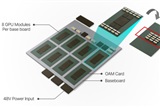
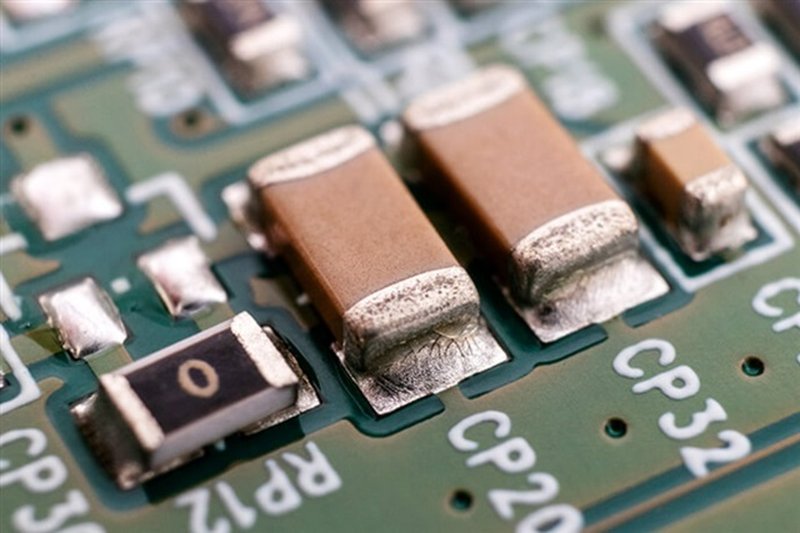
Samsung Electro-Mechanics has won a $200 million order to supply multi-layer ceramic capacitors — MLCCs — for AI servers. The announcement, light on technical specifics but heavy on the dollar figure, shines a light on a widely overlooked corner of AI infrastructure: the tiny passive components that keep GPUs, memory modules, and baseboards alive. Without them, the most advanced silicon remains dead weight.
A single GPU module inside an AI accelerator can require hundreds of MLCCs to stabilize power delivery, filter electrical noise, and maintain signal integrity at ultra-high frequencies. Multiplied across thousands of servers in today’s datacenters, the numbers become staggering. It’s this scale that the Samsung Electro-Mechanics deal makes tangible: $200 million is not a one-off purchase, but a reflection of an industry building computational capacity at breakneck speed.
Passive components, active impact
MLCCs are among the most common electronic parts, yet in an AI context their role becomes critical. As power budgets soar — boards drawing 700 W or more — and signal frequencies climb, filtering and decoupling capability turns into a gating factor. A poorly designed power distribution network can destabilize an entire compute node, wasting the investment in GPUs and VRAM.
Samsung Electro-Mechanics is one of the world’s two largest MLCC producers, alongside Japan’s Murata. The size of this order suggests that major AI server assemblers — the ODMs supplying cloud providers and enterprises — are locking in supplies to prevent bottlenecks. It’s not just about price; the availability of high-performance MLCCs can determine how fast new machines reach production.
The ripple effect on the AI supply chain
For those watching from AI-RADAR’s perspective — on-premise deployment, hardware control, TCO — the order exposes a structural vulnerability. While attention fixates on GPUs, HBM memory, and optical interconnects, the passive component chain remains opaque and concentrated in a few hands. An MLCC shortage, like the one in 2018–2019 driven by smartphone demand, could slow AI server output irrespective of advanced chip availability.
Anyone planning an on-premise cluster must therefore build into their risk assessment not just GPU pricing, but the ability to procure complete systems. A vendor that has sealed multi-year supply agreements for key components will deliver on time; others may face delays. The geographic concentration of MLCC production — South Korea and Japan — adds another layer of complexity in a geopolitical climate where technological supply security has become a strategic priority.
Samsung Electro-Mechanics’ order is not merely an accounting line. It is a symptom of a hardware ecosystem organizing itself around AI with the same manufacturing intensity we witnessed for smartphones. And as with smartphones, the smallest components can become the hardest to obtain.




💬 Comments (0)
🔒 Log in or register to comment on articles.
No comments yet. Be the first to comment!