
Samsung Electro-Mechanics' Strategic Role in the AI Supply Chain
Samsung Electro-Mechanics, a leading company in the electronic components sector, has reportedly strengthened its position within the supply chain for Groq 3 LPUs (Language Processing Units). These processors are emerging as an alternative to traditional GPUs for specific artificial intelligence workloads. This move underscores the increasing importance of specialized component suppliers in an expanding AI market, where the demand for high-performance hardware is constantly growing.
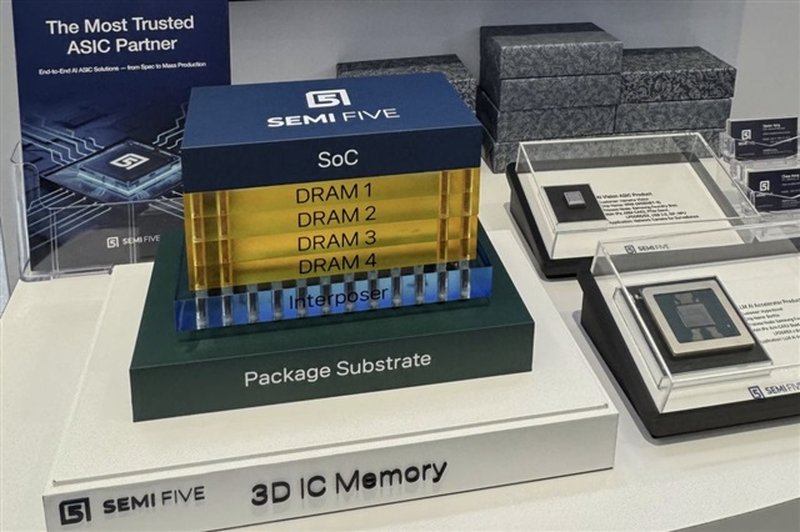
The Korean company's focus is particularly on the production of FC-BGA (Flip-Chip Ball Grid Array) substrates. These components are fundamental for the assembly of advanced chips, including those intended for accelerating artificial intelligence models. Their complexity and the need for precision in manufacturing make them a critical element for the performance and reliability of the final processors.
The Importance of FC-BGA Substrates for AI Processors
FC-BGA substrates represent a crucial interface between the chip die and the motherboard. Their function extends beyond simple electrical connection: they must ensure high-speed signal integrity, manage thermal dissipation, and provide stable power to the chip. For high-performance processors like Groq 3 LPUs, which process large volumes of data with low-latency requirements, the quality and efficiency of the substrate are determining factors.
Flip-Chip technology, in particular, allows for a much higher interconnection density compared to traditional methods, reducing signal path distances and improving electrical performance. This is essential for LLM inference workloads, where every millisecond counts. Samsung Electro-Mechanics' investment in this sector not only consolidates its leadership but also responds to the market's need for increasingly sophisticated components to support the evolution of AI.
Market Context and Implications for On-Premise Deployment
The AI accelerator market is characterized by strong demand and increasing diversification of solutions. Alongside GPUs, LPUs like those from Groq offer a different architectural approach, often optimized for low-latency inference, a crucial aspect for real-time applications. This specialization introduces new trade-offs for companies evaluating the deployment of LLM workloads.
For CTOs, DevOps leads, and infrastructure architects considering self-hosted or on-premise solutions, the availability and quality of supply chain components are critical factors. Reliance on a limited number of suppliers or scarcity of specific components can impact TCO, deployment times, and the scalability of AI infrastructures. Data sovereignty and regulatory compliance drive many organizations towards on-premise architectures, making the robustness of the hardware supply chain a key element for strategic planning.
Future Outlook and Supply Chain Resilience
The strengthening of Samsung Electro-Mechanics' role in Nvidia's Groq 3 LPU supply chain highlights the complexity and interdependence of the AI hardware ecosystem. The ability to ensure a stable supply of critical components like FC-BGA substrates is fundamental to supporting innovation and growth in the sector. This scenario also emphasizes the importance for companies to carefully evaluate their hardware options, considering not only technical specifications but also supply chain resilience and suppliers' ability to meet long-term needs.
Diversification of suppliers and investment in advanced manufacturing technologies are essential steps to mitigate risks and ensure that AI solutions, both cloud and on-premise, can be effectively implemented and scaled. For those evaluating on-premise deployments, analytical frameworks are available at /llm-onpremise to help assess the trade-offs between different architectures and the implications of the supply chain.







💬 Comments (0)
🔒 Log in or register to comment on articles.
No comments yet. Be the first to comment!