The signal: from prototypes to industrial supply logic
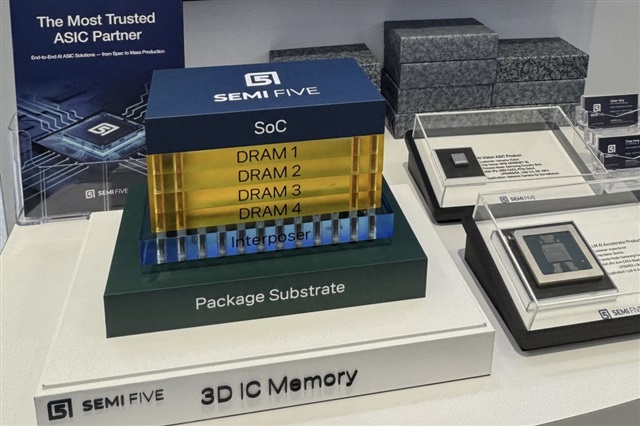
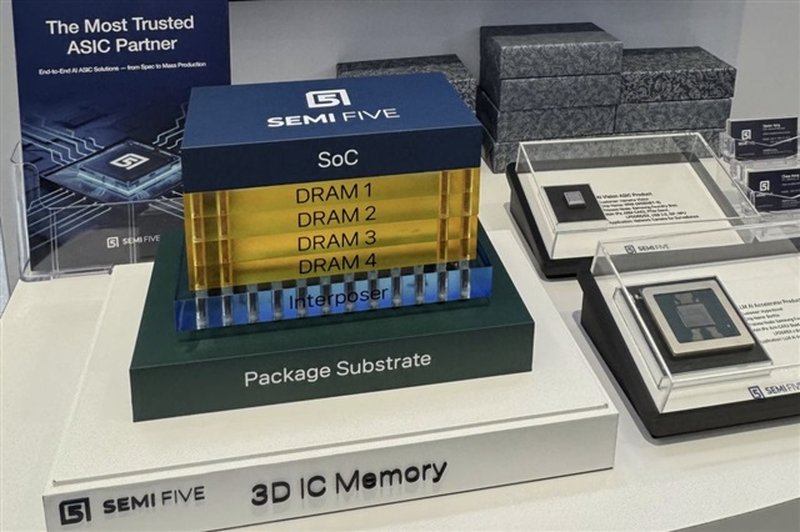
SEMIFIVE has started production of its HyperAccel chips on Samsung's 4-nanometer node. The news should not be read only as a technical milestone: a dedicated LLM accelerator enters production on an advanced process just as capacity on that node tightens. For those observing AI infrastructure, this signals that specialized silicon is moving out of the prototyping phase and beginning to operate under industrial supply rules.
The market for LLM accelerators is splitting in two directions. On one side remain GPUs, with a mature software ecosystem, a broad developer base, and the programming flexibility needed to handle different models and workloads. On the other, custom ASICs are emerging, designed for specific inference workloads, with lower power consumption and potentially lower cost per token when the workload is stable and predictable. HyperAccel production does not introduce a third path, but it makes the second more concrete.
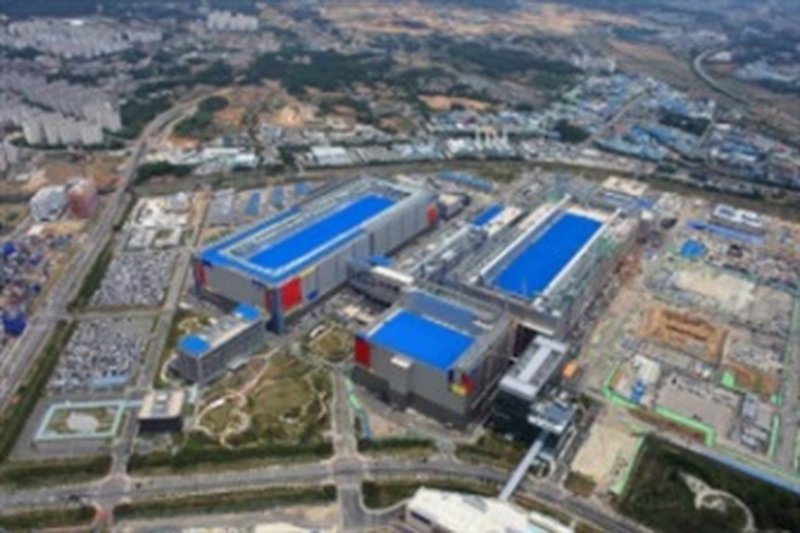
The source of friction is the production node. Samsung's 4nm is contested by smartphone chips, CPUs, and high-end GPUs. The choice of a specialized silicon producer to position itself on that node shows that LLM accelerators must also compete for wafers in a context of limited supply. This is no longer just a design problem, but a matter of access to production capacity.
For AI-RADAR, the initial point is simple: those planning self-hosted deployments need to start treating ASICs as a procurement component, not a laboratory curiosity. The question is not whether a faster chip exists, but whether that chip will be available in the volumes and timelines required by the infrastructure.
The 4nm node as a bottleneck: the supply chain narrows
The tightening of capacity on Samsung's 4nm node introduces a second layer of pressure. Suppliers without guaranteed volumes risk longer delivery times or renegotiated wafer allocations. This changes the calculation for anyone evaluating an ASIC project: having a valid design is not enough; you also need a consolidated foundry relationship or an order large enough to justify access to production.
The medium-term consequence is likely concentration. Smaller teams, research projects, and startups with limited volumes may not be able to bring a custom accelerator to production without leaning on an industrial partner. The benefit goes to those with existing foundry relationships, substantial orders, or a customer base able to absorb the investment. Not everyone who wants dedicated silicon will get it on the same terms.
For AI infrastructure managers, the capacity squeeze is not only about chip vendors. It filters down into procurement lead times, final costs, and roadmap predictability. A custom ASIC is not an off-the-shelf component: its availability depends on upstream allocation decisions, often outside the buyer's control.
This scenario strengthens the need to evaluate supply chain resilience alongside silicon performance. Design quality matters, but available production capacity can determine whether a project reaches production or remains on paper.
TCO and predictability: the proving ground for LLM ASICs
A custom accelerator can reduce TCO when the workload is predictable. If the model does not change often, inference requests have known latencies and batch sizes, and hardware optimization can be pushed to levels that a general-purpose chip rarely reaches, energy efficiency and cost per token can improve measurably. This applies to deployments with consolidated models and stable loads, where the hardware can be designed around a known usage pattern.
The trade-off is equally relevant. An ASIC is less adaptable to new models, new quantization schemes, or fine-tuning needs. In a landscape where LLMs evolve rapidly, locking hardware into a fixed architecture can become a hidden cost. If a new model requires different numerical precision or a different parallelism scheme, the custom accelerator may not adapt without a new tape-out.
Economic evaluation cannot stop at purchase cost or steady-state consumption. It must include platform lifespan, the frequency of model updates, and the cost of migrating to different hardware. An ASIC that excels on a single model can prove expensive if that model is replaced or updated within a few months.
For self-hosted deployments, TCO also includes operational factors: power consumption, maintenance, serving software, and integration with existing pipelines. A silicon that is energy-efficient but locked to a single execution format can generate indirect costs that exceed the savings on a single token.
Serving software and compatibility: where deployment decisions are made
In the GPU world, available VRAM constrains model size and quantization choices. The mature software ecosystem allows switching between frameworks, experimenting with batching techniques, and managing complex pipelines without writing integration from scratch. For ASICs, this software layer is often the weak point: the silicon may be fast, but if the runtime does not support expected functions, the theoretical advantage does not translate into real performance.
In LLM deployments, factors such as tokenization, batch management, parallelism, and quantization support determine effective performance. A custom accelerator without mature serving software, without integration with popular frameworks, and without adequate operational documentation can slow adoption even when the hardware is promising. Integration cost must be counted in TCO.
For on-premise infrastructure operators, compatibility with existing tools is a requirement, not an option. Containerization, orchestration, monitoring, and data sovereignty requirements must coexist with the chosen accelerator. If an ASIC requires proprietary software with poor interoperability, the infrastructure team may end up managing a parallel environment with additional operational costs.
AI-RADAR observes that deployment decisions hinge not only on compute power. Serving software and framework compatibility are the less visible but often decisive part of TCO. An accelerator that integrates poorly with existing pipelines can erase cost-per-token advantages.
Who gains and who loses from delivery contraction
The production capacity squeeze benefits those with guaranteed volumes, consolidated foundry relationships, or orders large enough to absorb custom ASIC costs. Industrial partners with priority wafer access can also benefit from scarcity, negotiating better terms and securing supply continuity.
Conversely, smaller teams, research projects, and startups with limited volumes risk being left out or facing significant delays. The need to renegotiate wafer allocations can push delivery times out and raise costs, making the custom approach less accessible to those without sufficient scale.
This dynamic can favor market concentration. Not everyone who wants a custom accelerator will bring it to production without an industrial partner. Hardware diversity may shrink, affecting innovation capacity and the variety of solutions for inference workloads.
For organizations evaluating self-hosted infrastructure, supply concentration introduces a risk element. Relying on a single ASIC vendor tied to a tight production node can create future bottlenecks. Supply chain resilience becomes part of the evaluation, alongside cost and performance.
What to watch in the coming months: signals beyond press releases
Production announcements are only the first indicator. In the coming months, it is worth monitoring capacity allocations, actual delivery lead times, and foundry agreement announcements. The transition from prototyping to volume production is not guaranteed: wafer availability can determine whether promises turn into real deliveries.
A second signal concerns ASIC flexibility. It is useful to watch whether vendors support new quantization schemes, allow model updates, or lock hardware to a fixed architecture. The ability to adapt to different models, even in limited ways, can make a difference in long-term TCO.
The third front is software. The maturity of serving, framework integration, container availability, and monitoring tools are less visible but equally important indicators. An accelerator with a weak software ecosystem risks remaining a lab experiment rather than an operational platform.
For AI-RADAR, the SEMIFIVE case signals a shift in incentives along the entire supply chain. Production capacity availability counts as much as design quality. Those planning on-premise deployments can follow not only benchmarks but also operational sustainability and supply resilience. The coming months will show whether ASICs become a stable component of AI infrastructure or remain a niche for very specific workloads.





💬 Comments (0)
🔒 Log in or register to comment on articles.
No comments yet. Be the first to comment!