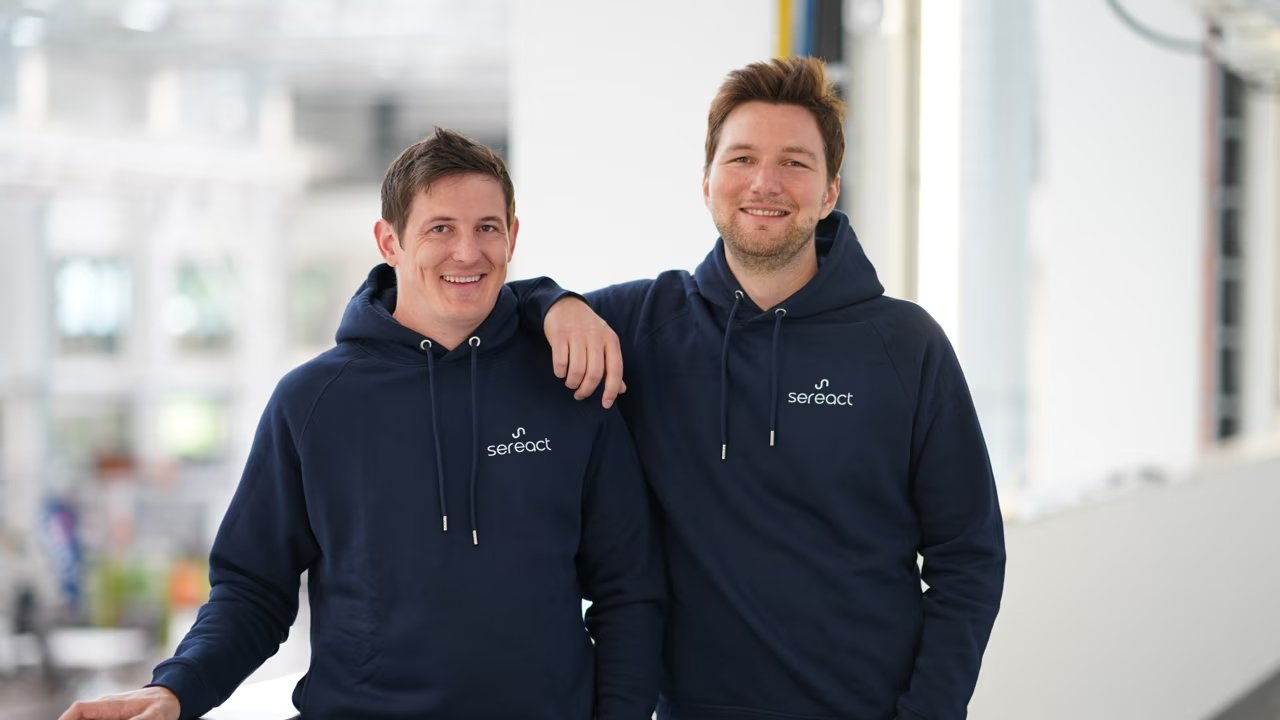
Sereact Raises $110 Million for Robotics AI and Global Expansion
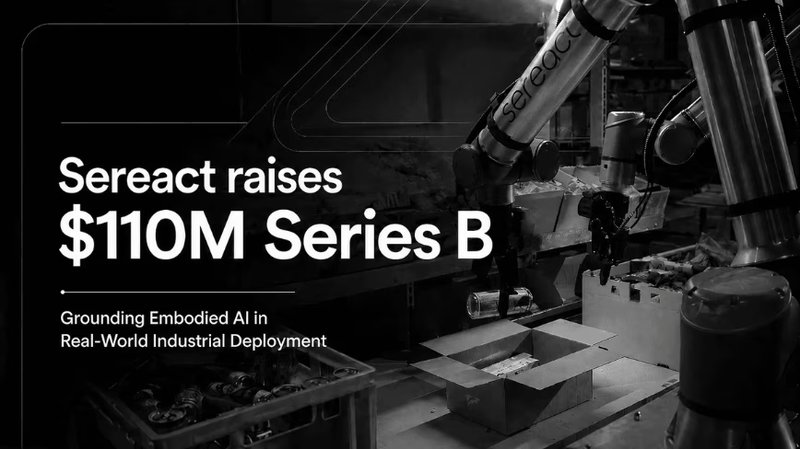
German startup Sereact, a specialist in artificial intelligence-powered robotics solutions, has announced the successful closure of a $110 million Series B funding round. This capital injection is earmarked to support the development and scaling of its latest AI model, Cortex 2, and to finance its strategic expansion into the US market.
The round was led by Headline, a venture capital firm with offices in San Francisco and Berlin, and saw participation from Bullhound Capital, Felix Capital, and Daphni. Returning investors included Air Street Capital, Creandum, and Point Nine. This latest funding brings Sereact's total capital raised to over $140 million, which includes the €25 million (approximately $29 million) Series A round last year, led by Creandum.
Cortex 2: Hardware-Agnostic AI for Robots
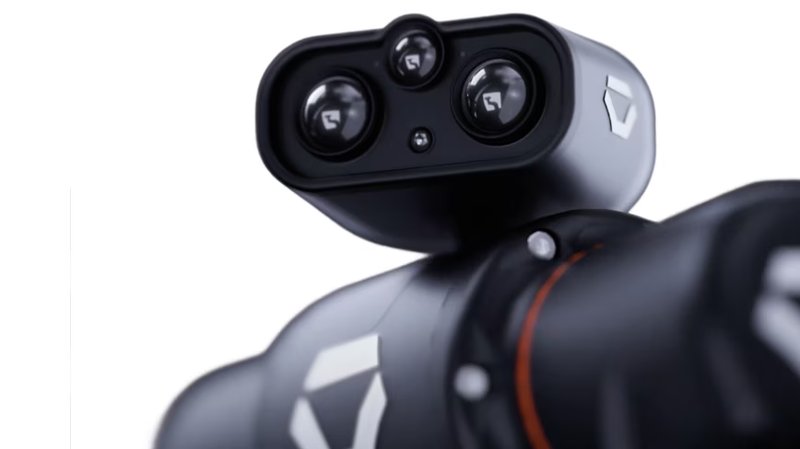
Founded in 2021 and headquartered in Stuttgart, Sereact employs approximately 100 people and focuses on developing AI-powered robotics technologies. These solutions are already being deployed across various industries and use cases, serving customers in both the United States and Europe. The core of Sereact's offering is AI software that provides robots with general-purpose visual perception and manipulation capabilities, enabling them to interpret their environment and devise intelligent strategies to perform a wide range of physical tasks.
The majority of the new funding will be dedicated to the development of Cortex 2, the AI model launching today. Cortex 2 is designed to train robots on different physical behaviors, allowing them to select the approach most likely to succeed. Ralf Guide, co-founder and CEO of Sereact, emphasized the model's versatility: "Cortex takes AI out of the picking bin and into work where contact matters - assembly under tension, kitting, placement where every millimeter counts. We don't build robots. We don't sell services. We ship one thing: the model that runs on any robot. Single arm, dual arm, humanoid, fixed cell - same brain across all of it." This "software-only" and hardware-agnostic philosophy is a distinctive element of Sereact's approach.
The "Data Flywheel" and US Market Expansion
Expansion into the United States represents a fundamental pillar of Sereact's strategy, with the opening of a new office in Boston. The company already boasts a notable client base, including names like BMW, Daimler Truck, Bol, and Active Ants. A unique aspect of the Sereact system is its ability to generate a real-time "data flywheel." The deployment of its products in real-world contexts produces a continuous stream of data that Sereact systems use to constantly improve their performance. This approach distinguishes it from systems primarily trained on synthetic data, offering a competitive advantage in terms of adaptability and robustness.
For companies evaluating the implementation of AI solutions in industrial environments, a model's ability to operate on heterogeneous hardware and learn from real-world field data is crucial. This reduces reliance on specific cloud infrastructures and supports on-premise or edge deployment scenarios, where data sovereignty and low latency are priorities. AI-RADAR, for instance, offers analytical frameworks on /llm-onpremise to evaluate the trade-offs between different deployment architectures, including Total Cost of Ownership (TCO) and compliance requirements.
Outlook and Impact on Industrial Automation
Sereact's funding and expansion highlight the growing demand for advanced AI solutions in the industrial robotics sector. The company's approach, focused on flexible AI adaptable to various robotic platforms, addresses the need for intelligent automation in complex production environments. The ability of a model like Cortex 2 to continuously learn and improve through real-world data collected in the field promises to accelerate the adoption of advanced robotics, making it more efficient and versatile.
The investment in Sereact not only strengthens its position in the global market but also underscores the trend towards AI solutions that offer greater control and flexibility to businesses. The possibility of integrating a unified AI "brain" across a variety of robots, without specific hardware constraints, opens new opportunities for process optimization and long-term operational cost reduction.




💬 Comments (0)
🔒 Log in or register to comment on articles.
No comments yet. Be the first to comment!