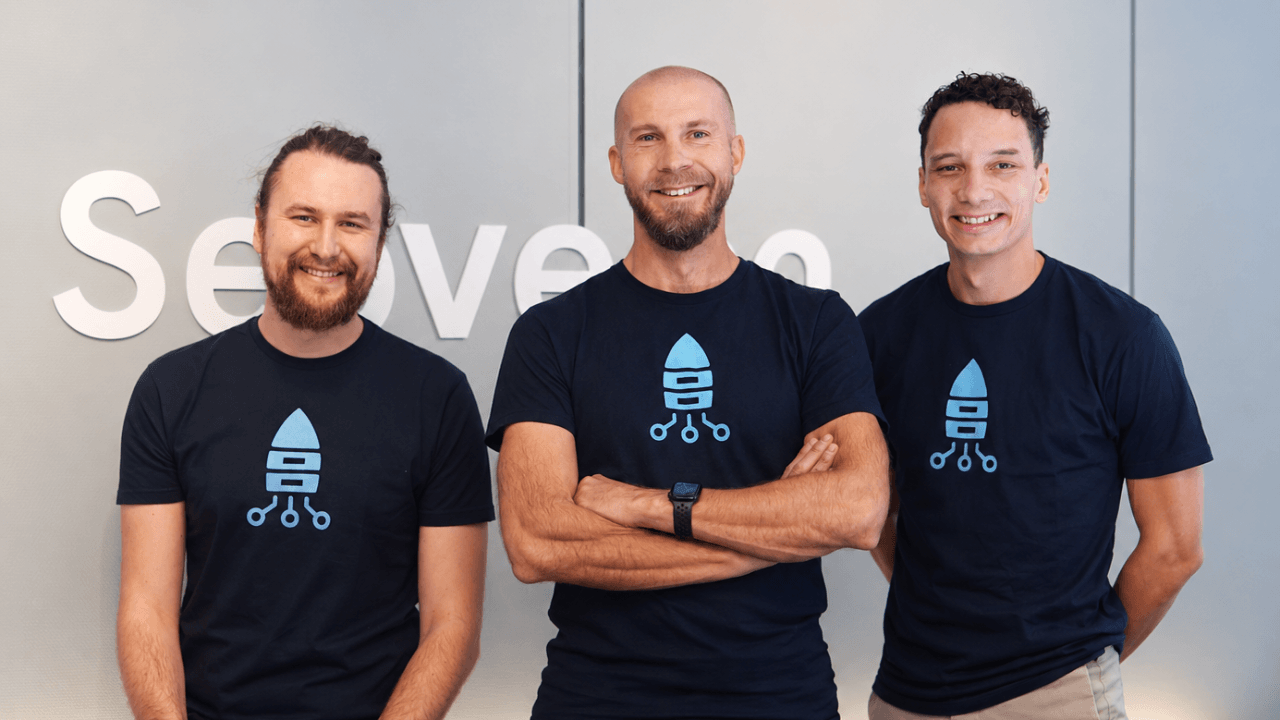
Serverpod has taken the opposite route from the rush to proprietary AI agents. The Stockholm-based company, founded in 2023 by former Google engineer Viktor Lidholt, announced App Studio in public beta: a downloadable development environment with no built-in AI. While tools like Claude Code, Codex, and Cursor accelerate code writing, the gap between prototype and product remains: databases, deployment, security, and production infrastructure still require conventional tools. Serverpod builds the perimeter around AI, not inside it.
App Studio creates standard projects with Flutter, Google's open-source framework for mobile, desktop, and web apps, and with Serverpod for backend and database. It includes setup, generated APIs, database schema, and — in the latest version — stateful hot reload across the full stack. An AI agent or a developer can update the application, server, APIs, and schema while the project keeps running, with millisecond feedback. According to Lidholt, the idea is that someone starting with vibe coding can ship the same app without changing stack.
The most interesting bet is portability across agents. App Studio does not tie code to a single assistant. Agents work on the same files, so you can close Claude Code and reopen the project with Cursor, or the reverse. Friction remains because there is no common industry standard for configuring skills and MCP servers, but multiple configurations can coexist and App Studio handles them automatically. That technical detail has second-order implications: if code generation becomes a commodity, the real exit cost is not the model but the surrounding environment. Serverpod aims to make the agent replaceable, not the infrastructure.
The deployment piece comes with Serverpod Cloud, which opens alongside App Studio. A backend and web app can be deployed with a single command, while the service manages databases, load balancing, domains, secrets, caching, and file storage. The framework itself remains open source and self-hosted: it can run on GCP, AWS, or on a server in your basement. This is the point that matters for teams evaluating data sovereignty and infrastructure control. Not coincidentally, according to the source, Serverpod is already used in production by startups, banks, medical companies, and government organizations. For those evaluating on-premise deployment, there are trade-offs between control and operational costs; AI-RADAR offers analytical frameworks at /llm-onpremise to explore these scenarios.
The problems App Studio wants to reduce go beyond configuration. Vibe-coded apps often stumble when moving from a single user to real traffic. Lidholt cites security flaws, missing access controls, unoptimized databases, and silent error handling that masks bugs. Automating setup does not replace judgment: applications involving sensitive data, complex permissions, or regulatory requirements still need an experienced engineer. Publishing to Apple's App Store or Google Play is also not yet automated, a limitation the company aims to address in the future.
The competitive picture is clear. Large agent providers could theoretically build a similar platform, but recreating the entire stack — client, server, APIs, database, development workflow, and deployment — is a substantial investment. Lidholt notes that AI models have relatively little training data on areas such as hot reload, offline-first sync, and advanced code analysis. That slows even the giants. Ultimately, the stake is not whether someone without a technical background can create an app, but whether that app can be understood, scaled, and freed from platform lock-in. Serverpod's answer is a single one: software should outlive the prompt and even App Studio itself.




💬 Comments (0)
🔒 Log in or register to comment on articles.
No comments yet. Be the first to comment!