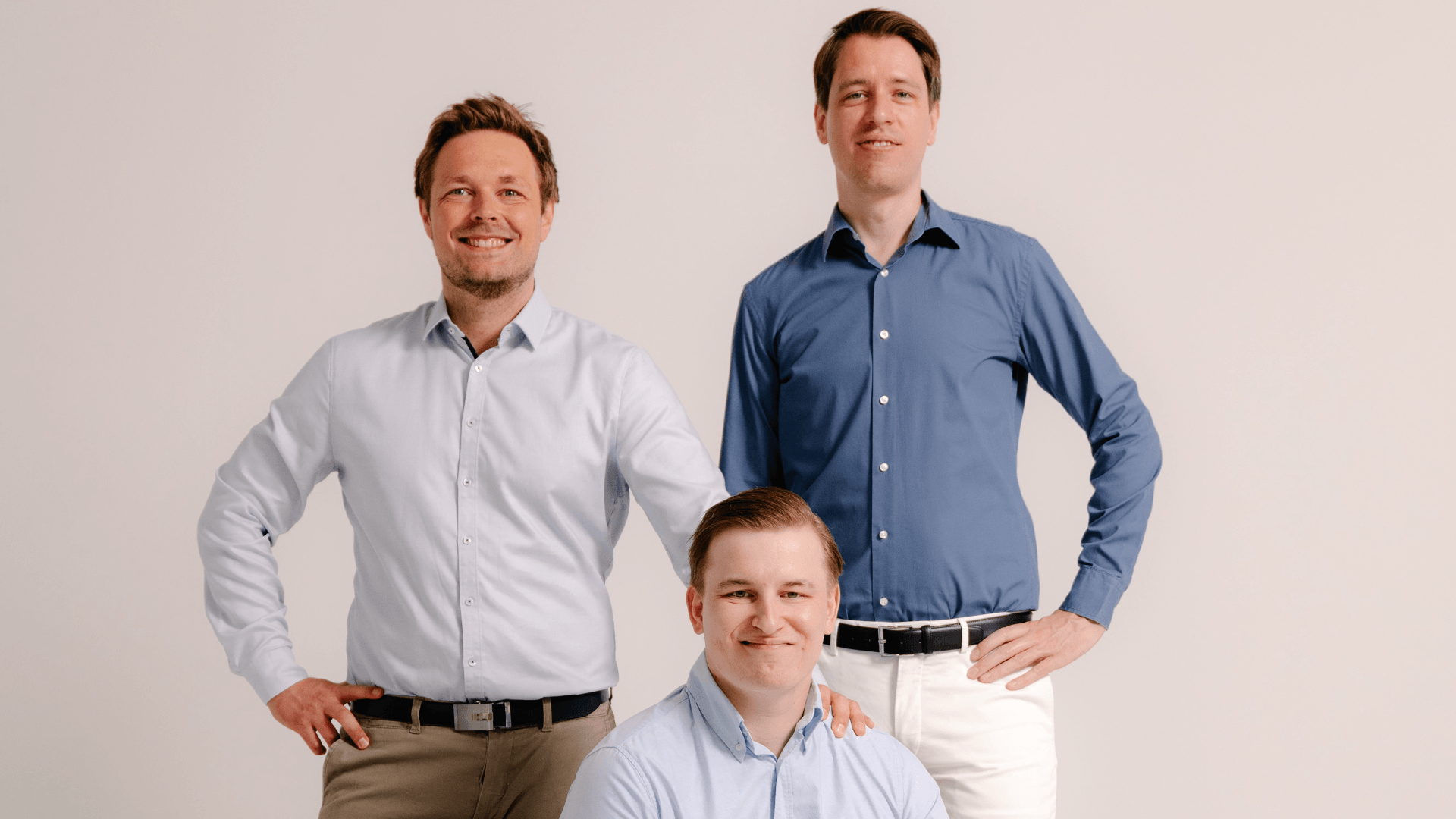
It is no longer news that generative AI is entering the enterprise. Yet how organizations will manage the wave of software agents working alongside freelancers, contractors and suppliers remains largely uncharted territory. This is where Sherpa, a German startup founded by Tristan Deschler, Tim Altpeter and Max Lang, comes in. It has just raised a $2.2 million pre-seed round co-led by Seedcamp, DN Capital, Activant Capital and Brighteye, with participation from several operator angels.
Sherpa is not selling an LLM or a generative AI tool. It is building an operating system for managing the entire lifecycle of external work, from request to payment. The platform brings together contractors, freelancers, consultants, service providers and, crucially, AI agents under a unified framework for onboarding, compliance, performance management and oversight. The core idea is a radical one: treat an algorithmic agent as a fully fledged external worker, subject to the same control requirements that apply to a human resource.
For those working on on-premise deployments and local data architectures, this move is less tangential than it may appear. Integrating AI agents into corporate workflows raises pressing questions about where data is processed, who governs it, and how regulatory compliance is maintained. If a software agent processes sensitive information without a clear control perimeter, the risk is both operational and legal. Sherpa does not directly solve the “where” the agent runs, but the “how” the organization retains control over it. Over time, this could push companies to prefer on-premise or hybrid environments for those very agents, precisely so they can enforce strict governance rules without relying on third-party cloud providers.
The point is far from trivial. Many experiments with agentic AI currently run on public clouds, but when moving to production – and as soon as financial data, intellectual property, or personal information is involved – sovereignty moves back to center stage. Sherpa seizes this need by offering an orchestration layer that is independent of the underlying infrastructure. In other words, a company using the platform could, at least in theory, decide to run its AI agents on local servers and manage them through the same dashboard it uses to coordinate freelancers. It is a separation of concerns reminiscent of the logic behind LLM serving frameworks: the runtime is local, but control and monitoring can be centralized.
The real stakes here lie in reconfiguring incentives for enterprise tool builders. While automation has traditionally been sold as a way to reduce human headcount, Sherpa tells a different story: generative AI does not replace people, it works alongside them, and it requires exactly the same management apparatus. Deschler said there is “huge demand for a single platform where all work can be requested, governed, delivered, and measured, regardless of whether it’s performed by a person or an AI agent.” That sentence captures a paradigm shift: from workforce management to work orchestration.
For CTOs and infrastructure leaders, this means the next wave of enterprise adoption will not be won on model performance or latency alone, but on the ability to integrate AI agents into existing processes without losing control. Platforms like Sherpa become the missing link between model hype and the everyday reality of HR and procurement departments. And for those already evaluating on-premise deployment of agents or LLMs, the message is clear: orchestration tools matter as much as the hardware they run on, because without them the risk is having powerful but ungovernable automata.






💬 Comments (0)
🔒 Log in or register to comment on articles.
No comments yet. Be the first to comment!