Leonardo's SignalTrace: Extending Surveillance from Vehicles to Personal Devices
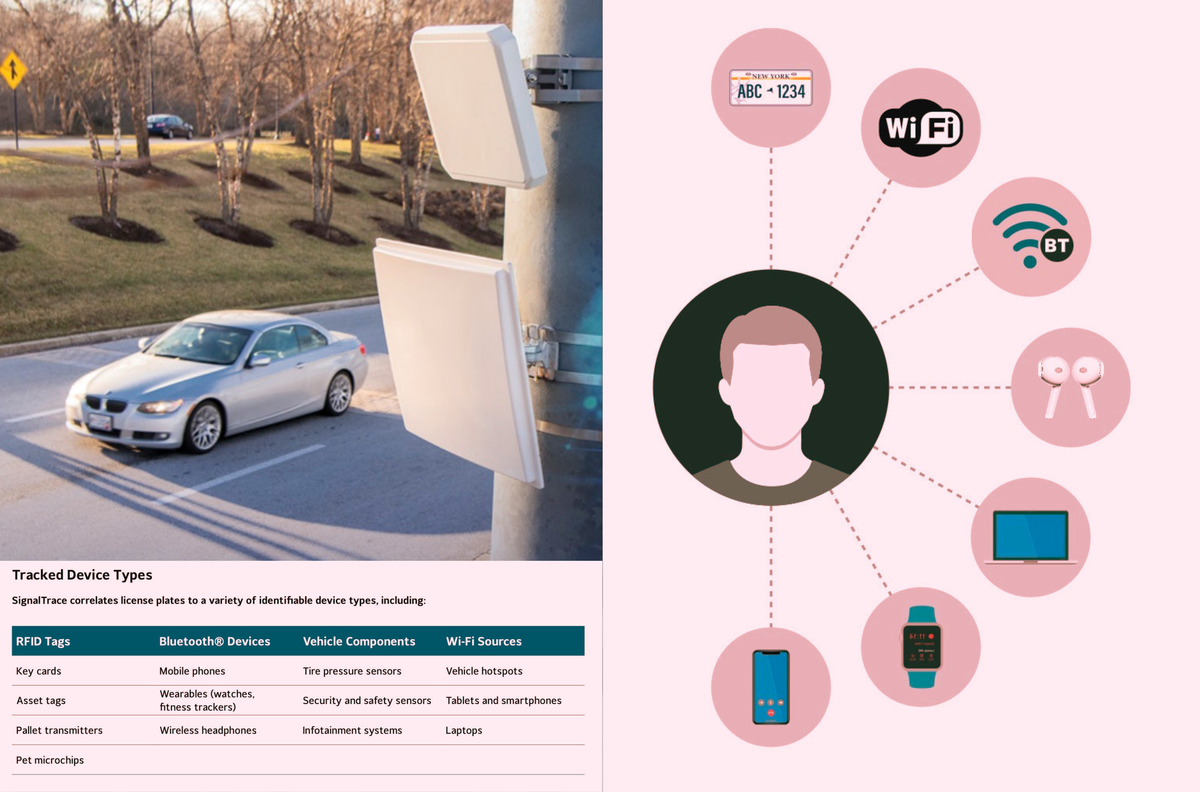
Leonardo, a leading surveillance company, has introduced SignalTrace, a technology set to redefine the capabilities of Automatic License Plate Readers (ALPRs). Traditionally used to identify passing vehicles, these devices, thanks to SignalTrace, are now capable of collecting a wide range of unique identifiers from personal electronic devices and vehicle systems. This evolution marks a significant shift, transforming ALPRs from tools focused on automotive tracking to systems capable of monitoring the location of specific individuals through their electronic fingerprints.
The implementation of SignalTrace involves integrating advanced sensors into existing ALPRs. These sensors are designed to "capture" unique identifiers from a multitude of sources. Among the data SignalTrace can acquire are Bluetooth identifiers from smartphones, wireless headphones, and fitness trackers, RFID tags present in key cards and pet microchips, as well as information from automotive components such as tire pressure sensors and infotainment systems. The technology is also capable of detecting Wi-Fi sources, including vehicle hotspots and laptops. The primary objective is to correlate these unique identifiers with vehicle license plates and time-stamped location data, thereby creating a traceable electronic fingerprint useful for investigations and forensic analysis. According to product documentation, the collected data is securely stored in an Enterprise Operations Center (EOC) for future queries and analysis.
The proliferation of ALPR systems is already widespread in the United States, where they are extensively used by law enforcement and government agencies. The introduction of SignalTrace significantly amplifies the quantity and type of data these cameras can collect, raising important questions regarding privacy and data sovereignty. While the technology promises a new level of "actionable intelligence" for investigators, allowing devices to be linked to vehicles even if a license plate is changed or removed, it also introduces new challenges. For organizations managing critical infrastructures or sensitive data, the ability to control where and how this data is processed and stored becomes fundamental. Leonardo's approach, with centralized storage in an EOC, highlights the need to carefully evaluate deployment architectures, favoring self-hosted or on-premise solutions to maintain full control over information flows.
In a technological landscape where data collection is increasingly pervasive, tools like SignalTrace present decision-makers with complex trade-offs. On one hand, the promise of greater investigative effectiveness; on the other, growing concerns about individual surveillance and personal data protection. For CTOs, infrastructure architects, and DevOps leads, evaluating similar technologies requires an in-depth analysis not only of operational capabilities but also of the implications in terms of compliance, security, and the Total Cost of Ownership (TCO) of the necessary infrastructures. Choosing an on-premise deployment for managing such sensitive data, as suggested by the use of an EOC, can offer greater control and sovereignty guarantees but also requires significant investments in hardware, maintenance, and specialized skills. AI-RADAR offers analytical frameworks on /llm-onpremise to evaluate these trade-offs, supporting strategic decisions on on-premise deployments.








💬 Comments (0)
🔒 Log in or register to comment on articles.
No comments yet. Be the first to comment!