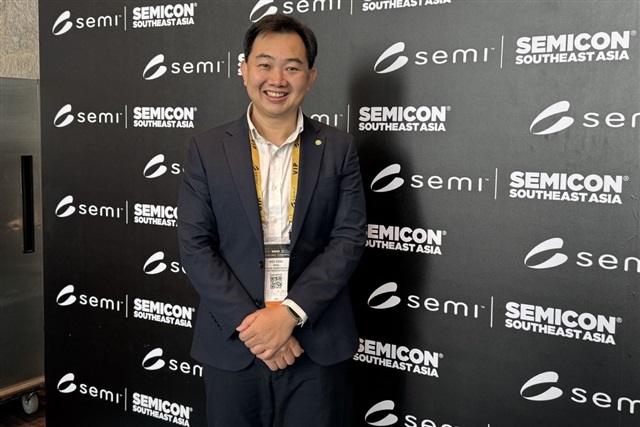
Singapore's Initiative and the Global Context
Singapore has launched a significant diplomatic and industrial initiative, promoting the creation of a regional semiconductor alliance within the Association of Southeast Asian Nations (ASEAN). This move responds to the profound transformation that artificial intelligence is imposing on global supply chains. The increasing demand for advanced chips, essential for training and Inference of Large Language Models (LLM) and other AI workloads, has highlighted the vulnerability and complexity of the current production ecosystem.
The primary goal of this alliance is to strengthen ASEAN's position as a strategic hub in semiconductor manufacturing and distribution. For companies considering on-premise AI deployments, supply chain stability and predictability are critical factors. The availability of specific hardware, such as GPUs with high VRAM, is fundamental for building resilient and high-performance AI infrastructures, and fluctuations in the semiconductor market can significantly impact costs and implementation timelines.
The Strategic Role of Semiconductors for On-Premise AI
Semiconductors represent the beating heart of any AI infrastructure, whether cloud-based or self-hosted. For organizations opting for on-premise deployments, access to a constant and reliable flow of chips is an absolute priority. GPUs, in particular, have become the cornerstone for accelerating AI workloads, requiring high specifications in terms of memory (VRAM) and computing power. Scarcity or instability in the supply of these components can delay projects, increase costs, and compromise a company's ability to innovate with AI autonomously.
A regional alliance like the one proposed by Singapore can help mitigate these risks by diversifying sources and strengthening the overall resilience of the supply chain. This is particularly relevant for companies that require air-gapped environments or must comply with stringent data sovereignty requirements, where direct control over hardware and its origin becomes a distinguishing factor. The ability to acquire and maintain a robust bare metal infrastructure directly depends on the health of the semiconductor market.
Data Sovereignty and Supply Chain Control
The push for a regional alliance is not just an economic matter but also a strategic one. In an era where data sovereignty and cybersecurity are absolute priorities, control over the hardware component supply chain takes on crucial importance. Over-reliance on single regions or suppliers can expose companies to geopolitical risks, production disruptions, and compliance issues.
For CTOs and infrastructure architects evaluating self-hosted AI solutions, the origin and stability of the semiconductor supply chain directly translate into considerations about Total Cost of Ownership (TCO) and operational resilience. An alliance like ASEAN's can offer greater transparency and predictability, essential elements for long-term hardware investment planning and for managing risks associated with external technological dependence. This approach supports the vision of more granular control over the entire AI pipeline, from chip production to final model deployment.
Future Prospects and Trade-offs for Enterprises
Singapore's initiative highlights a broader trend towards regionalization and diversification of technology supply chains. For companies investing in on-premise AI capabilities, this means potential improvements in the availability and price stability of critical hardware. However, creating and maintaining such alliances also involves complexities, requiring coordination among multiple nations and significant investments in research, development, and production capacity.
On-premise deployment decisions versus cloud for AI workloads always involve a careful evaluation of trade-offs between initial costs (CapEx), operational costs (OpEx), control, security, and scalability. The stability of the semiconductor supply chain is a factor that profoundly impacts these calculations. AI-RADAR continues to provide analytical frameworks on /llm-onpremise to help organizations navigate these complexities, offering tools to evaluate the constraints and opportunities arising from a continuously evolving technological landscape, without recommending specific solutions but highlighting the facts and implications for strategic decisions.








💬 Comments (0)
🔒 Log in or register to comment on articles.
No comments yet. Be the first to comment!