
AI for Taiwan's Green Energy Transition
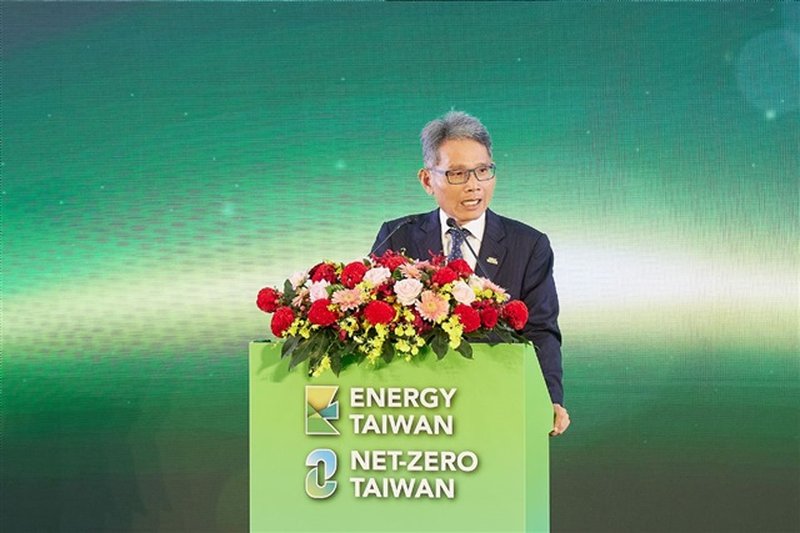
Sino-American Silicon Products (SAS), a key player in the technology landscape, is leveraging artificial intelligence to support Taiwan's energy transition. Under the leadership of chairwoman Doris Hsu, the company aims to harness AI capabilities to address the complexities and challenges arising from the increasing adoption of green energy sources on the island.
This strategic move reflects a global trend: the application of AI to optimize complex systems and improve efficiency in critical sectors. Energy management, particularly that derived from renewable sources, presents significant variables that can be mitigated through the predictive analytics and real-time optimization offered by AI technologies.
The Role of Artificial Intelligence in Energy Optimization
Artificial intelligence can play a transformative role in managing energy grids, especially those integrating a high proportion of renewable energies like solar and wind. Advanced algorithms can analyze vast volumes of data – from weather forecasts to historical consumption patterns – to predict demand and supply with greater accuracy. This allows for better load balancing, reduced waste, and improved overall grid stability.
Implementing such solutions requires robust computational systems. Inference of complex models, often Large Language Models (LLM) or specialized neural networks, demands significant resources in terms of VRAM and computing power, typically provided by high-performance GPUs. The ability to process data in real-time is crucial for making timely operational decisions and maintaining system efficiency.
Implications for On-Premise Deployment
For critical sectors such as energy, decisions regarding the deployment of AI solutions are of paramount importance. A self-hosted or on-premise approach offers significant advantages in terms of data sovereignty, security, and control. Managing sensitive data related to energy infrastructure within a controlled, potentially air-gapped, environment reduces the risks of breaches and ensures compliance with stringent regulations.
Furthermore, on-premise deployment can offer more granular control over hardware specifications, allowing infrastructure to be optimized for specific AI workloads, such as those requiring high throughput and low latency for continuous Inference. While the initial investment (CapEx) may be higher, a long-term Total Cost of Ownership (TCO) analysis can reveal economic benefits, especially for large-scale and prolonged operations, by reducing reliance on external cloud services and their associated variable operational costs.
Future Prospects and Trade-offs
The adoption of AI by companies like SAS to address energy challenges highlights the growing maturity and practical impact of these technologies. The ability to predict and manage fluctuations in renewable sources is essential for achieving sustainability goals and ensuring energy security.
However, the choice between on-premise deployment and cloud-based solutions always involves trade-offs. While the cloud offers immediate scalability and flexibility, self-hosted solutions provide greater control, security, and, in many scenarios, a more advantageous TCO in the long run for stable and predictable workloads. For those evaluating on-premise deployment, AI-RADAR offers analytical frameworks on /llm-onpremise to assess these trade-offs, providing tools to make informed decisions based on specific constraints and operational requirements.







💬 Comments (0)
🔒 Log in or register to comment on articles.
No comments yet. Be the first to comment!