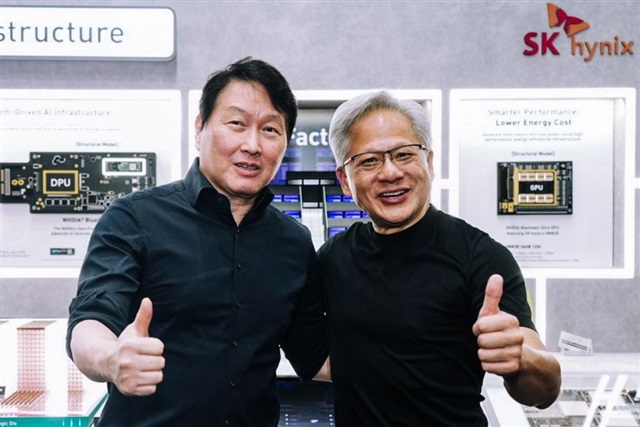
Suspicion, rather than surprise, was in the air: SK Group has postponed its own AI Summit, an event that was meant to showcase the entire South Korean value chain dedicated to artificial intelligence. The official reason points to closer alignment with Nvidia’s GTC. Behind diplomatic language, the move tells a far more concrete story, one that touches the beating heart of the hardware needed to put large language models into production: high-bandwidth memory, HBM.
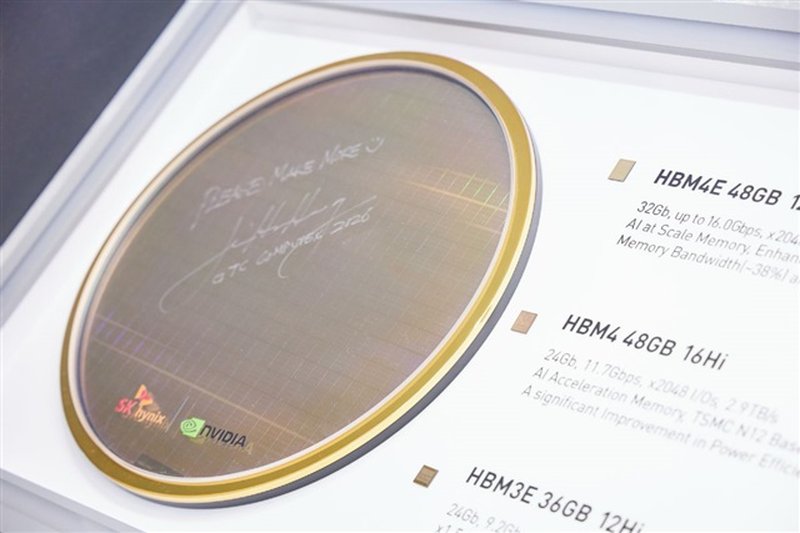
SK hynix, the group’s industrial backbone, is the reference supplier for the HBM3 and HBM3e stacks that power Nvidia’s GPU data centers, from H100 accelerators all the way to Blackwell platforms. Giving up an independent stage means choosing to step onto the most crowded and decisive one, GTC, where Jensen Huang sets the rules year after year. It is not just a calendar issue. It is a signal of strategic consolidation: SK does not want to be perceived as just another factory, but as an inseparable and indispensable part of the Nvidia ecosystem — the only one that today generates enough volume and roadmap certainty to justify multi-billion-dollar investments in production capacity.
For anyone building or evaluating on-premise inference infrastructure — self-contained servers, dedicated GPU nodes, air-gapped environments — the news adds an important piece to total cost of ownership calculations and supply continuity analysis. HBM memory remains a structural bottleneck, with long lead times and competition (Samsung, Micron) that struggles to keep pace with Nvidia’s qualification requirements. If the main HBM supplier explicitly reinforces its coupling with GTC, it is effectively signaling that its allocation priorities will follow the demand generated by that very event, typically concentrated on volumes for the next GPU generation. The knock-on effect is clear: less immediate availability for alternative channels, reduced negotiating power for those seeking independent configurations, and upward price pressure that ripples through the budgets of organizations preferring self-hosted setups over cloud consumption.
The stakes go beyond a single company. The de facto vertical integration between the GPU leader and the memory champion sends a structural message: hardware innovation for LLMs has reached a level of interdependence where critical component suppliers no longer seek to differentiate their positioning, but instead choose to anchor it to a dominant ecosystem. This shrinks space for alternative architectures (AMD, Intel, custom ASICs) that struggle to secure priority access to the most advanced memory, and raises the barrier for any technological sovereignty project that relies on silicon outside the Nvidia galaxy.
The postponement of the South Korean AI Summit is not, after all, an organizational footnote. It is a clear clue to how the geography of technological power is being redrawn: fewer national flags, more platform allegiance. For IT decision-makers who follow hardware evolutions closely, it is yet another element to weigh on the scale of single-vendor dependency.







💬 Comments (0)
🔒 Log in or register to comment on articles.
No comments yet. Be the first to comment!