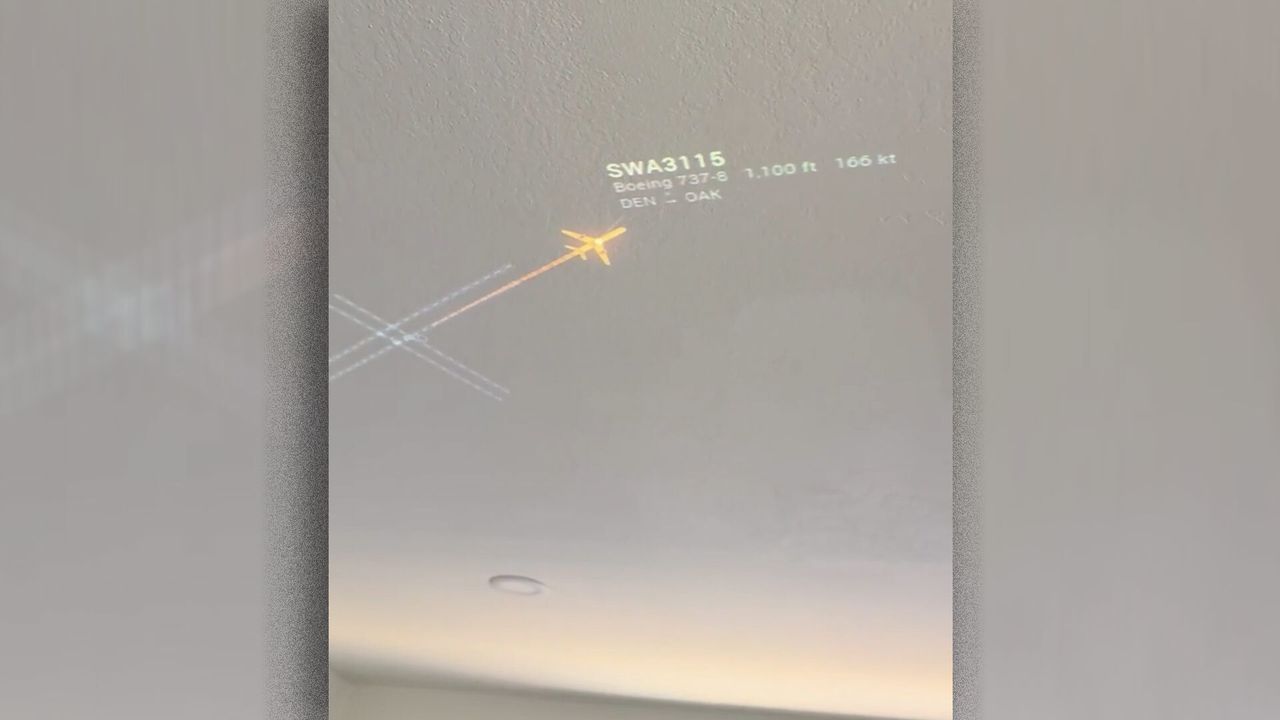
Skylight: When Open Source Meets Home Aviation
In today's technological landscape, where data processing and AI services are increasingly centralized in the cloud, projects emerge that demonstrate the value of distributed and self-hosted innovation. One such initiative is "Skylight," an open-source project that has rapidly gained viral visibility. Conceived by an aviation enthusiast, Skylight transforms a simple Raspberry Pi into a sophisticated real-time air traffic monitoring system, offering a unique and personalized perspective on aircraft movements.
This project not only captures the imagination but also highlights how accessible hardware and open-source software can be combined to create powerful and highly specific solutions. Skylight's approach, which prioritizes local control and customization, resonates with the needs of companies and organizations evaluating on-premise deployments for their AI and Large Language Models (LLM) workloads, where data sovereignty and Total Cost of Ownership (TCO) are critical factors.
Technical Details: A Raspberry Pi Serving the Skies
At the heart of Skylight is a Raspberry Pi, a single-board microcomputer known for its versatility and low cost. This device, paired with an ABS-B (Automatic Dependent Surveillance–Broadcast) radio, allows the system to intercept signals emitted by aircraft in flight. These signals contain crucial data such as position, altitude, speed, and flight identification. Skylight's open-source software processes this information, translates it into flight paths, and projects them in real time, for example, onto a room's ceiling.
The project has demonstrated its effectiveness by tracking air traffic for San Francisco International Airport (SFO), providing a dynamic and engaging visualization. This type of architecture, which processes data directly on the edge device, is particularly interesting for scenarios where latency is a critical factor or where continuous transmission of large volumes of data to the cloud is not feasible or desirable. The ability of a Raspberry Pi to manage a constant data stream and perform inference locally paves the way for multiple applications, well beyond mere aircraft tracking.
Implications for Control and Data Sovereignty
Skylight's self-hosted approach offers significant insights for enterprise deployment decisions. In a context where data sovereignty and regulatory compliance (such as GDPR) are increasingly stringent, solutions that keep data processing and storage within corporate or national boundaries become fundamental. Skylight, operating entirely locally, eliminates reliance on external cloud services for processing tracking data, ensuring complete control over the infrastructure and information.
For organizations evaluating the implementation of LLM or other AI workloads, the example of Skylight underscores the advantages of on-premise or hybrid deployments. These approaches allow for optimizing TCO, avoiding the recurring operational costs of cloud services, and customizing hardware and software based on specific needs, such as VRAM memory or throughput required for inference. The open-source nature of the project also offers transparency and flexibility, allowing users to modify and adapt the code to their specific requirements.
The Value of Distributed and Open-Source Innovation
The viral success of Skylight is a testament to the power of DIY innovation and the open-source community. It demonstrates that colossal infrastructures or unlimited budgets are not always necessary to create impactful and functional solutions. On the contrary, ingenuity and the ability to leverage low-cost hardware can lead to surprising results, with granular control over the process.
This development model, which emphasizes accessibility and collaboration, is particularly relevant for the tech sector. It offers a concrete alternative to centralized service models, fostering a more resilient and diversified ecosystem. For those evaluating on-premise deployments, AI-RADAR offers analytical frameworks on /llm-onpremise to assess the trade-offs between control, cost, and performance, highlighting how solutions like Skylight can inspire broader strategies for managing AI workloads.









💬 Comments (0)
🔒 Log in or register to comment on articles.
No comments yet. Be the first to comment!