
SolvaPay Secures €2.4 Million for AI Payment Infrastructure
SolvaPay, an AI payments platform headquartered in Stockholm, has announced it has raised €2.4 million in a pre-seed funding round. This investment is earmarked for the development of critical payment infrastructure for the emerging era of agentic commerce. The round was led by Redstone, a European fintech venture capital firm, and Silicio Valley-based MS&AD Ventures, with additional participation from Antler and Greens Ventures.
SolvaPay's primary objective is to address the limitations of existing digital payment systems, which often operate within closed ecosystems. This fragmentation restricts AI agents from freely interacting and conducting transactions across different platforms, posing a significant hurdle to the rise of an autonomous agent-based economy.
Technical Details and SolvaPay's Solution
The solution proposed by SolvaPay aims to bridge this gap by enabling AI agents to seamlessly discover, access, and pay for digital services. This approach fosters autonomous economic activity within the growing agentic economy, where software agents act independently to achieve specific goals, often requiring access to external paid services.
The company’s infrastructure is designed to integrate directly into existing workflows, APIs, and applications. This allows payments to occur seamlessly within the user experience. Through a single integration, SaaS providers, API developers, and digital service companies can make their products discoverable, consumable, and payable across various AI ecosystems, such as those based on Claude and ChatGPT, as well as future agent-based environments.
Context and Implications for the Agentic Economy
Viggo Stenseth, CEO and co-founder of SolvaPay, emphasized the significance of this initiative: "Every major technological shift has needed a financial layer before it could become a real economy. The internet needed it. E-commerce needed it. Now, we’ve reached the same point with the agentic economy, but naturally the transaction types, the speeds, and the compliance required for this are impossible within the existing infrastructure. We’ve built what was missing. The timing is not early, it is exactly right."
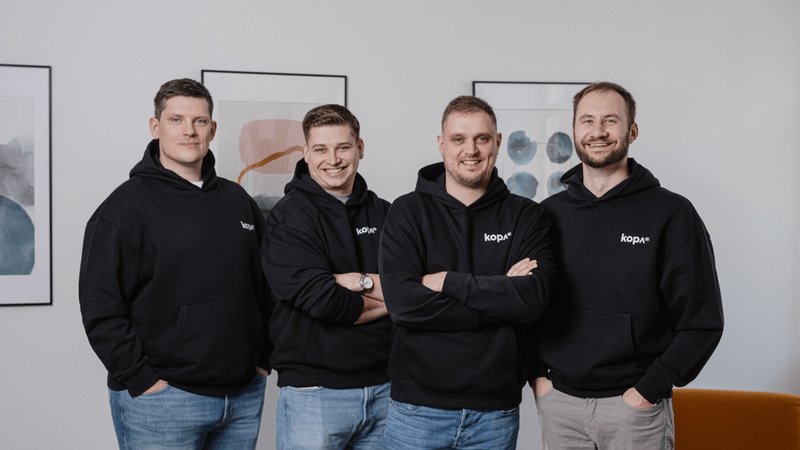
SolvaPay’s founding team brings over five decades of combined experience across financial services and prominent technology companies, including Spotify, FIS, Bank of America, Lehman Brothers, and Handelsbanken. This deep industry knowledge is crucial for building robust and compliant financial solutions. The newly secured funding will be used to accelerate the development of SolvaPay’s machine-native payment rails and agentic revenue infrastructure. Furthermore, the company intends to expand its engineering team and support early adoption among businesses seeking to actively participate in the emerging agentic economy.
Future Outlook and Infrastructural Challenges
The emergence of the agentic economy presents new challenges and opportunities for IT infrastructures. The ability of AI agents to operate autonomously and conduct transactions requires not only computational power and advanced models but also a robust financial layer that ensures security, interoperability, and compliance. SolvaPay positions itself as a key player in this scenario, aiming to enable a new paradigm of digital economic interaction.
For organizations exploring the deployment of LLMs and AI agents in self-hosted or hybrid environments, the issue of managing autonomous payments and transactions becomes a critical factor. The need to ensure data sovereignty and control over financial processes, even in highly automated contexts, is an aspect that AI-RADAR continues to analyze, offering frameworks to evaluate trade-offs on /llm-onpremise.








💬 Comments (0)
🔒 Log in or register to comment on articles.
No comments yet. Be the first to comment!