
SpaceX Goes Public: A New Chapter for the Tech Sector
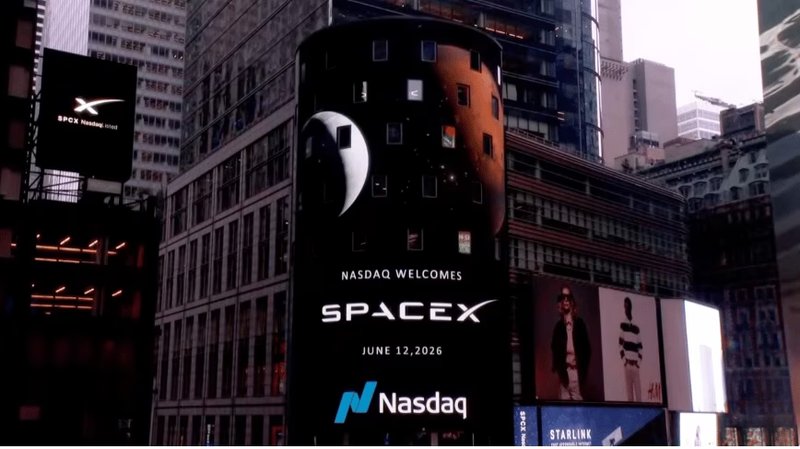
The news of SpaceX's public listing marks a significant moment for the global technology landscape. TechCrunch, which has closely followed the company's trajectory from its early days, through initial challenges to consolidated successes, is now poised to analyze the next phases of this journey. The entry of such a prominent player into the public market is not just a financial event, but an indicator of the trends and expectations permeating the entire innovation ecosystem.
This transition from a private company to a publicly traded entity opens up complex scenarios that extend far beyond mere economic valuation. It is an operation that redefines balances, creates new opportunities, and demands greater transparency. For industry observers, understanding the underlying dynamics of an operation of this magnitude is crucial.
IPO Details and S-1 Documentation
SpaceX's IPO coverage package includes an in-depth analysis of who stands to benefit from this move and who, conversely, might find themselves in a less favorable position. Pre-IPO deals, often crucial for defining the basis of future capitalization and establishing initial anchor investors, are also examined. These pre-listing agreements are important indicators of market confidence and the appetite for risk associated with an innovative company.
A central element of this analysis is the S-1 registration document, a detailed filing that companies must submit to the U.S. Securities and Exchange Commission (SEC) before going public. This document provides a comprehensive overview of the company's financial health, operational strategies, associated risks, and governance. For investors and analysts, the S-1 represents the primary source of information for evaluating SpaceX's long-term potential and stability.
Implications for the Tech Market and Investments
The public listing of an entity like SpaceX has repercussions that extend far beyond the company's individual boundaries. A successful IPO can instill confidence in the market, stimulating investments in other startups and technology companies, including those operating in the artificial intelligence and Large Language Models sectors. The availability of fresh capital and the perception of a vibrant market can accelerate the development and deployment of new solutions, also influencing decisions related to infrastructure deployment.
In a context where companies carefully evaluate the trade-offs between cloud and self-hosted solutions for AI workloads, market liquidity and optimism can influence the ability to finance significant investments in on-premise hardware. The choice of an on-premise deployment, often motivated by data sovereignty, control, and TCO optimization needs, requires substantial initial capital. Therefore, a robust financial market can facilitate these strategic decisions.
Future Prospects and the AI-RADAR Context
SpaceX's entry into the public market is an event that, while not directly related to the development or deployment of LLMs, is part of a broader framework of technological and financial evolution. Market dynamics, capital availability, and investor confidence are factors that indirectly shape the environment in which companies make crucial decisions regarding their AI infrastructures. Whether it's investing in new GPUs for on-premise inference or developing local stacks to ensure data sovereignty, the general economic context plays a significant role.
For companies following AI-RADAR, focused on self-hosted solutions and complete control over their AI resources, understanding these market dynamics is essential. Although SpaceX's IPO does not offer specific details on VRAM or throughput, it reflects the overall health of the tech sector, a factor that can influence the ability to invest in robust and scalable AI infrastructures. For those evaluating on-premise deployment, analytical frameworks are available at /llm-onpremise to assess the trade-offs between costs, performance, and control.







💬 Comments (0)
🔒 Log in or register to comment on articles.
No comments yet. Be the first to comment!