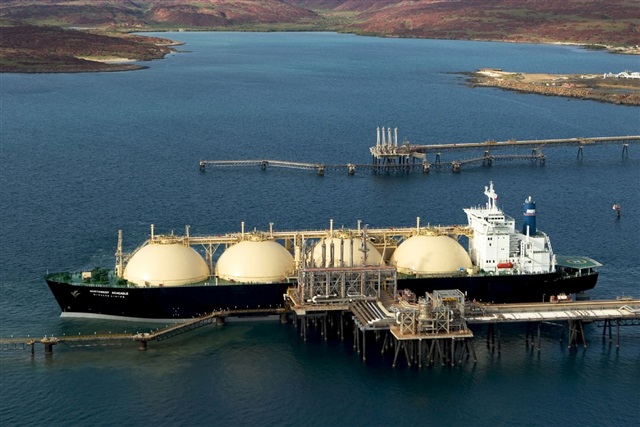
The news that Qatari liquefied natural gas shipments might reach Taiwan by September – provided the Strait of Hormuz reopens in time – seems light-years away from the concerns of those orchestrating on-premise infrastructure for Large Language Models. Yet it touches a raw nerve: technology’s material dependence on shipping routes, energy, and semiconductors, now more intertwined than ever.
The News: A Strategic Chokepoint at Risk
The source, an AFP dispatch, is sparse. The Strait of Hormuz remains the bottleneck for roughly one-fifth of global gas consumption. A prolonged disruption does not merely sway methane prices: it triggers a chain reaction that propagates into data centers, cooling costs, and ultimately the availability of hardware accelerators.
Data Safe, Hardware at the Mercy of Geopolitics
Those who choose a self-hosted LLM approach normally think of data sovereignty, regulatory compliance, and latency. Less obvious is that the physical security of hardware depends on supply chains exposed to geopolitical shocks. High-density GPU servers, often configured with 80 GB of VRAM or more per card, require stable energy and predictable costs. A blocked strait means higher energy bills, component shipping delays, and slower turn-around for bare-metal installations.
Energy, Logistics, and Total Cost: A Silent Domino Effect
Total Cost of Ownership analysis for an on-premise cluster often sidelines logistical variables. Yet a spike in energy prices translates directly into deferred CapEx or unexpected operational expenses. Gas fuels a significant share of power generation in several industrial hubs: when Qatari LNG is delayed, companies with intensive AI workloads may find themselves renegotiating contracts or rethinking architectures, perhaps shifting part of the load to the edge to relieve pressure on the main data center.
Supply Planning: A Lesson for On-Premise Adopters
The episode – even if the strait reopens on schedule – provides an evergreen takeaway for those designing local deployments. Diversifying suppliers, evaluating on-site energy storage, and including geopolitical risk indicators in the decision matrix become concrete actions to mitigate impact. It is not about chasing headlines, but recognizing that the “iron” running inference demands a supply chain as solid as the electrical one. For those seeking analytical frameworks for such choices, resources exist to map the trade-off between control, cost, and resilience – a topic AI-RADAR follows closely.







💬 Comments (0)
🔒 Log in or register to comment on articles.
No comments yet. Be the first to comment!