Super El Niño and AI’s Hunger for Energy Bring Fuel Cells into Play
Super El Niño and the skyrocketing energy demand of artificial intelligence are creating a perfect storm for power infrastructure, and fuel cells may be the technological parachute many were looking for. What at first glance reads like a meteorology textbook headline is, in fact, a signal for anyone designing on-premise deployments of LLMs: energy resilience is no longer an optional extra but a pillar of TCO calculation.
The Climate Squeeze and AI’s Appetite for Power
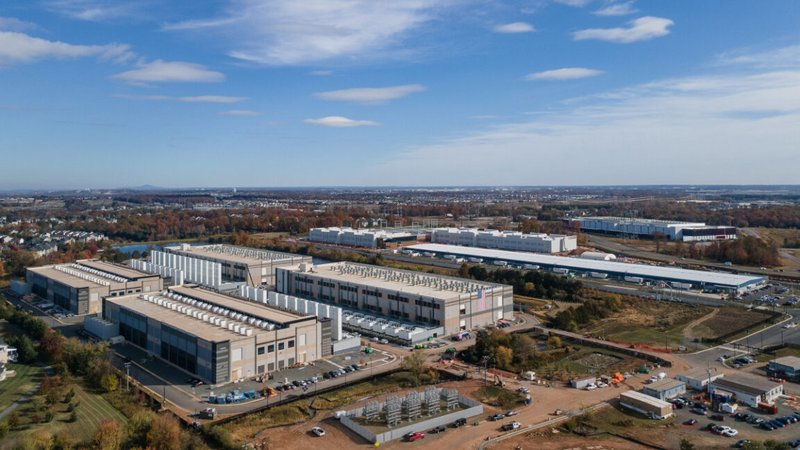
Super El Niño events bring droughts, heat waves, and instability to power grids across several regions of the world. In parallel, training and inference for ever-larger models require computing power that shows no sign of slowing down. Clusters of GPUs, indispensable for those who choose to stay on-premise, consume hundreds of watts per individual card, and a rack full of these units can easily reach the threshold of a traditional data center. In a context where every interruption translates into costs and potential loss of sensitive data, total dependence on the public grid becomes a concrete risk.
Fuel Cells as an Answer to Grid Fragility
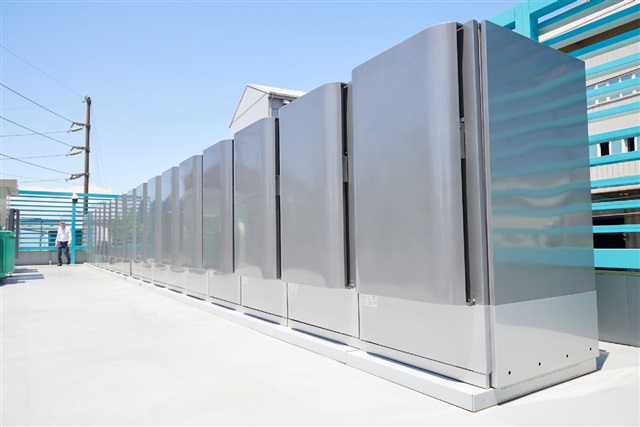
Hydrogen fuel cells are not new, but the convergence of extreme weather events and AI workloads is accelerating their evaluation by system architects. Unlike diesel generators, fuel cells produce electricity with no local emissions—the only byproduct is water vapor—and can operate continuously if fed by a tank or a steady supply of hydrogen. This feature makes them particularly suited to sites that must guarantee constant uptime, such as on-premise data centers dedicated to LLMs and inference workloads. The reliability of fuel cells does not depend on the external power grid, a non-trivial advantage when weather conditions put transmission operators under severe strain.
On-Premise Facilities: Autonomy and Energy Sovereignty
Those who manage self-hosted infrastructure often do so for reasons of data sovereignty, regulatory compliance (such as GDPR), or total control over their stack. But having control over data without control over power is only half a victory. Fuel cells can turn a corporate data center into an energy-independent island, reducing vulnerability to blackouts and price fluctuations. From a total cost of ownership (TCO) perspective, the upfront investment in fuel cells and hydrogen storage remains high, but it must be weighed against long-term operational costs, including damage from service interruptions and continuity requirements. Moreover, for certain edge computing applications or remote sites where the power grid is weak or absent, fuel cells become the only feasible path to running local inference without compromise.
Future Scenarios Between Hydrogen and GPUs
The hydrogen ecosystem is still young and fragmented: supply chain, transport infrastructure, and production costs remain unresolved knots. Yet, in parallel, research moves forward on more efficient hardware and liquid cooling, which further reduces overall energy needs. In the future, we may see modular containers for AI workloads powered entirely by fuel cells, capable of being rapidly deployed in areas with fragile grids or to handle demand peaks. For those currently evaluating the purchase and maintenance of an on-premise GPU fleet, the advice is not to immediately embrace hydrogen, but rather to include the “energy resilience” parameter in the risk-factor calculation. This is not science fiction: it is the natural evolution of infrastructure that wants to be genuinely independent.









💬 Comments (0)
🔒 Log in or register to comment on articles.
No comments yet. Be the first to comment!