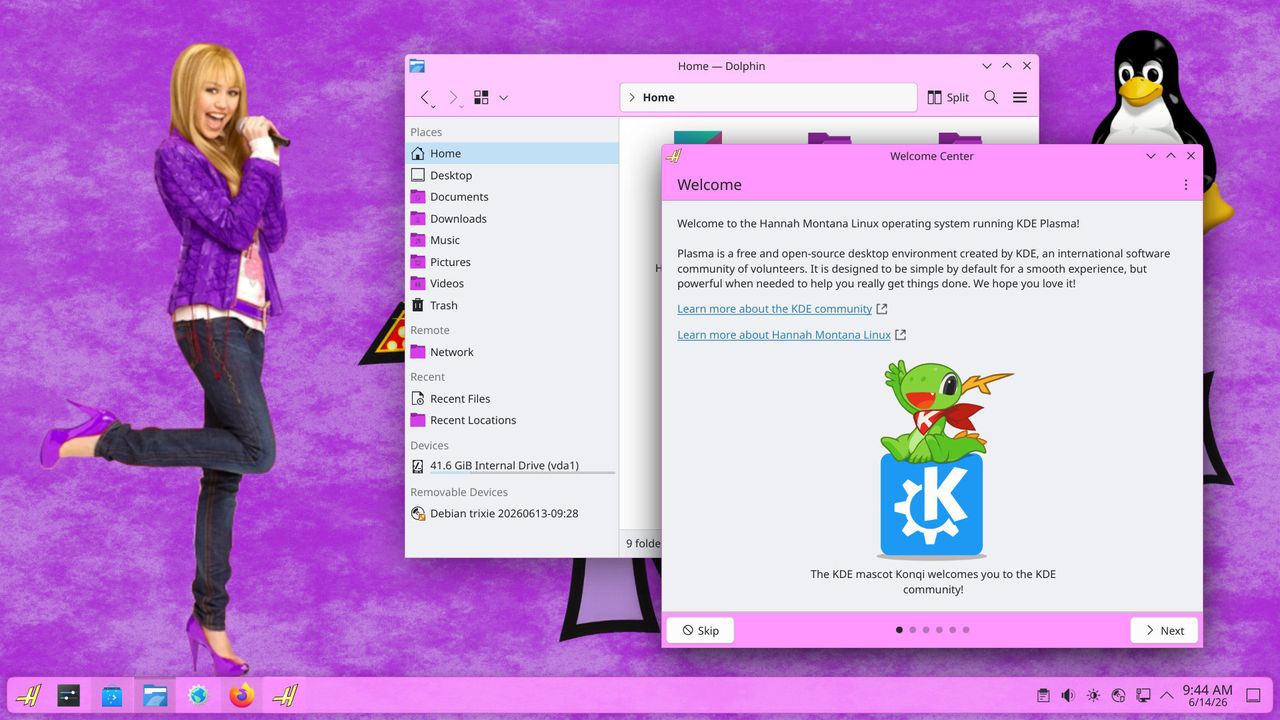
Hannah Montana Linux è uno di quei progetti che sembravano destinati a rimanere una nota a margine nella storia dei sistemi operativi. Nato nel pieno della popolarità della serie Disney, il fork di Kubuntu con icone viola e wallpaper della protagonista incarnava lo spirito della prima decade dei Duemila: personalizzazione spinta, comunità esuberanti e una certa dose di ironia. Ora, quasi vent’anni dopo, arriva una remaster inattesa. La versione 26, che riprende il nome in codice della serie televisiva, è costruita su Debian e sfoggia una ri-pelle di KDE Plasma.
Il salto è tecnico ma anche simbolico. L’originale si basava su Kubuntu, un derivato di Ubuntu, che a sua volta discende da Debian. Oggi il progetto taglia i ponti con Ubuntu e si appoggia direttamente a Debian, una scelta che dice molto sulla maturità dello sviluppo. Debian è il fondamento di innumerevoli distribuzioni enterprise, note per la stabilità a lungo termine e per un supporto di sicurezza che le rende adatte a server e carichi di lavoro critici. Che un progetto colorato e apparentemente futile scelga proprio Debian come base è il segno che le fondamenta solide contano, anche quando si fa software con il sorriso.
La personalizzazione del desktop è un aspetto tutt’altro che trascurabile fuori dai riflettori dell’IT aziendale. KDE Plasma, tra i desktop environment più modulari e configurabili in circolazione, permette di costruire interfacce su misura senza dover reinventare la ruota. Per un’organizzazione che valutasse deploy on-premise di workstation tematiche, magari in ambiti educativi o di intrattenimento, un approccio simile potrebbe ridurre il costo di sviluppo, mantenendo al contempo accesso a tutte le librerie e agli strumenti di sistema di una distribuzione standard.
Certo, Hannah Montana Linux non sta contendendo il mercato server. Non ci sono metriche di performance, accelerazione hardware o contesti di inference LLM di cui parlare. Eppure, proprio la sua esistenza ricorda che l’ecosistema Linux è un terreno fertile dove le idee più strampalate possono mettere radici, nutrite dalla stessa infrastruttura che sorregge progetti critici. La v26, con la sua combinazione di Debian e KDE Plasma, è un piccolo monumento alla durabilità del software libero: un sistema che, se curato, può continuare a funzionare e ad aggiornarsi per decenni, adattandosi a mode e tecnicie che cambiano. Per chi gestisce ambienti on-premise, questa longevità non è un vezzo, ma un requisito.





💬 Commenti (0)
🔒 Accedi o registrati per commentare gli articoli.
Nessun commento ancora. Sii il primo a commentare!