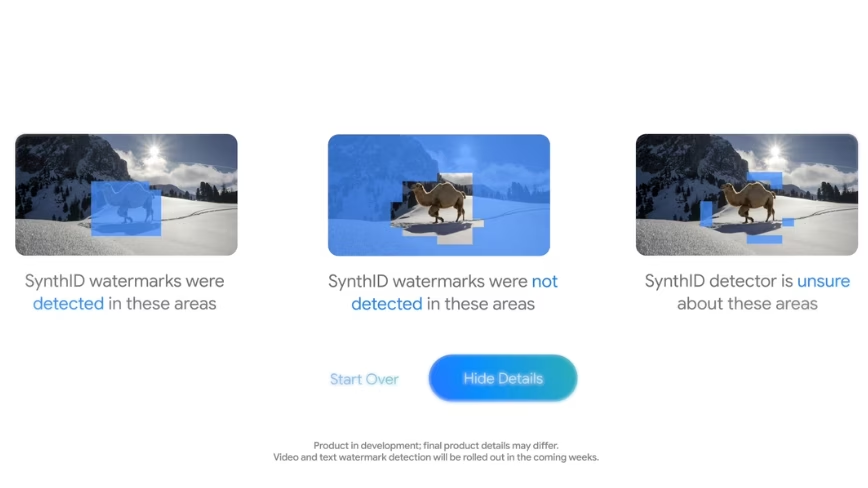
Fact-checking is no stranger to deepfake attacks, but this week a single post on Reddit and X gave the industry more than one thing to think about. The image appeared to show Senator Mitch McConnell covered in tubes in a hospital bed, in extreme distress. It was fake, generated by artificial intelligence, and Snopes debunked it without complex forensic analysis: Google DeepMind’s SynthID watermark did the job.
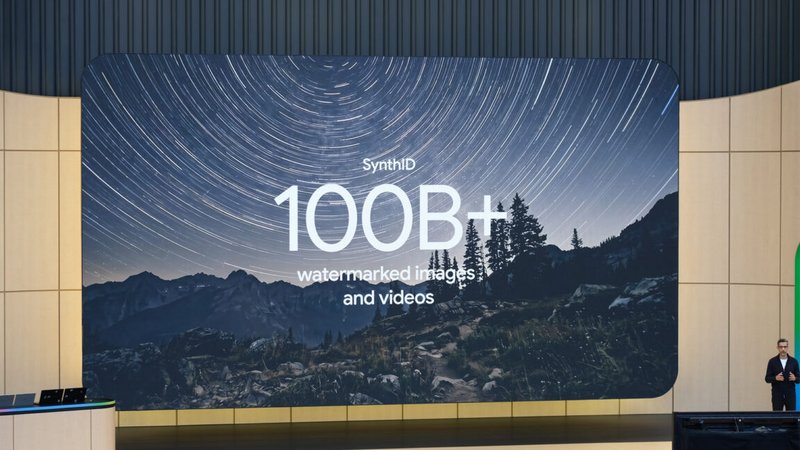
SynthID is a technology that embeds imperceptible markers directly into the generative process – for images, audio, text, even video – and later allows verification of synthetic origin. It works even after compression, resizing and screenshots, making it a solid candidate for real-world scenarios. In this case, the system had no doubt: the output was AI-generated and the result was confirmed in minutes.
Snopes’ win, the first large-scale test for SynthID, is not just a news item. It signals a cultural shift with very concrete consequences for hardware, data control and deployment models.
If a news organization, a government agency or a legal office has to establish the authenticity of a piece of content that could become evidence in court, the question is no longer “can we detect it?” but “where does detection happen?”. Uploading an image to a cloud API – however offered by a big tech company – means exposing potentially sensitive data to third parties, often under contractual terms that grant the provider opaque usage rights. For many of the organizations AI-RADAR follows, from central banks to hospitals, that step is unacceptable.
That’s why SynthID’s success in this specific case forcefully reopens the on-premise discussion. Verifying watermarks locally does not require datacenter GPUs: a trained detection model can run on commodity CPU in containers, perhaps orchestrated with Kubernetes in an air-gapped cluster. Total cost of ownership (TCO) must be compared with the API alternative: an organization processing thousands of images per month can reach economic breakeven far sooner than expected, but the real differential is sovereignty. No external logs, no metadata leaving the corporate perimeter.
This scenario reshapes incentives for vendors. Google has so far integrated SynthID into its own cloud services and products like Vertex AI, but competitive pressure will push toward releasing offline modules or self-contained libraries. GDPR and the upcoming European AI Act, with its labeling mandate for synthetic content, will accelerate demand for tools that can be verified without an internet connection. The most attentive organizations will not want to depend on an endpoint that could change policy overnight.
Then there is a second order of consequences. When watermark detection becomes a piece of infrastructure – akin to a firewall or authentication system – the market polarizes: on one side managed services for those lacking in-house skills, on the other appliances and software packages for those who must demonstrate compliance to auditors and courts. In between, a space opens for integrations that stitch detection into editorial workflows, e-discovery platforms and content moderation systems.
In short, today’s news does not close a circle: it opens one. The fact that a single deepfake was debunked with a transparent watermark is not the end of disinformation, but proof that the problem is changing nature. No longer “who is right?” but “who audits the auditor?”. And the answer, for many, will increasingly be: we run the verifier ourselves, on our own servers.







💬 Comments (0)
🔒 Log in or register to comment on articles.
No comments yet. Be the first to comment!