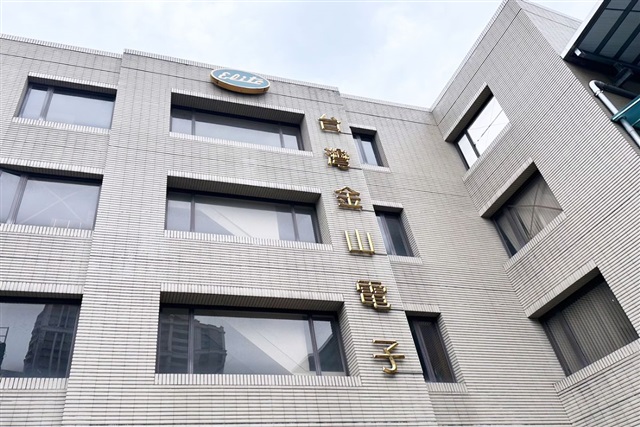
Chinsan Strengthens AI Server Supply Chain
Chinsan, a Taiwanese company specializing in capacitor manufacturing, has announced that it has secured significant production capacity for AI servers at its facilities in Thailand. The agreement, which extends until 2026, underscores the growing pressure on the global supply chain for hardware components dedicated to artificial intelligence. This strategic move reflects the need for suppliers to ensure resource availability in a rapidly expanding market, driven by the demand for infrastructure for training and inference of Large Language Models (LLMs).
Chinsan's decision to lock in this long-term production capacity is an indicator of market confidence in the sustained growth of the AI sector. Capacitors are critical components for the stability and energy efficiency of servers, especially those intended for intensive workloads like those required by LLMs, where precise power management is fundamental for system performance and reliability.
The Context of AI Hardware Demand
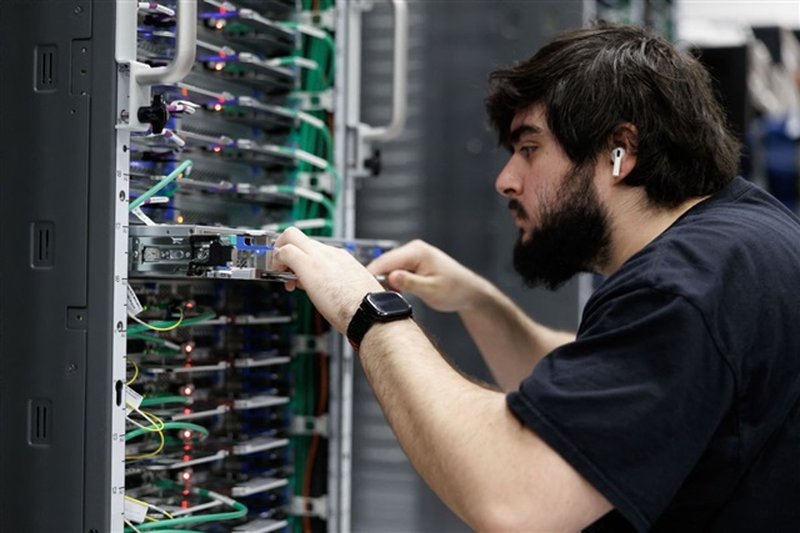
The demand for AI servers has exploded in recent years, propelled by the advancement of LLMs and their adoption across various sectors, from finance to healthcare to industrial manufacturing. These servers require high-performance components, including specialized GPUs with high VRAM, high-bandwidth memory (HBM) modules, and, of course, high-quality capacitors for power management and system stability.
AI deployment architectures, whether on-premise or cloud, heavily depend on the availability of robust and reliable hardware. Chinsan's secured production capacity in Thailand not only addresses this need but also helps mitigate the risks of supply chain disruptions, an issue that has plagued the technology industry in recent years. Stability in the supply of essential components is crucial for the long-term planning of AI infrastructures.
Implications for On-Premise Deployments
For organizations evaluating on-premise LLM deployments, the availability and stability of the hardware supply chain are critical factors. Chinsan's decision to lock in production capacity until 2026 offers a positive signal regarding the future availability of essential components. However, the AI server market remains volatile, with lead times that can vary significantly.
CTOs, DevOps leads, and infrastructure architects must carefully consider these aspects when planning their hardware investments. Choosing a self-hosted deployment, while offering advantages in terms of data sovereignty, compliance, and long-term TCO, requires proactive supply chain management and a deep understanding of hardware requirements, such as GPU VRAM and overall system throughput. AI-RADAR provides analytical frameworks on /llm-onpremise to evaluate the trade-offs between different deployment architectures, helping enterprises make informed decisions.
Future Outlook and Supply Chain Challenges
Chinsan's long-term commitment in Thailand highlights a broader trend: companies are diversifying their manufacturing bases to mitigate geopolitical risks and supply chain disruptions. While Taiwan remains a crucial hub for semiconductor production and high-tech components, expansion into regions like Southeast Asia is an increasingly common strategy to ensure resilience and operational continuity.
This move not only supports the growth of the AI server market but also helps stabilize costs and delivery times for end customers, whether they are cloud providers or enterprises building their own AI infrastructure for on-premise or air-gapped workloads. The ability to meet the demand for critical components will be a determining factor for success in the competitive artificial intelligence landscape, directly influencing the speed and efficiency with which new LLM-based solutions can be deployed and scaled.






💬 Comments (0)
🔒 Log in or register to comment on articles.
No comments yet. Be the first to comment!