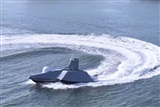
Taiwan's Indigenous Submarine Makes Its Debut
Taiwan has recently achieved a significant milestone in bolstering its defense capabilities with the commencement of dive trials for its first domestically produced submarine. The vessel, developed locally, has entered the immersion testing phase, a crucial step before its official handover. This project underscores the island's commitment to strategic autonomy and the diversification of its military assets.
The Horizon of Autonomous Systems and "Unmanned Boats"
In parallel with the submarine's development, the Taiwanese shipbuilder is already looking to the future, expressing interest in contracts related to "unmanned boats." This orientation is not coincidental: autonomous systems represent a rapidly evolving technological frontier in the defense sector and beyond. Unmanned boats, to operate effectively, require advanced artificial intelligence capabilities for navigation, target recognition, mission planning, and autonomous management in complex environments. Such requirements imply a robust AI infrastructure, capable of performing Inference with low latency and high reliability.
Data Sovereignty and On-Premise Deployment for Defense
The adoption of autonomous systems in military and national security contexts raises fundamental questions regarding data sovereignty and AI Deployment methods. For such critical applications, the preference often falls on self-hosted or on-premise solutions. This approach ensures full control over sensitive data and AI models, preventing potential risks associated with external access or reliance on third-party cloud infrastructures. The ability to operate in air-gapped environments, completely isolated from external networks, becomes a non-negotiable requirement to ensure security and operational resilience. For those evaluating on-premise deployments in highly sensitive sectors, AI-RADAR offers analytical frameworks on /llm-onpremise to assess the trade-offs between control, security, and TCO.
The Infrastructural Challenges of AI for Security
The transition towards increasingly autonomous naval systems demands significant investment in dedicated AI infrastructures. This includes the development and integration of specialized silicon for edge computing, capable of handling complex Inference workloads directly on board the vehicles. Hardware choices, from the VRAM available on GPUs to Throughput capacity, become crucial to guarantee the required performance. These infrastructural decisions, which balance initial (CapEx) and operational (OpEx) costs with security and performance needs, are at the heart of defense modernization strategies and reflect the same complexities faced by enterprises evaluating the adoption of Large Language Models (LLM) in controlled and secure environments.









💬 Comments (0)
🔒 Log in or register to comment on articles.
No comments yet. Be the first to comment!