AI Growth and Taiwan's Energy Demand
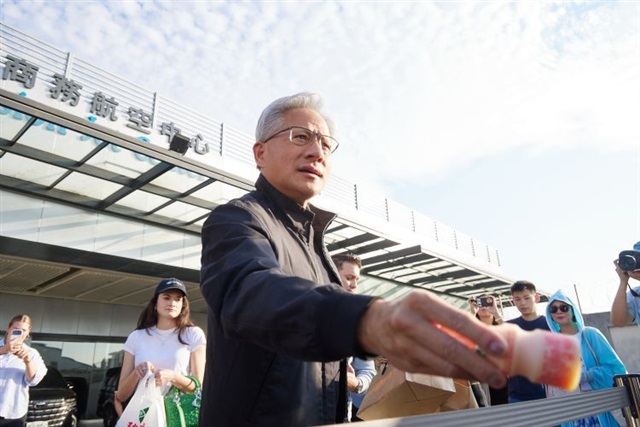
The rapid expansion of artificial intelligence and continuous innovation in the semiconductor sector are posing significant challenges to global energy infrastructures. A striking example emerges from Taiwan, a crucial hub for advanced technology manufacturing. Nvidia's CEO, Jensen Huang, recently highlighted the island's need to increase its electricity generation capacity to support the exponential growth of the technology sector.
This statement did not go unnoticed. Taiwan's relevant ministry promptly confirmed plans to add 5.2 GW of gas generation capacity. This initiative underscores the authorities' awareness of the strategic importance of a robust energy infrastructure to maintain the country's leadership position in the global technology supply chain, especially in an era dominated by AI.
The Energy Impact of AI Workloads
Artificial intelligence workloads, particularly the training and Inference of Large Language Models (LLMs), are notoriously energy-intensive. Modern GPUs, such as Nvidia's A100 or H100 series, consume significant amounts of power, and a single data center can house thousands of these units. This translates into massive electrical demand to power not only the chips themselves but also the complex cooling systems required to maintain optimal operating temperatures.
For companies evaluating the Deployment of on-premise LLM infrastructures, the availability and cost of energy represent a fundamental component of the Total Cost of Ownership (TCO). Planning a self-hosted infrastructure requires careful assessment of existing electrical capacity, necessary upgrades, and long-term operational costs. A robust and reliable national power grid is therefore a prerequisite not only for hardware manufacturing but also for the large-scale operation of these systems.
Energy Sovereignty and Infrastructure Planning
Sufficient and reliable energy availability is a fundamental pillar for a nation's technological sovereignty. Countries like Taiwan, which play a central role in semiconductor manufacturing and AI development, must ensure they have the energy resources to support their industrial and technological growth. The addition of 5.2 GW of gas capacity reflects a long-term strategic planning aimed at ensuring that the energy infrastructure can keep pace with the country's technological ambitions.
This dynamic is particularly relevant for organizations handling sensitive data or operating in air-gapped environments, where reliance on external cloud infrastructures is limited. The ability to host and manage critical AI workloads locally directly depends on the robustness of the national energy infrastructure. Decisions regarding energy sources and their expansion have direct implications for a company's or country's ability to maintain control over its data and AI operations.
Future Challenges for the Tech Ecosystem
The demand for increased energy capacity in Taiwan is a microcosm of a broader global challenge: how to balance rapid technological advancement with the need for sustainable and scalable energy supply. The AI industry is still in its early stages of growth, and the demand for computing power, and consequently electricity, is set to increase further with the proliferation of LLMs and other AI applications across every sector.
For the global tech ecosystem, this means that innovation must not be limited to hardware and software but must also extend to energy efficiency and the diversification of power sources. Strategic investments in energy infrastructures, such as those announced in Taiwan, will be crucial to sustain the growth and evolution of AI, while ensuring the resilience and sustainability of the entire technology sector.






💬 Comments (0)
🔒 Log in or register to comment on articles.
No comments yet. Be the first to comment!