
Taiwan Investigates Alleged Illegal Exports of High-End AI Servers
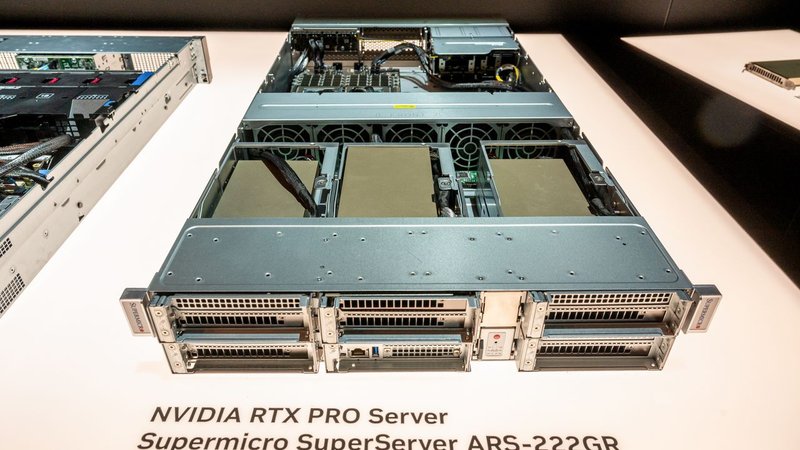
Taiwanese authorities have launched their first formal investigation into illegal semiconductor exports, aiming to detain three individuals accused of using forged documents to ship high-end AI servers, equipped with Nvidia Hopper systems, to customers in China. This operation is part of a broader diversion network, linked to Supermicro, which allegedly rerouted critical artificial intelligence systems through Hong Kong and other third countries.
The legal action taken by Taiwanese prosecutors underscores the increasing scrutiny over the control and final destination of advanced technology. This incident highlights the complexities and challenges characterizing the global supply chain for AI hardware, a strategic sector for the development and deployment of Large Language Models (LLM) and other artificial intelligence applications.
The Geopolitical and Technological Context of AI Hardware
High-end hardware, such as Nvidia Hopper systems, forms the backbone for training and inference of complex LLMs. For companies and organizations opting for on-premise deployment, the availability of these resources is crucial to ensure data sovereignty, control over operational costs, and compliance with local regulations. The ability to manage AI workloads internally, on self-hosted or bare metal infrastructures, offers significant advantages in terms of security and customization.
However, demand for these technologies often exceeds supply, creating a market where geopolitical dynamics play an increasingly significant role. Export restrictions on certain AI technologies have become a tool to influence technological power balances, making access to advanced AI servers a critical factor for national competitiveness and innovation. The Taiwanese incident precisely illustrates these tensions, where control over the supply chain becomes a strategic asset.
The Diversion Network and Supply Chain Implications
The investigation has revealed the existence of a diversion network that, according to allegations, exploited forged documents to circumvent export controls. The involvement of a Supermicro-linked network and transit through Hong Kong and other third countries highlight the sophistication of these operations. For companies looking to build or expand their on-premise AI infrastructure, such illicit activities can have significant repercussions.
The distortion of the supply chain not only creates uncertainty about the availability of critical hardware but also raises questions about the provenance and compliance of components. Organizations investing in self-hosted solutions for their LLMs must face the challenge of ensuring that their infrastructure is based on legally and transparently acquired components, to avoid legal and reputational risks. Transparency and traceability therefore become fundamental elements in managing AI hardware procurement.
Future Prospects for On-Premise AI Infrastructure
This Taiwanese investigation marks an important precedent in the fight against semiconductor and AI hardware smuggling. For the industry, and particularly for those evaluating LLM deployment on on-premise infrastructures, the incident underscores the importance of a robust and compliant supply chain. The ability to access high-end AI servers, such as those based on Nvidia Hopper architecture, is essential for sustaining innovation and competitiveness.
AI-RADAR focuses precisely on these dynamics, offering analyses on the trade-offs between self-hosted and cloud solutions for AI workloads. The need to balance TCO, data sovereignty, and hardware performance remains a priority for CTOs and infrastructure architects. Events like the one in Taiwan reinforce the awareness that the choice of AI infrastructure is not just a technical or economic matter, but also a strategic and geopolitical one, with direct implications for the availability and control of computational resources.






💬 Comments (0)
🔒 Log in or register to comment on articles.
No comments yet. Be the first to comment!