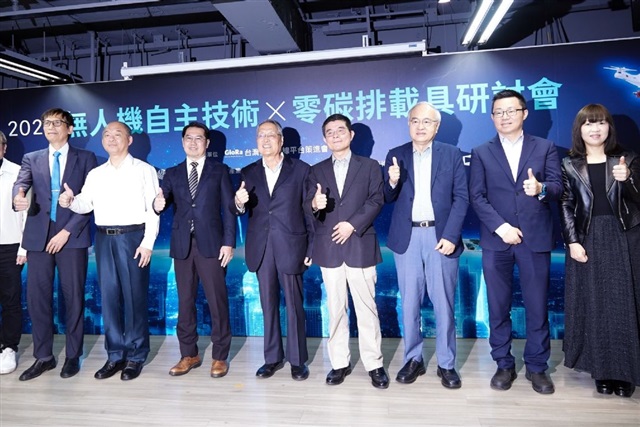
Taiwan's Strategy for Technological Sovereignty
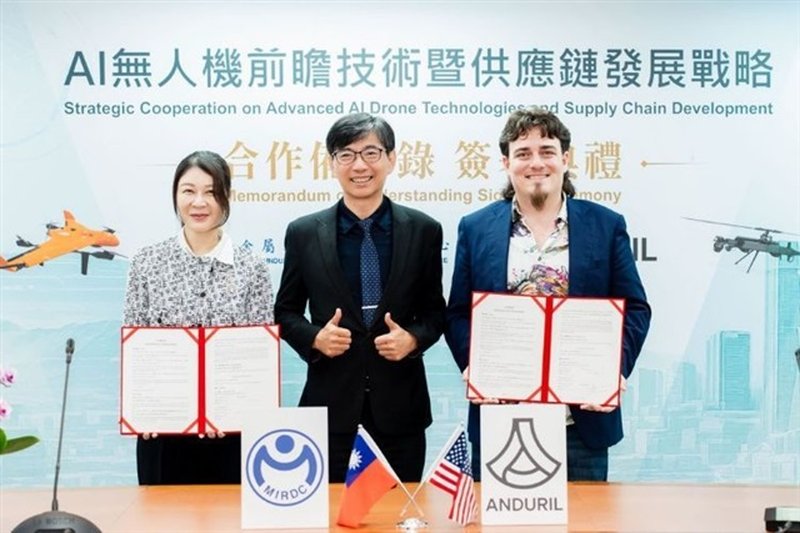
Taiwan, a key player in the global technology landscape, has outlined an ambitious goal: to close gaps in its drone manufacturing supply chain by 2027. This move is not isolated but is part of an international context where supply chain resilience and technological sovereignty have become absolute priorities for many countries. Dependence on external suppliers for critical components, which became acutely evident during recent global crises, is pushing nations to invest in local production capabilities.
Taipei's initiative aims to ensure greater autonomy and security in the drone sector, which has significant implications for both civilian and military applications. End-to-end control of the production pipeline, from chip design to final assembly, is seen as a fundamental pillar for economic stability and national security.
Implications for the Supply Chain and Local Innovation
Taiwan's plan implies a strengthening of local manufacturing and R&D capabilities. This will not only reduce vulnerability to external disruptions but also stimulate internal innovation and the creation of a more robust industrial ecosystem. For companies operating in the sector, this could mean new collaboration opportunities and investment in emerging technologies, from advanced sensors to autonomous control systems.
Closing supply chain gaps is not limited to physical production but also includes the development of software, firmware, and security systems, all crucial elements for drone performance and reliability. This holistic approach is essential for building a truly resilient and globally competitive supply chain.
The Global Context of Supply Chain Resilience
Taiwan's objective reflects a broader global trend: the pursuit of greater autonomy in supply chains for strategic technologies. From semiconductor manufacturing to artificial intelligence, governments and large enterprises are re-evaluating deployment and procurement models, favoring solutions that offer greater control and security. This often translates into investments in self-hosted infrastructures or partnerships with local suppliers.
For technology decision-makers, such as CTOs and infrastructure architects, the lesson is clear: the evaluation of Total Cost of Ownership (TCO) must extend beyond initial costs, encompassing risks related to dependence on external supply chains and implications for data sovereignty and compliance. The ability to operate in air-gapped environments or with stringent security requirements heavily depends on the robustness and control of one's technological supply chain.
Future Prospects and Strategic Autonomy
The 2027 target for Taiwan's drone supply chain represents a significant step towards greater strategic autonomy. This type of initiative underscores the importance of long-term planning for technological security and industrial resilience. A country's ability to produce and control its critical technologies is increasingly a determining factor in the geopolitical and economic landscape.
For those evaluating on-premise deployment of AI and Large Language Models (LLM) solutions, the principles of supply chain control, data sovereignty, and reduction of external dependencies are equally central. AI-RADAR offers analytical frameworks on /llm-onpremise to evaluate the trade-offs between different deployment architectures, highlighting how supply chain resilience is a critical factor for any long-term technological strategy.






💬 Comments (0)
🔒 Log in or register to comment on articles.
No comments yet. Be the first to comment!