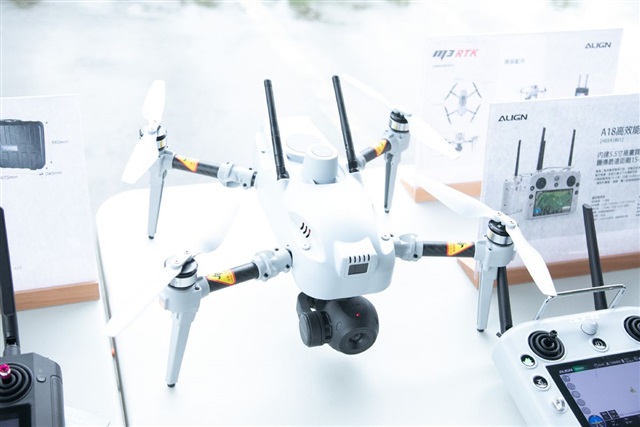
The news might seem like a purely parliamentary affair: after defense budget cuts, Taiwan is set to redefine its drone spending. But beneath the surface, the move spotlights a far more tangible issue: the artificial intelligence that powers those aircraft, and especially where it runs.
The game is played on board
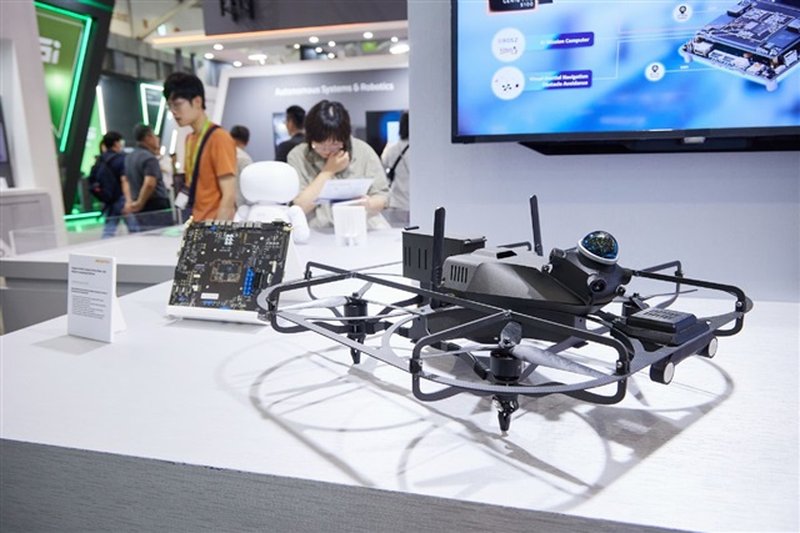
For next-generation remotely piloted systems, autonomy isn’t a luxury—it’s an operational necessity. Object recognition, GPS-free navigation, real-time decisions: functions that demand increasingly sophisticated deep learning models. In military or security contexts, however, sending data to cloud servers for inference is out of the question. Latency, interception risk, and reliance on radio links make local execution, directly on the drone, imperative. This opens the chapter of on-premise, or rather, edge computing: embedded hardware capable of running models without leaning on remote data centers.
Embedded inference hardware: constraints and choices
Flying a large language model or a convolutional neural network on a battery-powered device with limited space is no simple feat. Compute units must balance power, energy consumption, and VRAM management. Solutions like system-on-module boards with integrated GPUs (NVIDIA Jetson, for instance) or specialized FPGAs allow acceptable throughput with quantized models. Quantization—often in INT8 or FP16—is the key to shrinking memory footprint without overly sacrificing accuracy. Yet the trade-off between model precision and computational weight remains the knot that designers of such systems must untie.
Data sovereignty and total control
Taiwan’s decision to revise the drone budget after cuts carries implications beyond the headlines. In a tense geopolitical landscape, maintaining full control over the data pipeline—from sensor to action—is a strategic asset. On-premise execution eliminates any exposure to third-party infrastructure, aligning with the strictest data residency regulations. It’s not just about security: it’s the guarantee that sensitive data collected during a mission stays under the jurisdiction of the entity that generated it, avoiding foreign cloud routes.
The price of control: balancing autonomy and cost
Building fully local inference infrastructures brings significant engineering challenges and costs. Weight and power constraints shrink the usable model window, forcing careful TCO (Total Cost of Ownership) assessment that spans development, maintenance, and software updates. For those evaluating on-premise deployments, AI-RADAR offers analytical frameworks to map these trade-offs—no ready-made solutions, but tools for informed decisions. The Taiwan drone case becomes a study in how digital sovereignty choices translate into very specific hardware requirements.
In the end, the drone news reminds us that artificial intelligence isn’t just cloud-bound: when the stakes are high, computation comes home, to devices that can’t afford to ask the network for help.









💬 Comments (0)
🔒 Log in or register to comment on articles.
No comments yet. Be the first to comment!