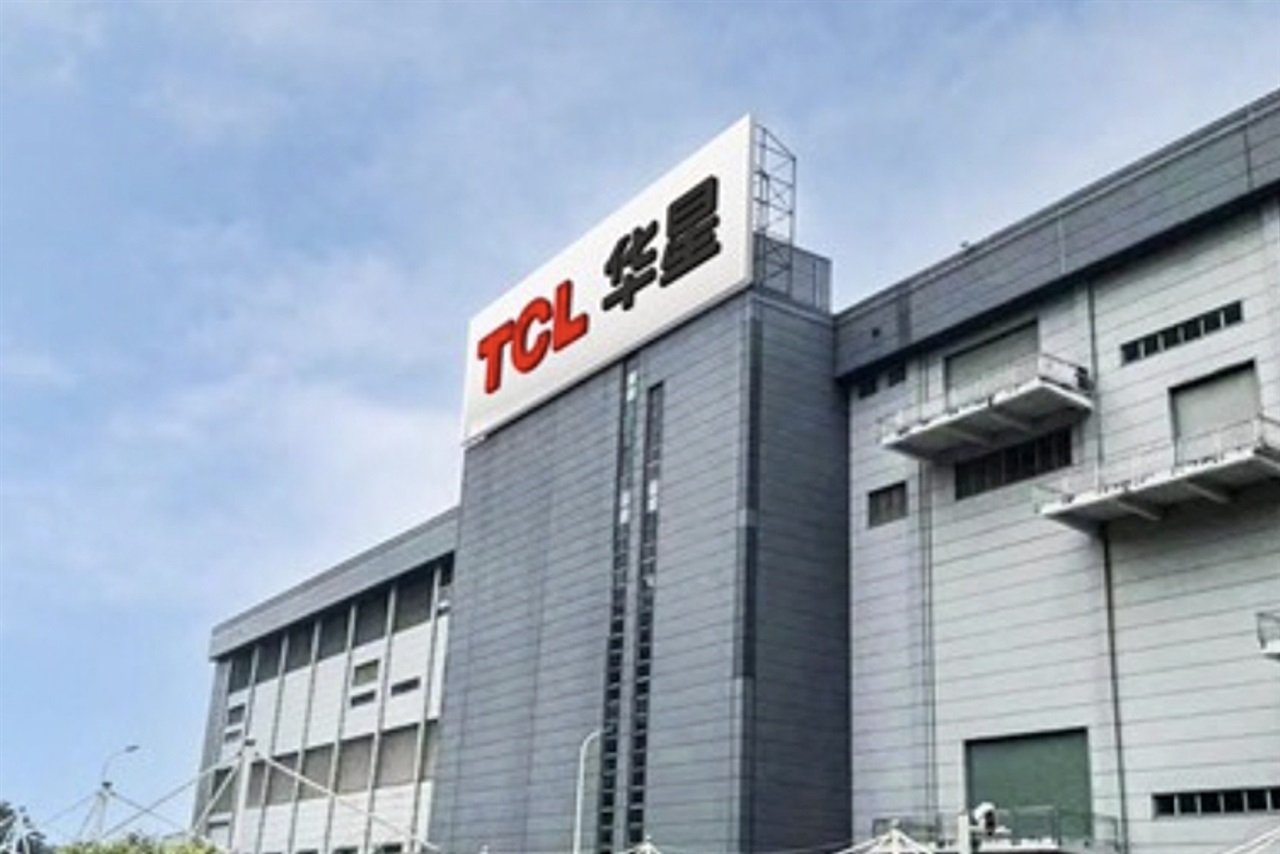
TCL and the Strategic Investment in the Display Sector
TCL, a prominent player in the global technology landscape, is strengthening its position in the Guangzhou production hub. The company has announced a significant $4 billion investment aimed at expanding its OLED display production. This move not only consolidates TCL's grip on a crucial LCD manufacturing hub but also signals a clear orientation towards more advanced, high-demand display technologies.
The OLED investment reflects a market trend towards displays with superior performance in terms of contrast, colors, and flexibility. For a company like TCL, direct control over these production pipelines is essential to ensure competitiveness and innovation capability in a rapidly evolving sector. Such a strategy of vertical integration or supply chain consolidation is a model observed across various technology domains, from semiconductors to infrastructure components.
The Importance of Supply Chain Control
TCL's decision to invest heavily in its OLED production capacity underscores a key principle in the technology industry: the strategic relevance of supply chain control. In an era characterized by supply chain disruptions and increasing demand for specific components, a company's ability to internally manage the production of critical elements can translate into a significant competitive advantage. This approach reduces reliance on external suppliers, mitigating risks associated with shortages or price fluctuations.
For companies evaluating on-premise deployments of complex infrastructures, such as those dedicated to Large Language Models (LLMs), supply chain stability and predictability are crucial aspects. The availability of hardware components, from silicon chips to VRAM memory modules, directly impacts the Total Cost of Ownership (TCO) and the ability to scale operations. Tighter control over display production, while not directly related to AI chips, exemplifies the pursuit of resilience and autonomy that many organizations seek for their critical infrastructures.
Implications for the Tech Ecosystem and TCO
TCL's expansion in the OLED sector has implications that extend beyond the display market. The availability and cost of advanced displays influence a wide range of products, from consumer devices to professional monitors and data center panels. For companies developing AI solutions, for instance, the quality and efficiency of displays can be relevant for data visualization, model interaction, or monitoring the performance of complex systems.
In a broader context, investments of this magnitude in the manufacturing sector help shape the cost dynamics and availability of fundamental technologies. For CTOs and infrastructure architects, understanding these dynamics is essential for planning long-term investments and evaluating the overall TCO of their solutions, whether it involves an on-premise deployment or a hybrid architecture. Data sovereignty and control over underlying hardware are often linked to the ability to procure reliable components at competitive costs.
Future Prospects and Technological Autonomy
TCL's move in Guangzhou is a clear example of how companies are seeking to consolidate their position in key technology sectors through targeted investments. This approach is not just about market share but also about supply chain security and, ultimately, technological autonomy. In an increasingly interconnected yet fragmented world, the ability to control fundamental aspects of production becomes a strategic asset.
For organizations venturing into the world of LLMs and AI, the lesson is clear: infrastructure robustness depends not only on immediate technological choices but also on the stability and resilience of the global supply chain. While AI-RADAR focuses on analytical frameworks for evaluating the trade-offs of on-premise deployments, the ability to procure hardware and components remains a critical factor for any long-term strategy.





💬 Comments (0)
🔒 Log in or register to comment on articles.
No comments yet. Be the first to comment!