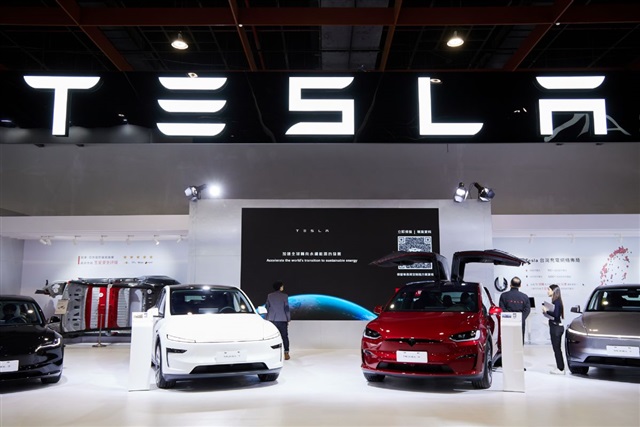
Tesla Focuses on AI and Proprietary Silicon for Next Growth Phase
Tesla has announced a significant acceleration in its strategic investments, particularly focusing on artificial intelligence, Robotaxi development, and custom chip production. This move marks the beginning of a new growth phase for the company, aiming to strengthen its position in both the automotive and technology sectors. Tesla's approach, which vertically integrates hardware and software, is a clear indicator of the direction many companies are taking to maintain a competitive edge and optimize their operations.
Investment in proprietary silicon, in particular, reflects a broader trend in the tech industry. Developing chips in-house allows companies to design hardware specifically optimized for their AI workloads, such as training Large Language Models (LLMs) or real-time inference for autonomous driving systems. This can not only lead to substantial improvements in performance and energy efficiency but also offers unprecedented control over the entire development pipeline, from chip design to final software deployment.
The Strategic Imperative of Custom Silicon
The decision to invest heavily in custom chips, building on initiatives like the Dojo supercomputer, underscores the critical need for specialized hardware in advanced AI applications. For tasks like autonomous driving, where latency and throughput are paramount, off-the-shelf solutions often present limitations. Proprietary silicon enables fine-tuning of architectural elements to specific algorithms, potentially leading to significant gains in processing power per watt and overall system efficiency. This approach also impacts the Total Cost of Ownership (TCO) over the long term, as companies can avoid recurring cloud infrastructure costs and achieve better cost-performance ratios for their specific workloads.
Furthermore, developing custom hardware facilitates greater data sovereignty and security. By keeping critical AI training and inference operations within a self-hosted or air-gapped environment, companies can ensure compliance with stringent regulatory requirements and protect sensitive data. This level of control is particularly vital for applications handling vast amounts of real-world data, like those powering autonomous vehicles.
Implications for AI and Robotaxi Development
These investments are set to profoundly impact Tesla's AI capabilities, especially in the realm of autonomous driving and Robotaxi services. The ability to design chips tailored for the specific neural networks used in their vehicles means faster training cycles and more efficient inference at the edge. This directly translates into quicker iteration on AI models, improved decision-making capabilities for autonomous systems, and ultimately, a more robust and reliable Robotaxi fleet. The sheer scale of data generated by Tesla's vehicles necessitates an infrastructure capable of handling massive data ingestion, processing, and model updates, often pushing companies towards self-hosted solutions.
The development of advanced AI also requires robust infrastructure for model deployment and management. Companies like Tesla often leverage sophisticated pipelines for continuous integration and continuous deployment (CI/CD) of AI models, where custom hardware can provide a stable and optimized foundation. The trade-offs between cloud-based solutions, which offer scalability and managed services, and on-premise or bare metal deployments, which provide maximum control and often better TCO for consistent, high-volume workloads, become central to strategic planning. For those evaluating on-premise deployments, analytical frameworks can help assess these trade-offs effectively.
Future Prospects and Strategic Control
Tesla's intensified focus on AI, Robotaxi, and custom chips represents a strategic pivot towards greater self-reliance and long-term competitive advantage. By owning more of the technology stack, from the silicon to the software, the company aims to accelerate innovation, reduce dependencies on external vendors, and achieve superior performance metrics. This integrated strategy is crucial for navigating the complexities of advanced AI development, where the interplay between hardware and software is critical for achieving breakthroughs.
Ultimately, these investments position Tesla to exert greater control over its destiny in the rapidly evolving landscape of artificial intelligence and autonomous mobility. The ability to rapidly iterate on custom hardware and software, optimized for specific use cases, will be a key differentiator. This trend of vertical integration, driven by the demands of cutting-edge AI, is likely to continue shaping the strategies of leading technology companies worldwide.






💬 Comments (0)
🔒 Log in or register to comment on articles.
No comments yet. Be the first to comment!