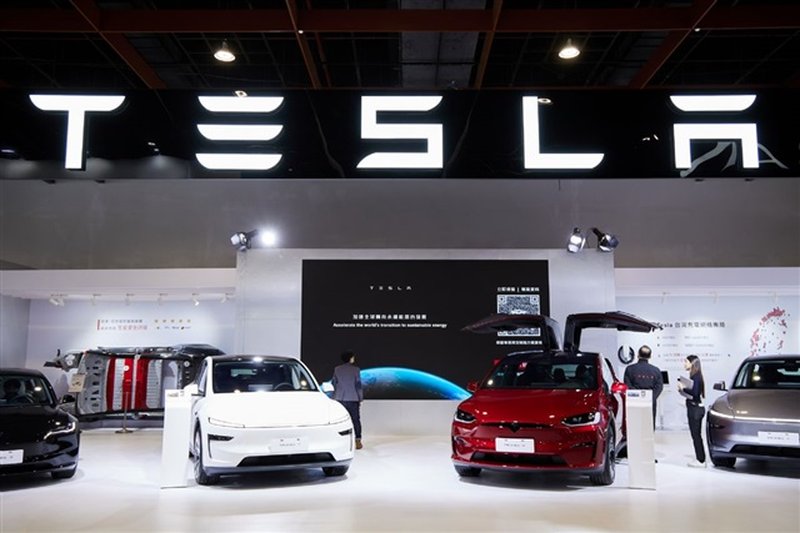
Tesla Bets on Proprietary Silicio with Intel 14A
Tesla, through its CEO Elon Musk, has unveiled ambitious plans for the production of dedicated artificial intelligence chips. The electric vehicle manufacturer's strategy hinges on adopting Intel's 14A manufacturing process, a technology that, at the time of the announcement, is still under development. This move underscores the growing trend among major tech companies to develop proprietary hardware solutions for their AI computing needs.
Tesla's decision to commit to a process that is not yet finalized highlights a long-term vision and a willingness to invest in cutting-edge technologies, accepting the risks associated with developing new silicio architectures. The goal is to support its AI infrastructure, including the future Terafab, with optimized hardware components.
The Bet on Vertical Hardware Control
Musk's announcement during Tesla's latest earnings call emphasized the company's need to build its own silicio. This approach, aiming for vertical integration, is common among companies managing intensive AI workloads and seeking to optimize performance and Total Cost of Ownership (TCO). The choice of Intel as a partner for the 14A process indicates confidence in the chip manufacturer's ability to deliver advanced technology, albeit with uncertain timelines.
Developing proprietary chips offers Tesla greater control over the hardware, allowing for specific optimizations for its Large Language Models (LLMs) and autonomous driving models. This can translate into advantages in terms of energy efficiency, latency, and throughput, which are crucial aspects for on-premise or edge AI deployments. However, it also involves significant investments in research and development and reliance on external manufacturing processes.
Implications for On-Premise AI Deployment
Tesla's strategy of developing in-house silicio, while relying on an external process like Intel's 14A, reflects a broader industry trend. Many companies, particularly those with data sovereignty requirements or operating in air-gapped environments, are evaluating or implementing self-hosted solutions for their AI workloads. The ability to customize hardware down to the silicio level can offer competitive advantages in terms of performance and security.
For organizations considering on-premise LLM deployment, the availability of specialized and optimized hardware is a key factor. The choice between purchasing commercial GPUs and developing proprietary chips involves a thorough analysis of TCO, VRAM requirements, computing capacity, and the complexity of the production pipeline. AI-RADAR offers analytical frameworks on /llm-onpremise to evaluate these trade-offs, providing tools for informed decisions.
Future Prospects and Technological Challenges
Tesla's commitment to Intel's 14A process, still under development, highlights the challenges and opportunities in the landscape of AI silicio manufacturing. Reliance on an immature process introduces an element of risk and uncertainty regarding production timelines and final performance. However, if the 14A process meets its targets, it could provide Tesla with a significant technological advantage.
This move also underscores the increasing importance of verticalization in the tech industry, where companies seek to control every aspect of their stack, from hardware to software. The success of this gamble will depend on Intel's ability to finalize the 14A process and Tesla's capacity to design chips that fully leverage its potential for their AI workloads.



💬 Comments (0)
🔒 Log in or register to comment on articles.
No comments yet. Be the first to comment!