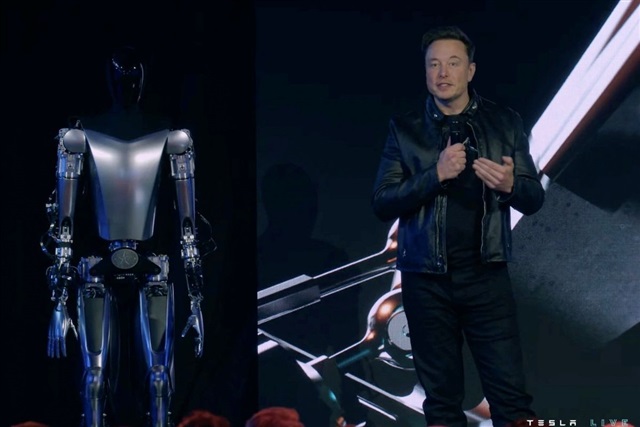
The news is eyebrow-raising: Tesla reportedly declined a speaking slot at a major conference on artificial intelligence for autonomous driving. The unofficial but telling reason? The company doesn’t need a stage to discuss the future of software-defined vehicles—it is already building and selling them by the hundreds of thousands.
Behind this decision lies an architectural truth that escapes the mainstream debate. Tesla has bet everything on a deployment model that turns every vehicle into an autonomous compute node. Its custom onboard hardware runs inference of the driving models directly on the car, without relying on a cloud connection for real-time decisions.
This approach is the automotive equivalent of on-premise deployment. While other automakers are designing platforms that mix edge and cloud or offload processing to remote data centers, Tesla has created a fleet of “data centers on wheels.” Sensor data is processed locally, slashing latency to safety-critical levels and ensuring the vehicle can operate even without connectivity.
The impact on Total Cost of Ownership is radical. Not only does it avoid recurring data transfer and cloud infrastructure costs for every driving decision, but it also provides complete sovereignty over the collected data. In an increasingly privacy-conscious regulatory environment, such as Europe’s GDPR, keeping all processing local simplifies compliance and reduces exposure risk.
There is a flip side: this model demands enormous upfront investment in custom chip design and software optimized for on-device inference. Tesla built its own FSD chip and an optimization stack that includes aggressive quantization and model compression—a path not everyone can follow.
Tesla’s absence from the conference circuit marks a turning point: the gap between those who “talk” about autonomous driving AI and those who “do” it is dangerously widening. While the industry debates hybrid architectures and partnerships with hyperscalers, Tesla shows that controlling the full pipeline—from silicon to software—is the real competitive advantage.
For competitors, the message is stark: if large-scale edge deployment becomes the standard, companies that today depend on external chip suppliers and the cloud will be forced into an expensive race to catch up. That is why many see Tesla’s silence not as arrogance but as a statement of strength. The real game is played on the hardware running locally, not on keynotes.







💬 Comments (0)
🔒 Log in or register to comment on articles.
No comments yet. Be the first to comment!