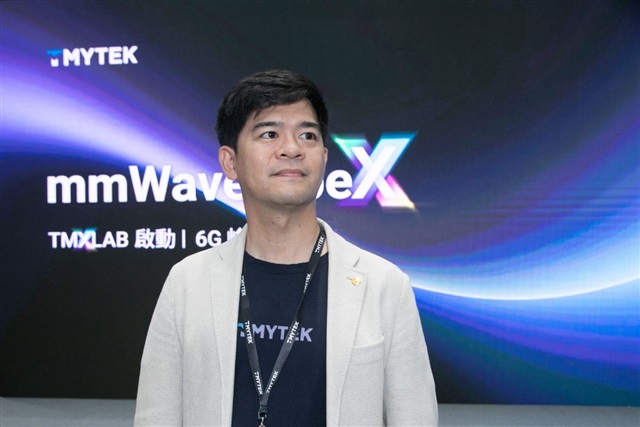
Tmytek Prepares for Public Listing: Millimeter-Wave Chips for Satellites, Defense, and 6G
Taiwanese company Tmytek has initiated the process for a public listing, marking a significant step in its growth trajectory. Central to its strategy is the development and commercialization of chips based on millimeter-wave technology, poised to revolutionize critical sectors such as satellite communications, defense applications, and infrastructure for future 6G networks. This move underscores the increasing importance of specialized hardware solutions in an increasingly demanding technological landscape.
Tmytek's decision to go public reflects confidence in the market potential of its solutions. In an era where the demand for high-speed, low-latency connectivity is constantly rising, especially in contexts where reliability and security are paramount, millimeter-wave chips are positioned as fundamental components. The company's focus on these strategic sectors highlights a clear market vision, targeting high-value niches that require cutting-edge technologies.
Millimeter-Wave Technology: Advantages and Challenges
Millimeter-wave (mmWave) represents a portion of the electromagnetic spectrum characterized by very high frequencies, typically between 30 GHz and 300 GHz. This band offers wide bandwidth, enabling extremely high data transmission speeds and reduced latency, essential characteristics for applications such as advanced 5G, future 6G, high-capacity satellite communications, and next-generation radar systems. The ability to handle large volumes of data with minimal latency is crucial for AI/LLM workloads requiring high throughput.
However, the implementation of millimeter-waves also presents challenges. Due to their high frequencies, mmWave signals are more susceptible to attenuation and obstruction by physical objects such as buildings, trees, or even rain. This necessitates the use of directional antennas and advanced technologies like beamforming to ensure reliable coverage. Designing chips capable of operating effectively under these conditions, integrating signal processing and power management functionalities, is a complex task that Tmytek is addressing.
Implications for Infrastructure and Data Sovereignty
The application of millimeter-wave chips in sectors such as defense and satellite communications has profound implications for infrastructure deployment strategies. In these contexts, data sovereignty, security, and the ability to operate in air-gapped or self-hosted environments are non-negotiable requirements. Specialized hardware solutions, like those proposed by Tmytek, become key elements for building robust and controlled local stacks, reducing reliance on external cloud services and ensuring compliance with stringent regulations.
For organizations evaluating on-premise deployments for AI/LLM workloads, the reliability and performance of network hardware are as important as GPUs or storage systems. The ability to transmit data at high speed and low latency between cluster nodes, or to remote systems via satellite, directly influences TCO and overall operational efficiency. The choice of components like Tmytek's mmWave chips can therefore be a decisive factor for architectures that prioritize total control over infrastructure and data.
Future Prospects and Tmytek's Strategic Role
The future of communications is closely linked to the evolution of millimeter-wave technologies. With the advancement towards 6G, which promises even greater speeds and capacities, mmWave chips will be at the heart of new applications, from extended reality (XR) to autonomous vehicles, and environmental monitoring and security systems. Tmytek's ability to innovate in this space positions it as a strategic player in a rapidly expanding market.
Going public will provide Tmytek with the necessary resources to accelerate research and development, consolidating its position in the defense and satellite communications markets, and opening new opportunities in the nascent 6G ecosystem. This development highlights how innovation in specialized hardware is fundamental not only for technological advancement but also for supporting the security, control, and performance needs of critical infrastructures globally.





💬 Comments (0)
🔒 Log in or register to comment on articles.
No comments yet. Be the first to comment!