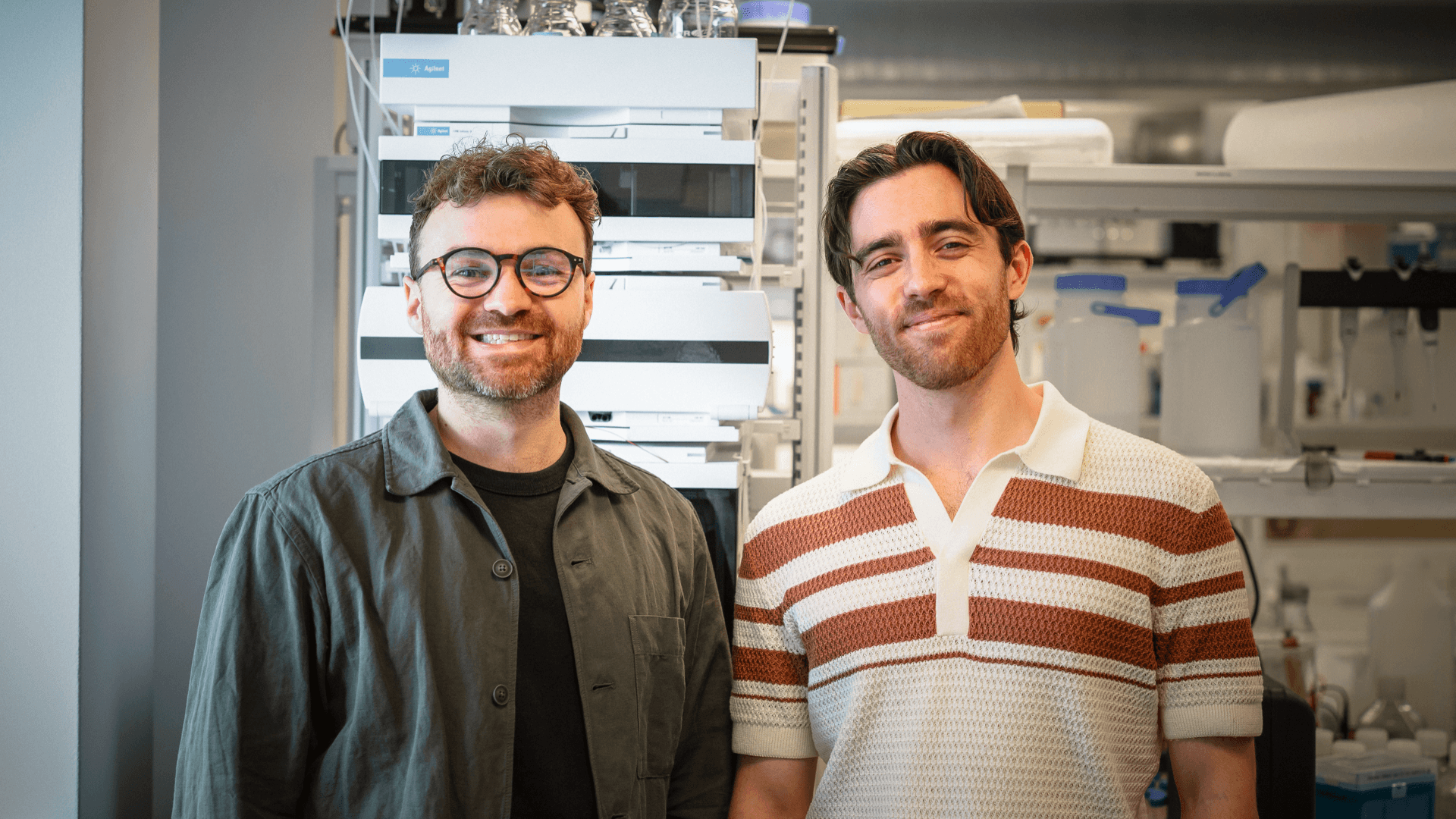
Tolemy Bio: A New Impetus for AI in Cell Biology
Tolemy Bio, a biotech startup headquartered in Cambridge with significant operational activities in Barcelona, has announced it has raised €1.4 million in a pre-seed funding round. This capital is earmarked to boost the development of its AI-enabled technology, designed for cell biology research and biopharma development. The round was led by Norrsken Evolve, with participation from Big Sur Ventures, JME Ventures, Masia, and a new UK-based stealth fund.
Founded by Alex Ward and Caelan Anderson, Tolemy Bio is developing Orbit, a system that promises to transform how researchers understand, interpret, and optimize living cells—crucial elements in modern therapies and drug development. This initiative addresses a longstanding challenge in the biopharmaceutical sector: despite the centrality of living cells, experimental workflows often remain manual and fragmented, limiting the effective application of AI tools.
Orbit: An AI-Native Environment for Data Management
The primary problem Orbit aims to solve is the dispersion of research data, which is often scattered across spreadsheets, lab equipment, notebooks, and disconnected systems. This fragmentation prevents teams from fully leveraging the potential of AI tools in drug development and manufacturing processes. Orbit is designed to consolidate these fragmented workflows into a single AI-native environment.
Tolemy Bio's system connects existing laboratory tools and various experimental data sources. Furthermore, it incorporates virtual cell models and AI research agents, tools that support scientists in analyzing cellular behavior and guiding experimental decision-making. This integration is crucial for overcoming difficulties in interpreting and reproducing complex cell biology experiments, as highlighted by Alex Ward, co-founder and CEO of Tolemy Bio.
Implications for Data Sovereignty and On-Premise Control
Orbit's approach, which aims to centralize and unify research data within an AI-native environment, has significant implications for organizations that value data sovereignty and control over their infrastructures. In highly regulated sectors like biopharma, internal management and protection of sensitive data are absolute priorities. A system that aggregates data from various sources and processes it locally or within a controlled environment can offer substantial advantages in terms of compliance and security.
For CTOs and infrastructure architects evaluating on-premise deployments for AI/LLM workloads, solutions like Orbit underscore the need for robust infrastructures capable of handling large volumes of heterogeneous data and supporting AI inference efficiently. The ability to keep data within one's own boundaries, avoiding transfer to external cloud services, becomes a critical factor for intellectual property protection and regulatory compliance. AI-RADAR offers analytical frameworks on /llm-onpremise to evaluate the trade-offs between control, TCO, and performance in on-premise deployment contexts.
Future Prospects and Long-Term Vision
The newly raised funds will be used to expand Tolemy Bio's capabilities in data generation, machine learning, and engineering. The company will continue the development of Orbit and support early deployments with customers and partners. Although the headquarters are in Cambridge, much of the operational activity will continue to be managed from Barcelona, reflecting a distributed development strategy.
Tolemy Bio's long-term goal is to build a virtual-cell platform that helps biopharma companies move beyond trial-and-error experimentation. The vision is to adopt more precise and data-driven approaches to understanding and controlling living cells, thereby accelerating the discovery and development of new therapies. This shift from manual methodologies to data-driven processes represents a fundamental evolution for the entire industry.





💬 Comments (0)
🔒 Log in or register to comment on articles.
No comments yet. Be the first to comment!