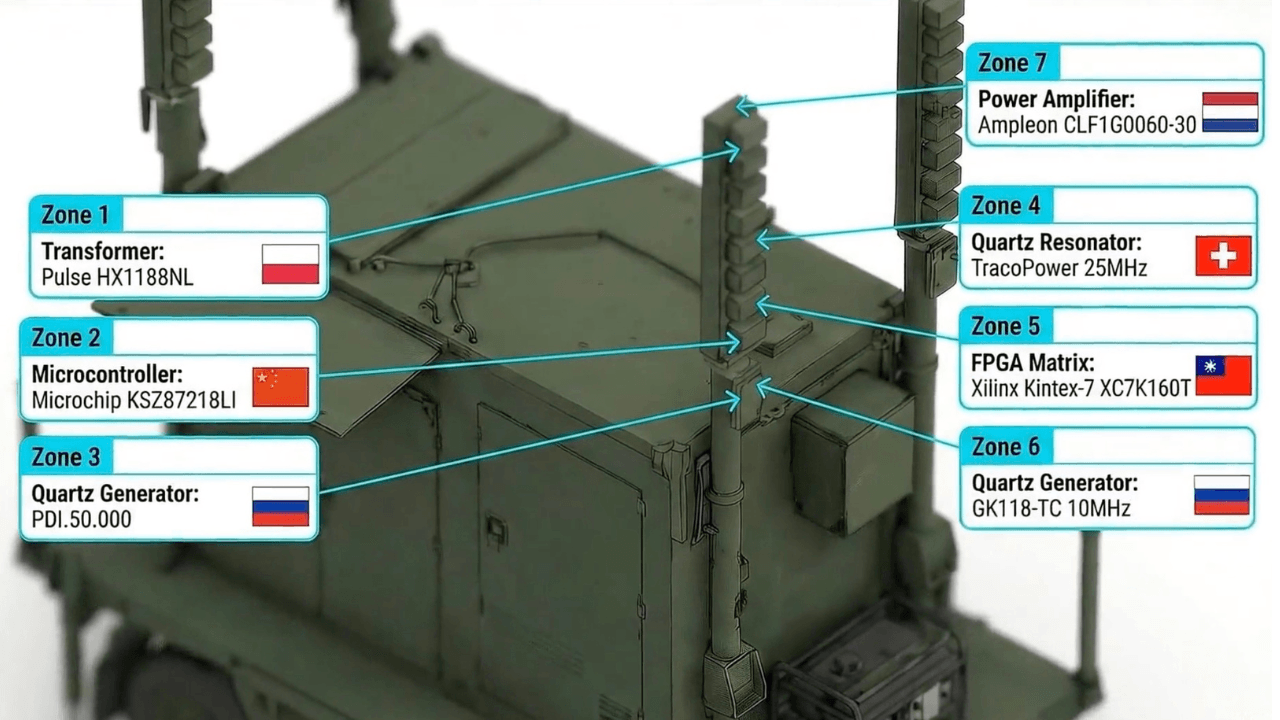
Ukraine’s Defense Ministry has just broken the traditional mold of war trophies. With the launch of TrophyLab, Ukraine is not simply parading destroyed Russian tanks: it is opening a shared technical archive where enemy weapons become living material for those building new defensive capabilities.
From capture to shared intelligence
Since the beginning of the full-scale invasion, Ukrainian military, research centers, and scientific institutions have been dismantling Russian weapon systems piece by piece to understand components, technological solutions, and vulnerabilities. Now that knowledge is no longer trapped in intelligence vaults: TrophyLab makes it accessible to a verified ecosystem of Ukrainian defense manufacturers, military units, scientific bodies, and international partners supporting Kyiv.
The platform provides technical documentation, analysis results, and reports on missiles, drones, and other modern equipment. More than that: authorized users can request direct physical examination of captured systems, choosing from several levels of analysis – from non-destructive inspection to tests involving full disassembly or destruction of the sample. This gives engineers the ability to calibrate their solutions against real hardware, not abstract simulations, and it dramatically shortens countermeasure development cycles.
Data sovereignty meets modern warfare
Platforms like TrophyLab raise questions that go beyond the military perimeter and cut to the heart of sensitive data sharing architectures. In a context where information advantage can determine a system’s survival, the choice between centralized cloud access and an on-premise or hybrid model is far from trivial.
Anyone working in defense knows that data sovereignty is not a luxury: technical documentation, vulnerability reports, and component schematics must remain under the control of those who generate and use them, shielded from unauthorized access or external infrastructure dependencies. The fact that TrophyLab explicitly speaks of a “secure space” and verified users suggests an architecture designed to balance international collaboration with strict information control – a tension we encounter daily in enterprise Large Language Model deployment decisions, where the goal is to enable sharing without ceding ground on compliance and data residency requirements.
A living lab for startups and partners
For defense-sector startups, TrophyLab amounts to a lab without equal. Companies working on anti-drone systems, electronic warfare, autonomous platforms, and sensors can study the vulnerabilities of real Russian hardware and test their own solutions against it. This collapses R&D timelines in areas such as drone defense, secure communications, and missile countermeasures – and does so by granting access to assets normally off-limits to anyone outside military and intelligence organizations.
Mykhailo Fedorov, Ukraine’s Defense Minister and Deputy Prime Minister for Digital Transformation, captured the philosophy behind the initiative: “Every piece of captured Russian equipment is not just a trophy. Knowledge about adversary technologies must not remain restricted: it should be used by those building defense systems. We are dismantling these weapons piece by piece. What was meant to be a secret advantage is becoming open knowledge for those defending democracy.”
Beyond the conflict, a paradigm shift
TrophyLab is not merely a sharing platform; it signals how contemporary defense is moving toward open models with granular access control. The ability to physically examine enemy systems and read Ukrainian analysts’ reports redefines the very concept of military R&D, edging closer to a form of open intelligence underpinned by strong authentication and strict usage policies.
In this sense, the initiative speaks to anyone designing architectures for sensitive data: collaboration is not the enemy of security if grounded on segregated spaces, verified access, and transparency around analysis modes. Ukraine is showing that even an enemy arsenal can become raw material for shared innovation – provided that data control stays at the center.







💬 Comments (0)
🔒 Log in or register to comment on articles.
No comments yet. Be the first to comment!