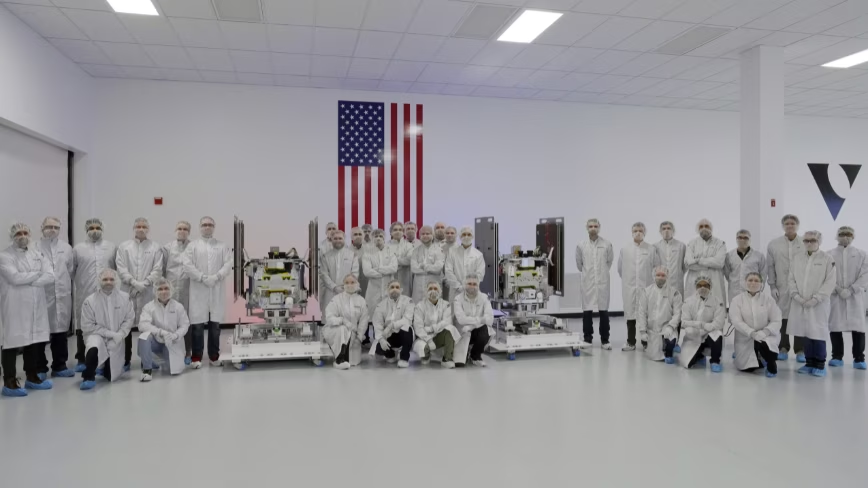
True Anomaly: A Billion Dollars for Orbital Defense
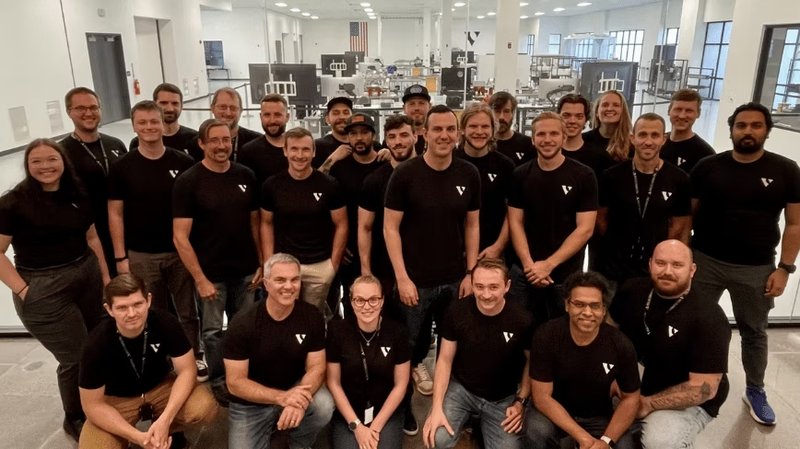
True Anomaly, a Colorado-based startup, recently announced a significant funding round of $650 million. This brings the total capital raised by the company beyond the $1 billion mark, solidifying its position as a key player in the space defense sector. The investment underscores the growing strategic importance of autonomous capabilities in space, particularly for national security missions.
The company distinguishes itself by its exclusive focus on orbital defense, a field that is gaining increasing relevance in the current geopolitical landscape. The massive funding reflects investors' confidence in True Anomaly's vision and its ability to develop innovative solutions to address emerging challenges in the space environment.
Jackal Vehicles: Technology and Capabilities
At the core of True Anomaly's offering are the autonomous orbital vehicles named Jackal, supported by sophisticated proprietary software. These systems are designed to operate in close proximity to other satellites, performing inspection tasks and providing detailed space situational awareness. The ability to maneuver precisely in orbit is fundamental for monitoring critical assets and identifying potential threats.
A particularly relevant aspect of the Jackal vehicles' capabilities is their potential deployment within the "Golden Dome" program. Under this initiative, the vehicles could be used for the interception of ballistic and hypersonic missiles, representing a significant evolution in defense strategies. The autonomy of these systems is crucial for ensuring rapid and effective responses in complex and dynamic scenarios, where human latency could compromise the outcome of operations.
Implications for Space Security and AI Deployment
Autonomous systems like those developed by True Anomaly, which operate in national security contexts with highly sensitive data, impose stringent requirements on computing infrastructure and deployment architecture. The need for low latency for real-time decisions, high reliability for critical missions, and guaranteed data sovereignty often pushes organizations towards self-hosted or air-gapped solutions. In these environments, direct control over hardware and software is paramount.
For those evaluating on-premise deployment, significant trade-offs exist. While a self-hosted approach may entail a higher initial TCO and complexity in infrastructure management, it offers advantages in terms of security, compliance, and customization. The ability to keep AI data and models within controlled boundaries is crucial for national security and the protection of sensitive information, an aspect that AI-RADAR explores in depth in its analytical frameworks on /llm-onpremise.
Future Prospects and Technological Challenges
The space defense sector is rapidly evolving, with an increasing emphasis on autonomy and the integration of artificial intelligence to counter increasingly sophisticated threats. The investment in True Anomaly highlights a broader trend towards the militarization of space and the need for advanced defensive capabilities. The continuous development of autonomous orbital vehicles and supporting software will require constant innovations in areas such as on-board processing, secure communication, and system resilience.
Technological challenges are not limited to vehicle development but also extend to the deployment and management of the AI infrastructures that support them. Ensuring that artificial intelligence models can operate reliably and securely in extreme environments and with limited resources, while maintaining the ability to adapt to new threats, will be fundamental to the success of these missions.




💬 Comments (0)
🔒 Log in or register to comment on articles.
No comments yet. Be the first to comment!