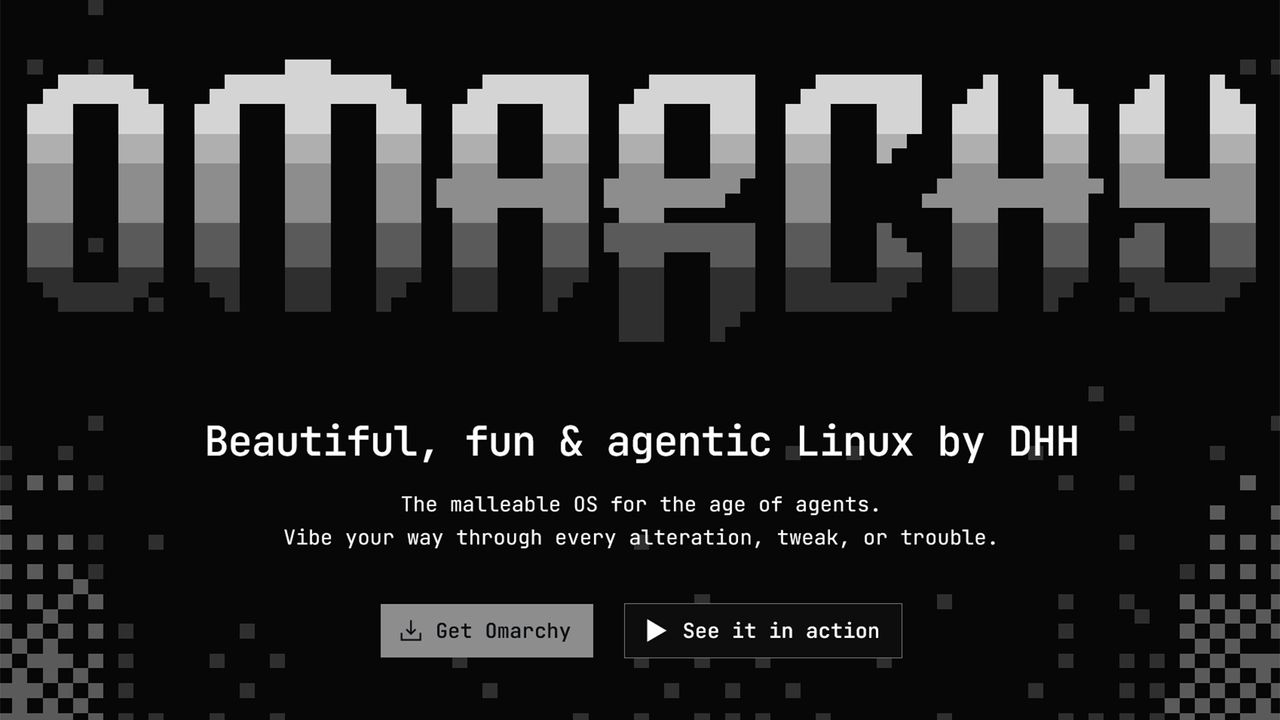
An old MacBook, a mirror pointed at its screen, and a webcam watching that mirror: that is the setup described for an AI agent writing its own AMD GPU drivers. The striking detail isn't just software writing software; it's that the agent checks its progress visually, in real time, like a technician watching a monitor during a repair.
The report comes in the context of Omarchy Linux, described as 'agent-first'. That framing reverses the usual software-development order: instead of a tool executing predefined commands, an agent plans, tries, observes, and corrects. Writing AMD GPU drivers for an older MacBook is a useful edge case. The code must interact with firmware, manage memory, and produce video output. If something fails, the system can freeze before returning a log. An agent that uses a webcam and a mirror to see the screen can catch those states even when software interfaces stop responding.
Using a mirror to observe the screen is a detail that says a lot. It becomes a low-cost observation channel for system states that are not exposed through APIs. On a self-hosted or air-gapped machine, an external agent looking at physical output can diagnose without installing telemetry agents and without sending logs or screenshots to a cloud. That has a direct consequence for data sovereignty: what happens on the machine stays on the machine. For those evaluating on-premise deployment, a familiar trade-off emerges: local autonomy comes with supervision and perception overhead. AI-RADAR explores these aspects at /llm-onpremise.
The downside is the fragility of computer vision. A misread on a low-resolution frame can lead to a wrong fix, and a bad driver change can make the system unstable in ways that are hard to reproduce. The upside is that the human operator sees the same scene as the agent and can intervene immediately, a level of control that cloud-based automation often does not provide with the same immediacy.
The source does not report hardware details, latency figures, or model choices, so this is an experiment rather than a benchmark. But that is precisely the signal: agentic automation does not necessarily depend on the latest accelerator or a data center. It can begin on old machines with improvised physical setups. The real constraint is the feedback loop itself, whether textual, visual, or tactile.
The mirror is a simple answer to a structural gap: agents still lack a reliable native way to access everything happening on a display. Until frameworks standardize a clean visual channel, setups like this remain a reminder that hardware automation often starts with lateral adaptations.





💬 Comments (0)
🔒 Log in or register to comment on articles.
No comments yet. Be the first to comment!