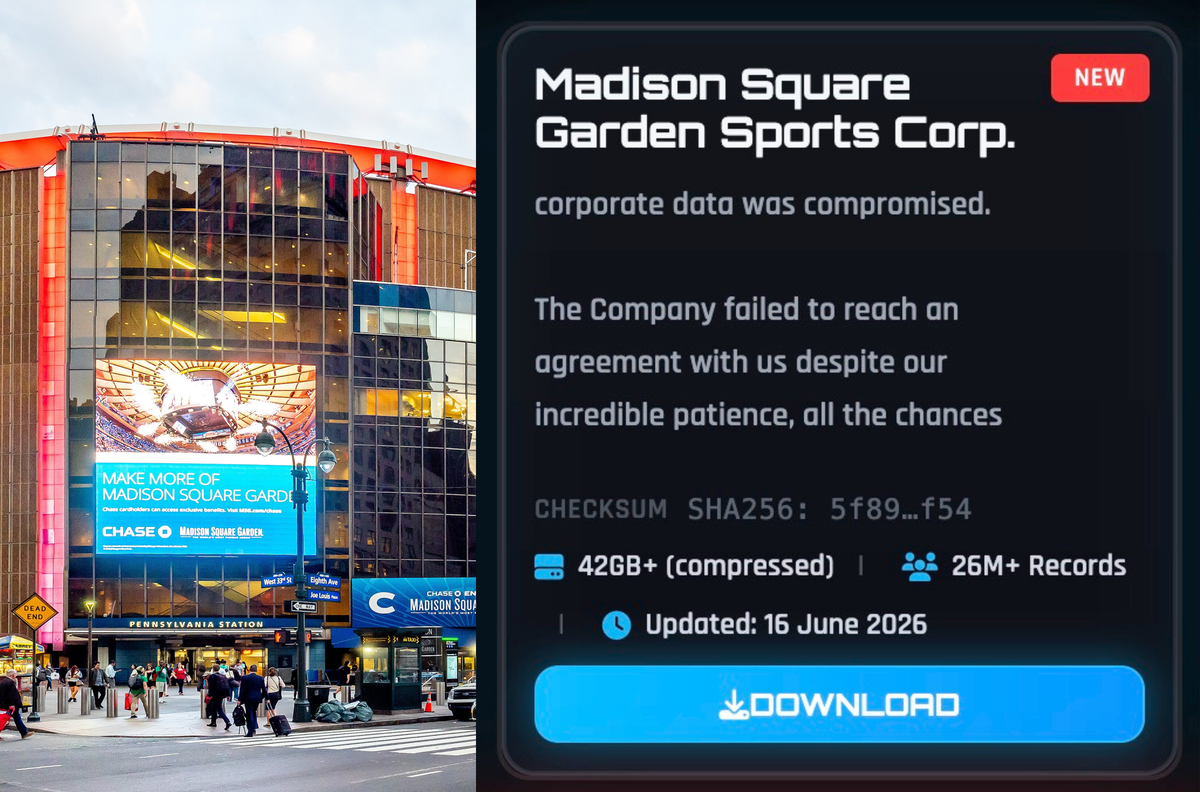
Shiny Hunters Makes Madison Square Garden Data Public
The cybersecurity landscape has been shaken by a new and significant breach: the Shiny Hunters hacker group has publicly released data stolen from Madison Square Garden (MSG) online. The nearly 45GB archive is now available for download and, according to the attackers, includes customers' personal information. This event, which follows the non-payment of a ransom, highlights the growing challenges large organizations face in protecting their digital assets.
The data publication comes just days after the New York Knicks' victory in the NBA Finals, a success that garnered enormous media attention for the team and, consequently, for MSG. Although the breach occurred on June 5, as stated by a spokesperson for the Shiny Hunters group, the current media resonance amplifies the impact of this information leak, emphasizing the vulnerability of corporate systems.
Breach Details: Between Personal Data and Risk Profiles
A sample of the data reviewed by 404 Media reveals the sensitive nature of the compromised information. Files were found mentioning specific sports teams and Knicks-related personalities, with fields including "address," "claim to fame," "cost of talent," and in some cases, direct contact information for them or their representatives. This suggests a detailed collection of profiles, potentially used for internal or marketing purposes.
Within the sample, a file emerged containing what appear to be emails sent by customers to MSG, sometimes with the organization's responses. One such email reports a user's complaint about potentially being flagged by MSG's facial recognition systems, a surveillance technology that, as reported by WIRED, has long been employed by MSG owner Jim Dolan in his arenas. Another file, named "Talent," lists numerous high-profile individuals from the sports and entertainment world, including family members of MSG executives, former New York Knicks players and head coaches, and celebrities like Ben Stiller. Stiller, a huge Knicks fan, is listed with an email address for his production company, Red Hour Films, and categorized as "Low Risk," while rapper A Boogie wit da Hoodie is the only person listed as "High Risk," although the precise meaning of these classifications is unclear.
Context and Implications for Data Sovereignty
Shiny Hunters is a well-known group in the cyber threat landscape, responsible for numerous breaches over the years. Their tactic, explicitly stated in a message on their website, is clear: "When you pay us, your data is deleted, and you move on with your life. When you don’t pay us, you get posted here, among other things." MSG, not having immediately responded to a request for comment, appears not to have yielded to the ransom demand.
This incident adds to a previous security episode involving MSG. In March, the organization had confirmed it suffered a data breach that targeted users of Oracle’s E-Business Suite, with responsibility attributed to the Cl0p ransomware group. These consecutive events underscore the persistent vulnerability of digital infrastructures and the critical importance of data sovereignty and compliance. For companies managing significant volumes of sensitive information, the choice between on-premise deployment and cloud solutions for AI/LLM workloads becomes crucial, directly impacting data control and the ability to respond to threats like these.
Strengthening Defenses in the Digital Age
The breach suffered by Madison Square Garden serves as a warning for all organizations handling sensitive data. Protecting personal and corporate information is not just a matter of regulatory compliance, but a fundamental pillar for customer trust and reputation. Incidents like this highlight the need to invest in robust security strategies, which include not only perimeter defenses but also a deep understanding of the data lifecycle and potential internal vulnerabilities.
For CTOs, DevOps leads, and infrastructure architects evaluating self-hosted alternatives versus the cloud for AI/LLM workloads, risk management and the Total Cost of Ownership (TCO) of security solutions are decisive factors. The ability to maintain direct control over data, especially in air-gapped or self-hosted environments, can offer a higher level of sovereignty and compliance, although it requires significant investments in hardware and expertise. AI-RADAR offers analytical frameworks on /llm-onpremise to support the evaluation of these trade-offs, providing tools to balance costs, control, and compliance in an evolving threat landscape.









💬 Comments (0)
🔒 Log in or register to comment on articles.
No comments yet. Be the first to comment!