It’s not every day that a Reddit post, written on a bus, contains technical news relevant to those running LLMs locally. User /u/transanethole, while thanking open source developers, dropped a detail worth noting: “vLLM developers have released three new major releases and, more importantly, the OOM (Out Of Memory) issues caused by preallocations and tuning seem to be gone.” The result? The context window of the Qwen2.5 7B model, running on a single NVIDIA RTX 5090 GPU, jumped from 120,000 to 240,000 tokens.
vLLM is a serving framework for LLMs that uses PagedAttention to manage memory efficiently during inference. Until recently, bugs related to VRAM preallocation and internal tuning parameters could trigger seemingly inexplicable memory errors, forcing users to shrink context windows or run smaller models. The fix, largely unnoticed by the wider public, represents a concrete leap for anyone committed to on-premise deployment.
Doubling context length without upgrading hardware is significant. It means you can analyze longer documents, summarize full reports, or sustain more complex conversations without breaking text into batches. For organizations that keep data in-house for sovereignty or compliance reasons, every byte of VRAM counts, and such optimizations lower TCO (Total Cost of Ownership) by raising the ceiling of what a single card can do.
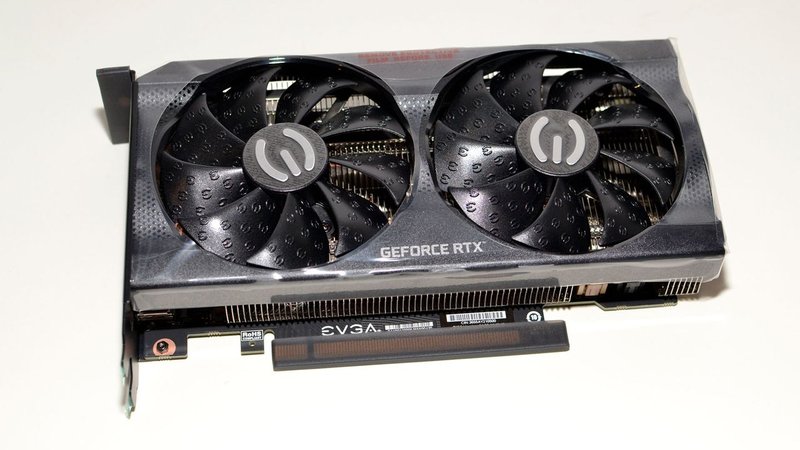
The mention of an RTX 5090 is interesting because it’s a consumer GPU, not an enterprise accelerator. Combined with a 7-billion-parameter Qwen2.5 model, it indicates the open source community is pushing local inference very close to levels that previously demanded multi-GPU setups or cloud resources. It’s not just a technical milestone: it’s a signal for those designing on-premise infrastructures, where direct hardware control and the ability to tune software become competitive advantages.
But as the original post reminds us, behind these advances lies a human element often overlooked. Maintaining an open source project is emotionally taxing: from maintainer burnout to the feeling of not being welcome, to the constant risk of conflicts. Gratitude is not just politeness; it’s the glue of an ecosystem that quietly improves software, avoiding the kind of deterioration that plagues so much proprietary code.
The vLLM episode confirms that working in the open with distributed contributions yields continuous improvement. For those evaluating on-premise LLM deployment, the lesson is twofold: first, keep software updated, because release after release you may gain capabilities without buying new hardware; second, recognize that those releases exist thanks to a community that deserves support. A delicate balance, but one that, when it works, produces concrete results – like 240,000 tokens on a single card.




💬 Comments (0)
🔒 Log in or register to comment on articles.
No comments yet. Be the first to comment!