A Strategic Investment for the Future of Electronics
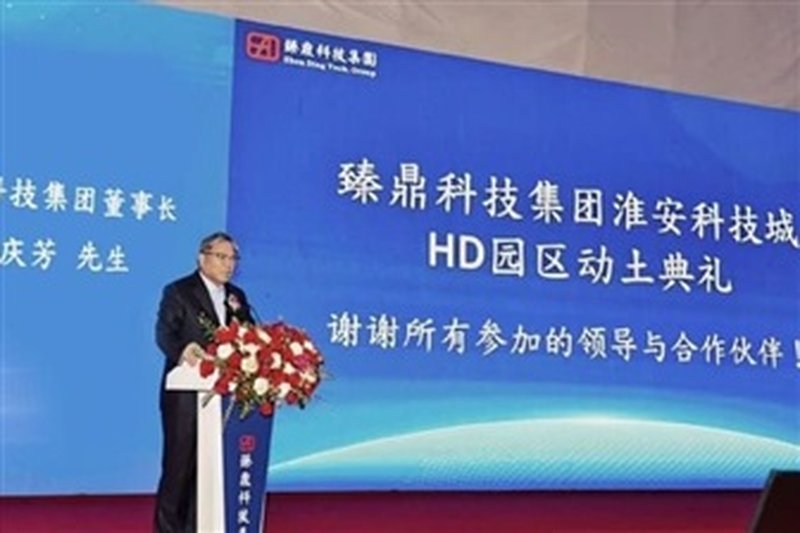
Zhen Ding, a leading supplier in the printed circuit board (PCB) industry, has initiated a significant expansion effort with an investment of CNY 40 billion in Huai'an city. The primary objective is to boost the production capacity of high-end PCBs, essential components for the modern electronics industry. This strategic move was officially inaugurated with a groundbreaking ceremony for the company's new HD campus, attended by Chairman Charles Shen.
This investment underscores Zhen Ding's commitment to strengthening its leadership position in a constantly evolving market. The expansion of high-end PCB production capacity is a direct response to the growing demand for more sophisticated and high-performance components, necessary to support technological innovations in key sectors such as artificial intelligence, 5G, and high-performance computing. The choice of Huai'an as the location for this strategic development also reflects logistical considerations and access to a skilled workforce.
The Importance of Advanced PCBs in the AI Era
High-end PCBs represent the backbone of modern hardware, particularly for infrastructures dedicated to artificial intelligence and Large Language Models (LLM). These components are not mere circuit supports; they are engineered to handle extreme interconnection densities, ensure signal integrity at high frequencies, and effectively dissipate heat generated by powerful chips like GPUs. A PCB's ability to meet these requirements is directly related to the performance and reliability of AI systems.
For companies evaluating on-premise LLM deployment, the availability of advanced PCBs is crucial. Motherboards, expansion cards, and memory modules integrating GPUs with high amounts of VRAM (such as A100 or H100) rely on high-quality PCBs to perform optimally. An expansion of production capacity in this segment can help mitigate supply chain bottlenecks, potentially reducing delivery times and costs for acquiring robust and reliable AI hardware—a key factor in calculating the Total Cost of Ownership (TCO) for self-hosted infrastructures.
Implications for the Supply Chain and TCO
An investment of this magnitude by a player like Zhen Ding has significant repercussions across the entire technology supply chain. The increased availability of high-end PCBs can translate into easier procurement for manufacturers of servers, graphics cards, and other critical AI components. This, in turn, can positively impact the TCO for companies choosing to implement on-premise AI solutions, potentially offering more competitive pricing and reduced waiting times for hardware.
For CTOs and infrastructure architects, supply chain resilience is a decisive factor. The ability to obtain specific hardware for AI workloads, which often requires high-density configurations and extreme performance, is fundamental for maintaining data control and adhering to sovereignty and compliance requirements. A more robust supply of advanced PCBs can therefore indirectly support on-premise and air-gapped deployment strategies, providing the material foundation needed to build resilient and controlled AI infrastructures. For those evaluating on-premise deployments, AI-RADAR offers analytical frameworks on /llm-onpremise to assess trade-offs and optimize TCO.
Future Prospects and Industry Challenges
Zhen Ding's investment in Huai'an reflects a broader trend in the technology sector: the need for increasingly sophisticated manufacturing infrastructures to support innovation. As the demand for AI computing capacity continues to grow exponentially, the quality and availability of foundational components, such as PCBs, become critical factors. The industry is constantly seeking new materials and manufacturing processes that can handle ever-higher data transmission speeds and greater component integration, while maintaining sustainable costs.
Future challenges include further miniaturization, advanced thermal management, and the integration of new functionalities directly into PCBs. Investments like Zhen Ding's are essential not only to meet current demand but also to push the boundaries of electronic engineering, ensuring that the global supply chain is ready for the next generation of AI and high-performance computing technologies. This proactive approach is crucial for sustaining the evolution of complex technological ecosystems, from cloud data centers to edge and self-hosted solutions.








💬 Comments (0)
🔒 Log in or register to comment on articles.
No comments yet. Be the first to comment!