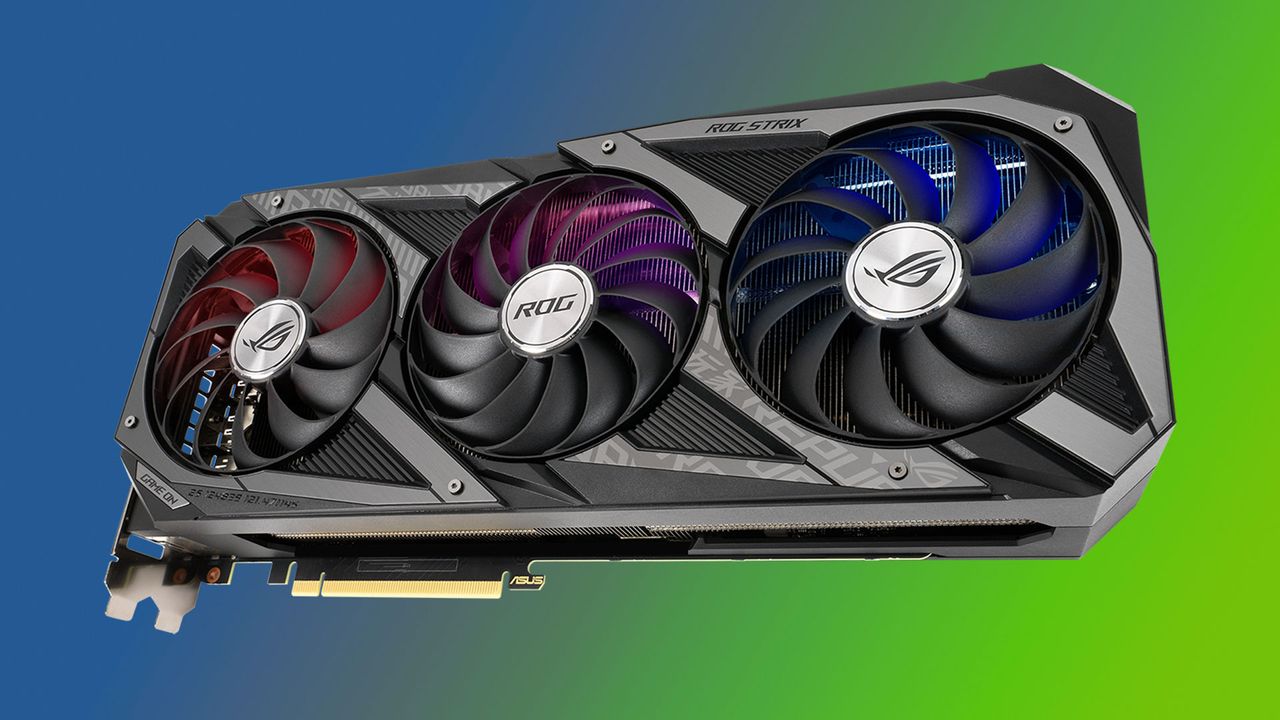
The experiment is as brutal as it is instructive: someone bolted eleven fans and a 360mm AIO liquid cooler onto a GeForce RTX 3080, turning it into a device that, under full load, sounds like a jet taking off. The thermal result is impressive—30°C cooler than the stock cooling—but the FPS gain barely reaches 5 units. The reason is simple: at those temperatures, the GPU was already well below its throttling threshold, and boost frequency does not scale linearly with extreme cold. In gaming, the law of diminishing returns hits hard.
But shift the view from the desktop to the rack cabinet. While noise is an unbearable flaw for a gamer, in an on-premises environment dedicated to AI inference, the story changes radically. A server chewing through prompts 24/7 doesn’t need silence; it needs thermal stability, sustained clock speeds, and zero throttling. That’s why the madness of eleven fans becomes an interesting signal for those building local stacks using repurposed consumer GPUs or enterprise cards with high TDPs. The ability to dump excess heat—even at the cost of unacceptable office noise—can make the difference between a node that holds boost frequencies for hours and one that degrades performance after a few minutes of intensive inference.
It’s not just about peak temperature. In AI workloads, especially when running LLMs locally without a reduced context window, the thermal profile is constant and aggressive: there are no pauses as in games. VRAM and core remain under pressure for minutes or hours, and every thermal oscillation translates into throughput variations that, multiplied across requests, degrade service quality. An oversized cooling system, even as artisanal as the one strapped to the modded RTX 3080, points in a clear direction: generous thermal headroom is an investment in performance predictability, not in peak power.
There’s a deeper lesson. The modding community is pushing the boundary of what consumer hardware can deliver, and this has direct implications for those evaluating on-premises deployment on tight budgets. Gaming-grade GPUs, when aggressively cooled, can approach the reliability of professional cards in contexts where noise is not a constraint. It’s no coincidence that specialized forums increasingly feature guides on turning RTX 3080s and 3090s into “pseudo-workstations” for inference, with hybrid air-liquid cooling solutions.
Of course, structural limits remain: gaming VRAM is not ECC, drivers aren’t optimized for virtualization, and multi-instance support is absent. But the eleven-fan experiment tells us that if the bottleneck is purely thermal, there’s a path around it with a bit of mechanical ingenuity. For those running AI workloads on-site, the takeaway is that noise isn’t a bug—it’s a variable to accept when the goal is thermal uptime for your nodes.






💬 Comments (0)
🔒 Log in or register to comment on articles.
No comments yet. Be the first to comment!