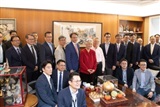
Half a century of history, an unconventional model
Acer is approaching its 50th anniversary, and founder Stan Shih is again highlighting the value of a corporate approach that has often challenged Western management conventions: the "Business Family" model. Rather than a traditional holding, it’s a constellation of entrepreneurial entities bound by a common brand and a philosophy of collaborative autonomy. In an era when technology supply chains face geopolitical and environmental pressures, Shih’s words carry weight beyond corporate history.
The architecture of the "Business Family": not an empire, but a federation
The model Shih devised and implemented breaks with the vertical corporation logic. Group companies operate with broad decision-making independence, sharing values and strategic resources without the burden of stifling central control. This setup—akin to a federation rather than a pyramid—has enabled Acer over decades to adapt to market shifts, from the PC era to the cloud, with a speed that monolithic structures often struggle to match. Its resilience through shocks like the 2008 financial crisis or recent global logistics disruptions confirms its effectiveness.
Sustainability beyond marketing: lessons for the hardware supply chain
When Shih speaks of a "more sustainable future," he’s not only referring to the group’s longevity, but to systemic sustainability. In a sector where planned obsolescence and accelerated refresh cycles generate e-waste and consume critical resources, the stability of a production ecosystem built on long-term relationships is a tangible answer. Manufacturers of servers, workstations, and components that embrace continuity and extended responsibility can offer businesses more reliable procurement, cutting hidden costs from forced turnover. It’s no coincidence that companies investing in on-premise infrastructure for artificial intelligence seek partners with financial solidity and a multi-year vision.
Implications for those choosing on-premise AI
For organizations evaluating local deployments of LLMs and AI workloads, hardware vendor choice is never neutral. Servers, GPUs, storage, and networking represent multi-year investments whose TCO depends on the vendor’s ability to provide support, spare parts, and updates over time. A corporate architecture that prioritizes resilience over quarterly maximization can translate into greater predictability for the enterprise user. In a landscape where trade tensions and semiconductor shortages make every supply chain uncertain, the "Business Family" model—if applied consistently—signals a direction that those managing on-premise datacenters cannot ignore.








💬 Comments (0)
🔒 Log in or register to comment on articles.
No comments yet. Be the first to comment!