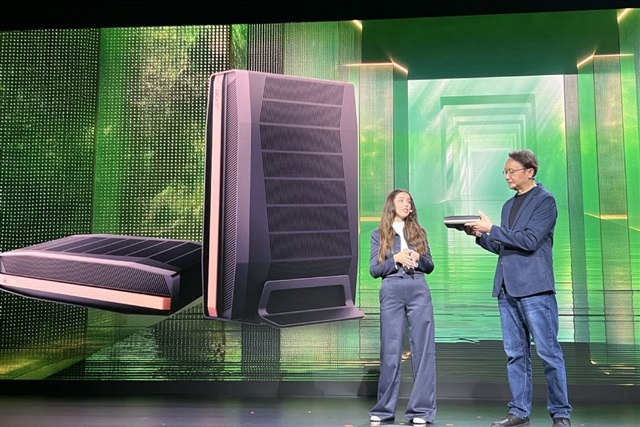
Acer is reorganizing its offer around two axes: RTX GPUs and the GoogleBook line. The news, reported by DIGITIMES, arrives as demand for AI run on-site grows visibly. This is not just a catalog update: it is a signal about how hardware makers are interpreting the artificial intelligence market.
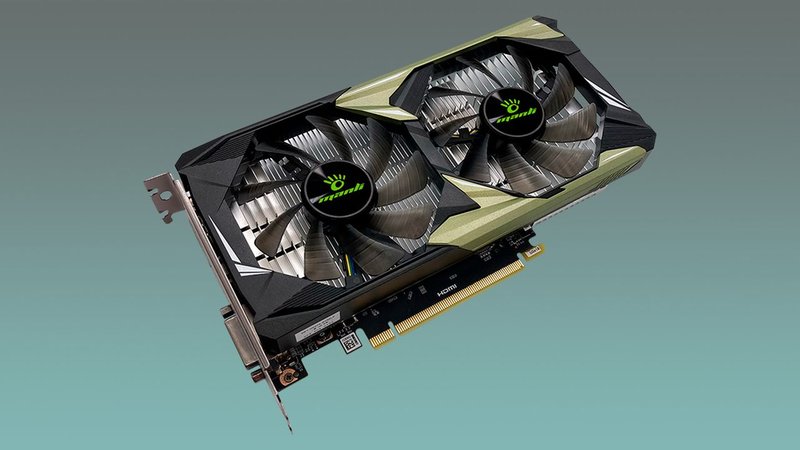
The direction is clear. For many enterprises, Large Language Model inference is no longer a process to delegate only to the public cloud. Data sovereignty, latency, and TCO control push toward local infrastructure, where models run on dedicated hardware and data remains inside the corporate perimeter. In this scenario, RTX GPUs are a practical entry point: they offer parallel compute and compatibility with the CUDA ecosystem, but they also impose VRAM constraints that make techniques such as quantization and the use of more compact models essential.
Acer's bet on GoogleBook adds a second layer: part of the on-site AI demand concerns devices that stay close to the user, not just servers. In this reading, some workloads can run locally, reducing dependence on remote calls and easing pressure on central infrastructure. This is a positioning oriented toward AI made of local components, not a single remote data center.
The structural point is not which specific model will run on these machines, but that AI hardware purchasing is shifting toward self-hosted deployments. This changes incentives for all players. NVIDIA strengthens its position because its GPUs become the foundation for local inference. PC and notebook makers can differentiate by offering configurations designed for AI workloads, not just generic productivity. Providers of local serving frameworks gain relevance, because teams managing their own hardware need orchestration, monitoring, and pipeline optimization.
There are also potential losers. Cloud inference services may see slower growth in regulated or latency-sensitive segments where local execution is preferable. Enterprises, for their part, must accept greater complexity: maintenance, model updates, and hardware sizing fall on internal teams. TCO does not stop at machine purchase cost, but includes energy, space, and operational skills.
At the second and third order, the growth of on-site AI pushes toward a market bifurcation: large-scale training remains in data centers with high-performance GPUs, while inference is distributed across enterprise racks and client devices. This requires more efficient models, more aggressive quantization, and careful management of tokens per second per watt. Acer does not solve these problems with an announcement, but its move confirms that local compute demand is strong enough to shape product strategies.
For those evaluating on-premise deployment, the knot to unravel remains the balance between initial costs, VRAM capacity, and actual workloads. AI-RADAR provides analytical frameworks on /llm-onpremise to explore these trade-offs. The direction pointed out by Acer, in any case, does not look like an isolated experiment.





💬 Comments (0)
🔒 Log in or register to comment on articles.
No comments yet. Be the first to comment!