
Adani and Jabil: A Strategic Alliance for AI Hardware in India
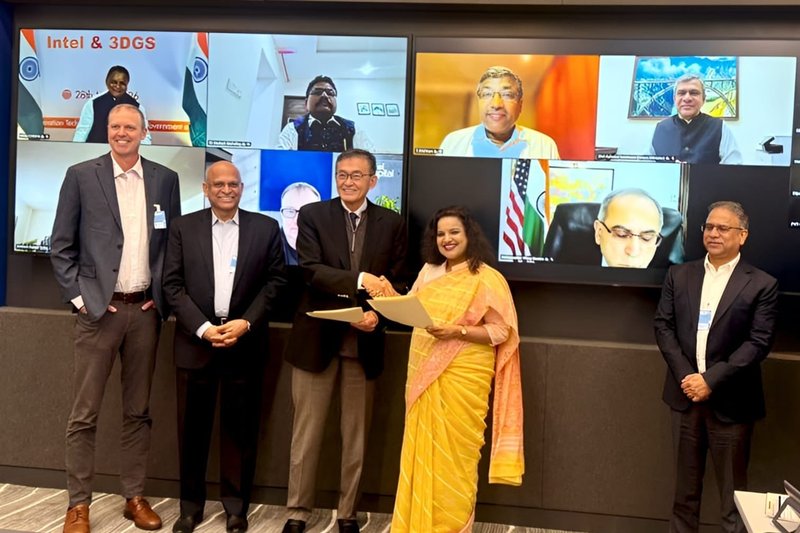
The global artificial intelligence landscape is constantly evolving, with a growing demand for dedicated hardware infrastructure. In this context, India's Adani Group, a conglomerate focused on infrastructure and energy, and Jabil, a renowned US contract manufacturer, have announced their intention to form a strategic partnership. The stated goal is ambitious: to build a vertically integrated hardware platform for artificial intelligence and data centers directly in India. This initiative marks a significant step towards strengthening local production capabilities and diversifying global supply chains for crucial AI components.
Alliance Details and Strategic Context
The alliance between Adani and Jabil aims to create a complete supply chain, from design to production, for essential hardware for AI workloads and modern data centers. The concept of a "vertically integrated platform" suggests extensive control over all aspects of production, potentially reducing reliance on external suppliers and optimizing delivery times. For Adani, with its vast experience in infrastructure and energy, this partnership represents a strategic expansion into a high-growth sector. Jabil, on the other hand, brings its established expertise in contract manufacturing, essential for the realization of complex hardware components. The choice of India as a production hub reflects its growing importance as a technological and manufacturing center, capable of attracting investment and talent in the sector.
Market Implications and On-Premise Deployments
The localization of AI and data center hardware production in India could have significant repercussions on the global market and, in particular, for companies evaluating on-premise deployments. The availability of locally produced hardware can potentially reduce logistics costs, waiting times, and complexities associated with imports, making self-hosted solutions more accessible and convenient. For CTOs, DevOps leads, and infrastructure architects, the ability to access a more robust and localized hardware offering is a key factor in evaluating Total Cost of Ownership (TCO) and managing data sovereignty. Specific hardware, such as GPUs with high VRAM and throughput, is crucial for efficient inference and training of Large Language Models (LLM) in on-premise environments. For those evaluating on-premise deployments, there are significant trade-offs between cloud and self-hosted solutions, and increased availability of local hardware can positively influence these decisions, offering greater control and flexibility.
Future Prospects and Challenges
While the announcement did not provide specific numerical details regarding the anticipated investment or production capacity, Adani and Jabil's intention to build an AI hardware platform in India is a clear signal of the direction the industry is taking. This strategic move could not only meet India's domestic demand but also position the country as a key player in the global supply chain for AI hardware. Challenges will include scaling production, attracting specialized skills, and navigating a rapidly evolving technological market. However, the combined forces of an infrastructure giant and a manufacturing expert create a solid foundation for addressing these complexities and contributing significantly to the artificial intelligence ecosystem.







💬 Comments (0)
🔒 Log in or register to comment on articles.
No comments yet. Be the first to comment!