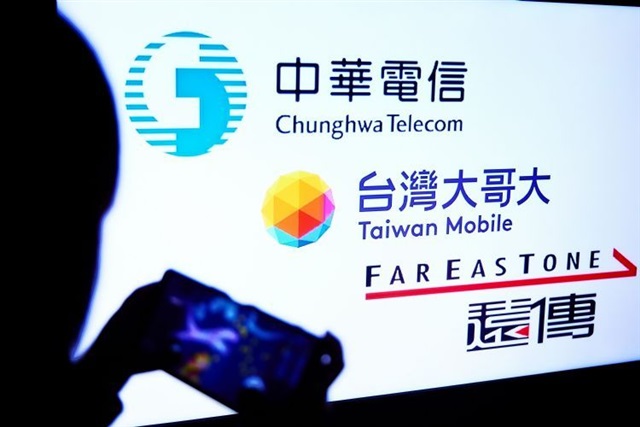
The news arrives with quarterly precision: Taiwan’s three telecom champions – Chunghwa Telecom, Taiwan Mobile, and FarEasTone – delivered a robust June performance, fueled by three pillars that, read closely, reveal a transformation deeper than a simple race for subscribers. Artificial intelligence projects, 5G network modernization, and ICT contracts acted as a flywheel, confirming that carriers are shifting their center of gravity from pure connectivity to distributed computing platforms where AI is no longer an ancillary service but a native workload.
The overlap between 5G and AI is not new, but the Taiwanese data signals a concrete acceleration. Next-generation networks are no longer just about mobile broadband; they become the backbone for moving inference from centralized data centers to edge nodes. For an operator, owning thousands of distributed sites means being able to place computing power where data is generated, reducing latency and backhaul costs. It is no coincidence that Taiwan’s carriers, in a mature and hypercompetitive market, are converting spectrum and antenna investments into edge architectures capable of hosting language models and computer vision for enterprise customers.
On the AI front, the game is played as much on LLMs as on predictive analytics for network management. Fine-tuning models on proprietary data flows – from historical traffic patterns to signaling logs – allows operators to optimize resource allocation and prevent faults. But there are second-order implications that go beyond operational efficiency. By shifting inference to on-premise or self-owned edge nodes, carriers gain granular control over data sovereignty, an increasingly stringent requirement for regulated sectors such as finance and healthcare. This repositioning transforms them from mere pipe providers into custodians of trusted computing infrastructure, an asset that large cloud providers struggle to replicate with the same capillarity on an island of 23 million people.
There is also a hardware angle that AI-RADAR watches closely. The compute demand generated by these hybrid architectures rewards GPU and accelerator vendors whose thermal and power profiles suit distributed environments, often lacking liquid cooling. This is no minor detail: the ability to run inference with 8-bit quantized models on commodity hardware can determine the TCO of an entire edge node fleet. While the spotlight remains on the gigawatts of cloud clusters, the quiet growth of AI workloads hosted by carriers could redraw the geography of demand for inference semiconductors.
In this light, the Taiwanese case shows how legacy operators are using 5G not only to defend revenues against ARPU erosion, but as a lever to enter an AI value chain that has kept them at the margins until now. Winners are those who own the physical ground – the central offices, the cell sites, the licenses – and repurpose it as a local computing platform. Losers are those who continue to treat AI as a cloud overlay without physical roots. And for those evaluating on-premise or hybrid deployments, the carriers’ move offers a concrete alternative to buying and managing racks of GPUs in-house, opening up scenarios of AI-as-a-Service delivered by an entity that already has the fiber, the power, and the proximity to the customer.






💬 Comments (0)
🔒 Log in or register to comment on articles.
No comments yet. Be the first to comment!