The AI Era and the Redefinition of Work
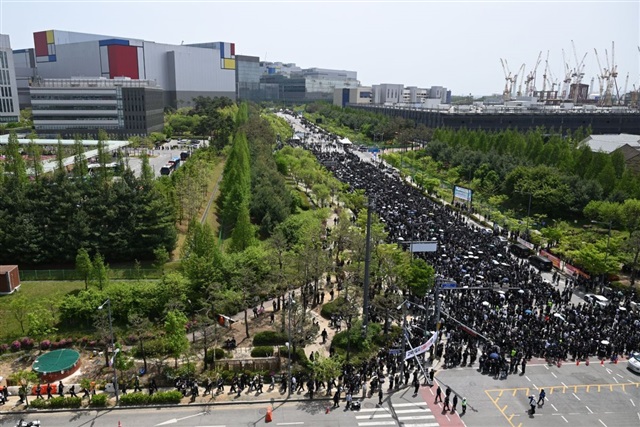
The advent of artificial intelligence is triggering a profound economic and social transformation globally, and South Korea serves as a prime example. The country, known for its leadership in the chip and telecommunications sectors, now faces a "labor reckoning," as suggested by recent analyses. This dynamic is not merely about job displacement but a fundamental redefinition of required skills, with an increasing emphasis on highly specialized roles in managing and optimizing AI infrastructure.
The transition towards an increasingly AI-driven economy compels nations and enterprises to rethink their human capital development strategies. The ability to attract, train, and retain talent with specific AI expertise becomes a critical success factor, especially for those aiming to maintain a competitive edge in technology-intensive sectors.
The Technical Challenges of On-Premise AI Deployment
For organizations choosing to implement AI solutions, particularly Large Language Models (LLM), infrastructure decisions are paramount. On-premise deployment, for instance, offers significant advantages in terms of data sovereignty, control, and potential long-term Total Cost of Ownership (TCO) optimization. However, this choice also entails considerable technical and skill requirements.
Managing local AI stacks demands expertise in configuring and Fine-tuning LLMs, optimizing hardware for Inference and training, and building robust data pipelines. It is essential to understand hardware specifications, such as GPU VRAM (e.g., A100 80GB or H100 SXM5), memory bandwidth, and high-speed network architectures, to ensure adequate Throughput and acceptable latencies. The ability to manage Bare metal environments, implement Quantization strategies, and orchestrate complex workloads is a prerequisite for fully leveraging the potential of self-hosted AI.
Skills and Strategic Implications
South Korea's "labor reckoning" reflects a global trend: the demand for engineers and architects with experience in AI, machine learning, and cloud/on-premise infrastructure outstrips supply. This talent shortage can slow AI adoption and increase operational costs for businesses. For those evaluating on-premise deployments, the internal availability of these skills or the ability to acquire them becomes a critical factor in assessing the overall TCO.
Data sovereignty and compliance requirements, especially in regulated sectors, push many organizations towards Air-gapped or self-hosted solutions. These environments, while offering greater control and security, require teams with deep expertise not only in model development but also in managing the underlying infrastructure, from network security to hardware maintenance. The ability to develop and maintain a robust local AI Framework is directly proportional to the quality and availability of human capital.
Future Prospects and the Centrality of Skills
The evolution of artificial intelligence will continue to shape the labor landscape, making advanced technical skills an increasingly valuable asset. South Korea, with its strong industrial base, is uniquely positioned to address these challenges, but success will depend on its ability to adapt educational programs and labor policies to meet the new demands of the AI era.
For businesses, investing in continuous staff training and the creation of multidisciplinary teams will be crucial for navigating the complexity of AI deployments. Whether optimizing Inference on specific hardware or ensuring security in an Air-gapped environment, the centrality of human skills will remain a fundamental pillar for unlocking the full potential of artificial intelligence and securing a lasting competitive advantage.








💬 Comments (0)
🔒 Log in or register to comment on articles.
No comments yet. Be the first to comment!